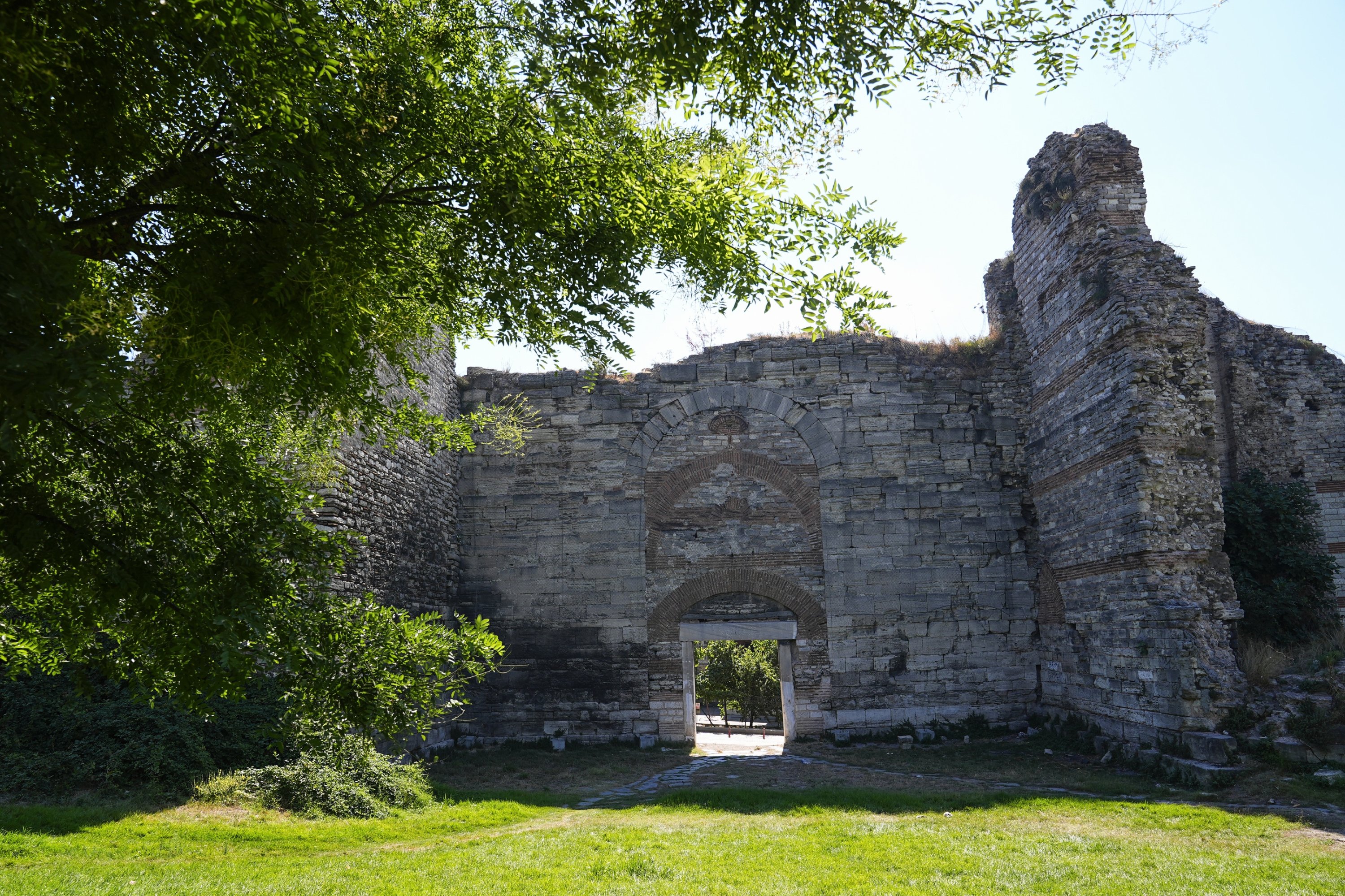
Istanbul’s 11 historic gates continue to preserve traces of the civilizations that shaped the city, carrying stories from the Roman and Byzantine eras through the Ottoman Empire and the republic.
Edirnekapı, Topkapı, Silivrikapı, Mevlanakapı, Sulukule Gate, Belgradkapı, Yedikule Gate, Golden Gate, Cibalikapı, Ayakapı and Eğrikapı have served different roles throughout the city’s history, from regulating access and facilitating trade to hosting ceremonies and witnessing major historical events.
The gates form important parts of Istanbul’s land walls, built during the reign of Byzantine Emperor Theodosius II. For centuries, they controlled movement into and out of the city and served as important commercial and ceremonial points.
Edirnekapı holds a particularly important place in accounts of the conquest of Istanbul. It is associated with Sultan Mehmed II entering the city with his army after praying at Hagia Sophia.
Topkapı, meanwhile, witnessed some of the most intense fighting during the 1453 conquest, when Ottoman forces used massive cannons to bombard the city walls.
The Golden Gate, one of the city’s most monumental entrances, once served as a ceremonial gateway through which Byzantine emperors entered Istanbul in triumphal processions. During the Ottoman period, it became part of Yedikule Fortress and took on a new role.
Other gates reflect the changing character of Istanbul and the communities and landmarks around them. Belgradkapı is believed to take its name from people from Belgrade who were settled in the area during the Ottoman period, while Mevlanakapı takes its name from the nearby Yenikapı Mevlevi Lodge.
Silivrikapı served as an important entry point for goods arriving from Rumelia, contributing to Istanbul’s commercial life for centuries.
Sulukule Gate is closely associated with accounts of the conquest and was regarded as one of the more vulnerable points in the city walls. Cibalikapı, meanwhile, has connected the city with the sea for nearly 1,800 years and takes its name from Cebe Ali, a figure associated with the conquest.
Ayakapı along the Golden Horn and Eğrikapı on the northern walls also preserve traces of life around the city’s waterfront and land walls.
Istanbul Governor Davut Gül emphasized that the historic gates should not be viewed merely as entrances but as monuments that form part of the city’s collective memory.
Speaking to Anadolu Agency (AA) at Topkapı, Gül said the gates had served purposes ranging from defense to trade and that a significant number had survived thanks to preservation efforts.
“We see them not simply as structures inherited from the Byzantine or Ottoman periods, but as monuments that have lived alongside the city and witnessed both its good and difficult days. They are among Istanbul’s greatest treasures. Thankfully, they have survived to this day,” Gül said.
Gül said the gates and city walls are protected as registered cultural properties, meaning restoration work and activities at the sites require approval from conservation boards.
He also pointed to restoration efforts in the Historic Peninsula, saying the preservation of Istanbul’s cultural heritage had gained momentum, particularly during the Republican period and over the past 25 years.
“Just as we bear witness to places and cities, cities also bear witness to the people who live in them. Rulers passed through here. These are the gates Sultan Mehmed used when entering Istanbul. When we see and experience this place, we bear witness to history,” Gül said.
Gül noted that Istanbul welcomes around 18 million visitors annually, with hundreds of thousands of people visiting the Historic Peninsula each day.
“May God grant everyone the chance to live in Istanbul for six months,” Gül said, describing the city as a place where visitors encounter centuries of history in its roads, buildings and public spaces.