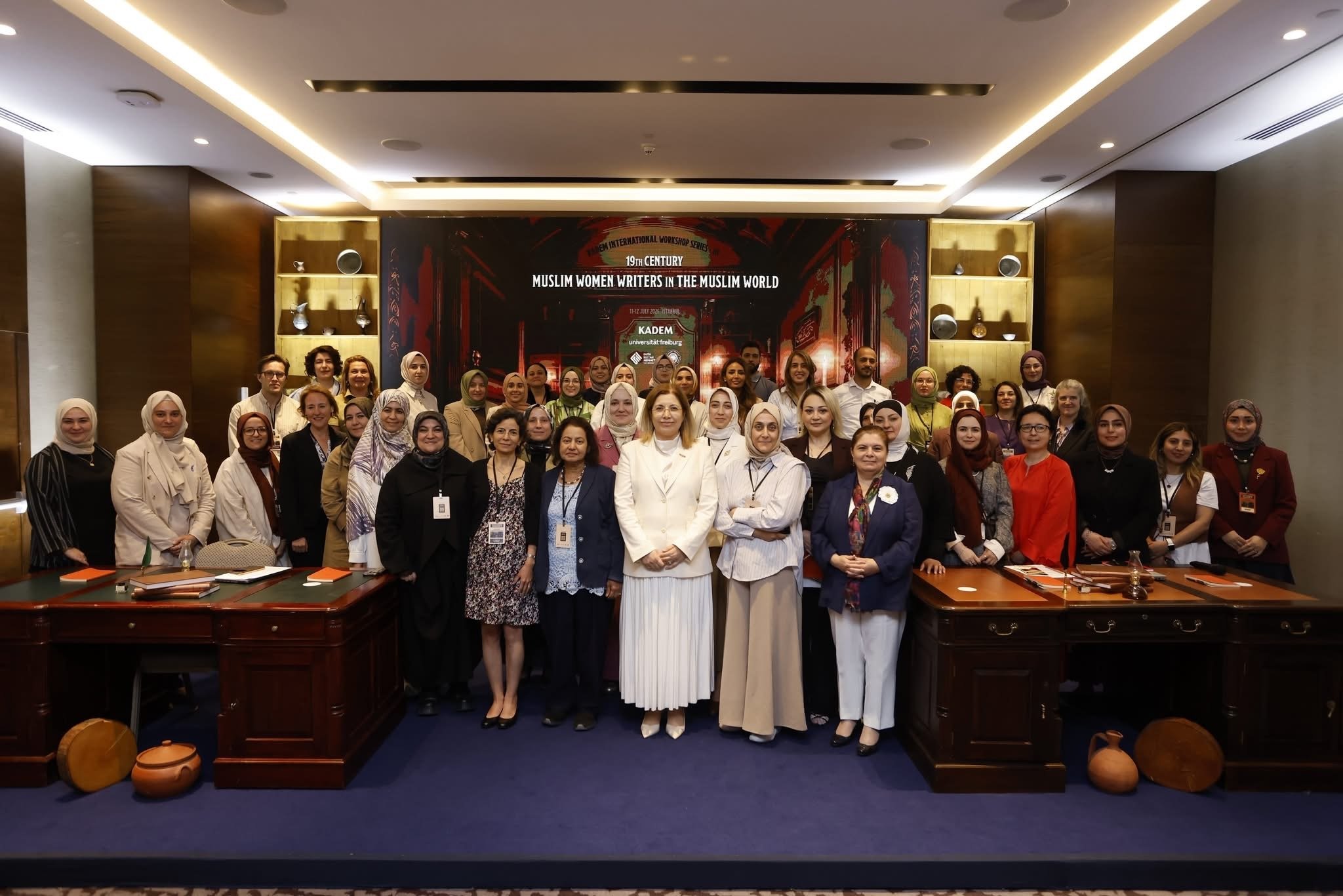
The contributions of 19th-century female Muslim writers were highlighted at an international workshop in Istanbul on Saturday, where academics from around the world examined their role in shaping literature, journalism, education and social thought across the Muslim world.
Organized by the Women and Democracy Foundation (KADEM) in cooperation with the University of Freiburg, Fatih Sultan Mehmet Vakıf University and Tbilisi State University, the two-day event, titled "KADEM International Workshop Series III: 19th Century Women Writers in the Muslim World," brought together researchers to explore the intellectual legacy of women whose works had long remained on the margins of historical scholarship.
Speaking at the opening ceremony, KADEM Chairperson Canan Sarı said history was shaped not only by what happened in the past but also by whose voices and ideas were preserved for future generations, arguing that the intellectual legacy of women had too often been overlooked.
Quoting Egyptian feminist and writer Huda Shaarawi, Sarı said history had long elevated a handful of exceptional women while ignoring the contributions of countless others. She said the workshop sought to reverse that pattern by recovering an entire tradition of Muslim women's intellectual production.
"The writing of history is more than passing on what happened in the past. It is also a process that decides which actors, which ideas and which experiences are recorded, and which ones are gradually left behind," she said.
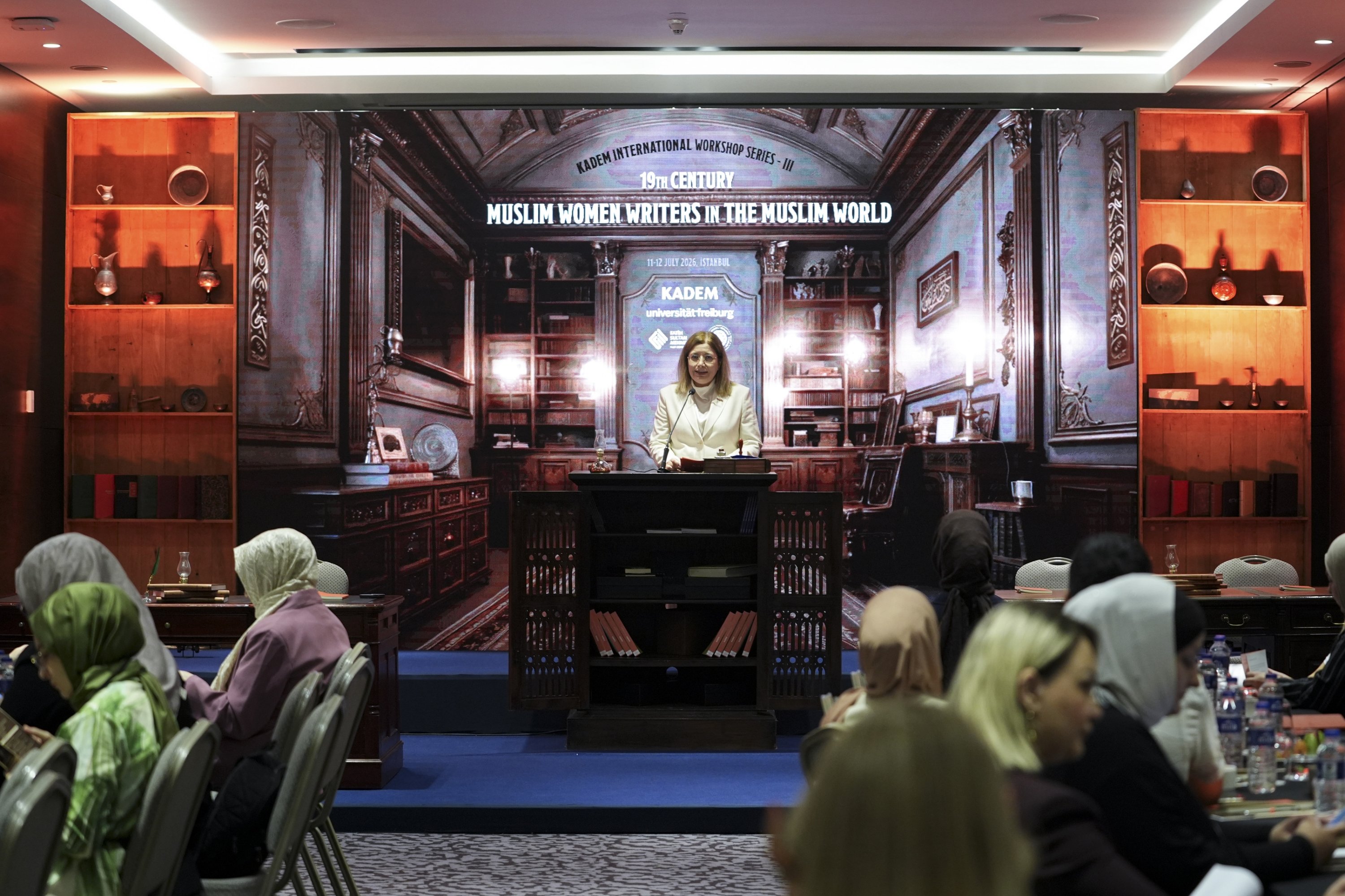
Describing the 19th century as a period of profound political, social and intellectual transformation across the Muslim world, Sarı said women were not merely witnesses to these changes but active participants who wrote newspaper articles, founded journals, published books and contributed to debates on education, law, religion, justice and social reform.
Despite their influence, she said, many of these women's ideas remained overshadowed by their literary identities and never received the scholarly recognition they deserved.
Sarı said the workshop aimed to recover this overlooked intellectual heritage by examining the works of pioneering Muslim women writers from regions stretching from the Ottoman Empire and Egypt to Iran, India, Indonesia, West Africa, Azerbaijan and Victorian Britain.
She added that the discussions would explore how these women grounded their calls for justice and rights within their own religious and cultural traditions while contributing to broader debates on modernization, women's participation in public life and social change.
During the workshop, Fatih Sultan Mehmet Vakıf University associate professor Zeynep Kevser Şerefoğlu Danış examined how female Muslim writers of the 19th century emerged as influential intellectuals during a period of profound social transformation, arguing that their works reflected not only the challenges of their time but also their efforts to shape society's future.
Danış said women found new ways to participate in intellectual life through novels, journals and essays, allowing them to address issues ranging from education and employment to marriage, politics and women's place in society. "Through novels, journals and essays, women became visible and found their voices," she said, adding that "writing gave women confidence and intellectual authority."
Highlighting the Ottoman experience, Danış noted that women established their own public sphere by publishing more than 40 women's journals, creating intellectual networks that fostered dialogue and the exchange of ideas.
She emphasized that these writers did not merely identify social problems but also sought solutions while reflecting on the broader implications of social change.
She also stressed that women's intellectual traditions developed differently across societies, arguing that "the same question does not produce the same answer in every context."
For Ottoman women writers, she said, "Faith was never excluded from intellectual inquiry," enabling them to question social conventions while remaining engaged with religious thought.
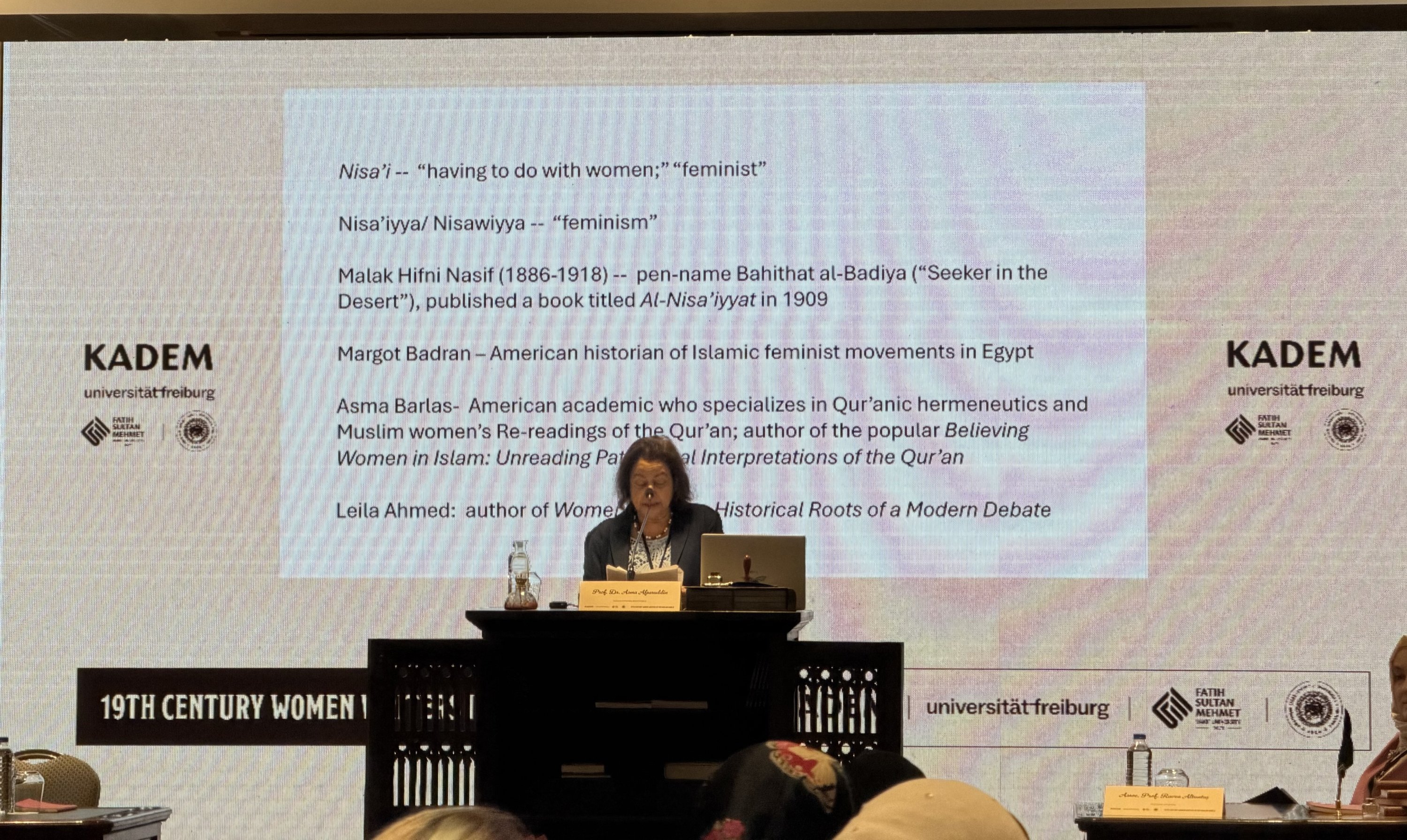
Another of the workshop's keynote speakers, Indiana University professor Asma Afsaruddin, argued that advocacy for women's rights in the Muslim world had a far longer history than is often recognized, tracing its origins to the writings of 19th-century Muslim women who challenged social restrictions while remaining firmly rooted in Islamic thought.
Afsaruddin said the absence of the modern term "feminism" in the 19th century did not mean that ideas associated with women's rights were absent.
Drawing on the concept of "invisible feminism," she argued that Muslim women were already producing intellectual and literary works advocating education, justice and greater participation in public life decades before such movements were formally named.
Describing the 19th century as a period of colonial expansion, modernization and educational reform across the Muslim world, Afsaruddin said these transformations created new opportunities for women writers to participate in public debate through newspapers, journals, novels, memoirs and essays.
"Their works argued that educating women was essential not only for individual advancement but also for strengthening families and contributing to national development," she said.
The program featured a series of keynote speeches, paper presentations, panel discussions and academic sessions that continued through Sunday, examining the intellectual legacy of Muslim women writers while fostering dialogue on future international research and collaboration.