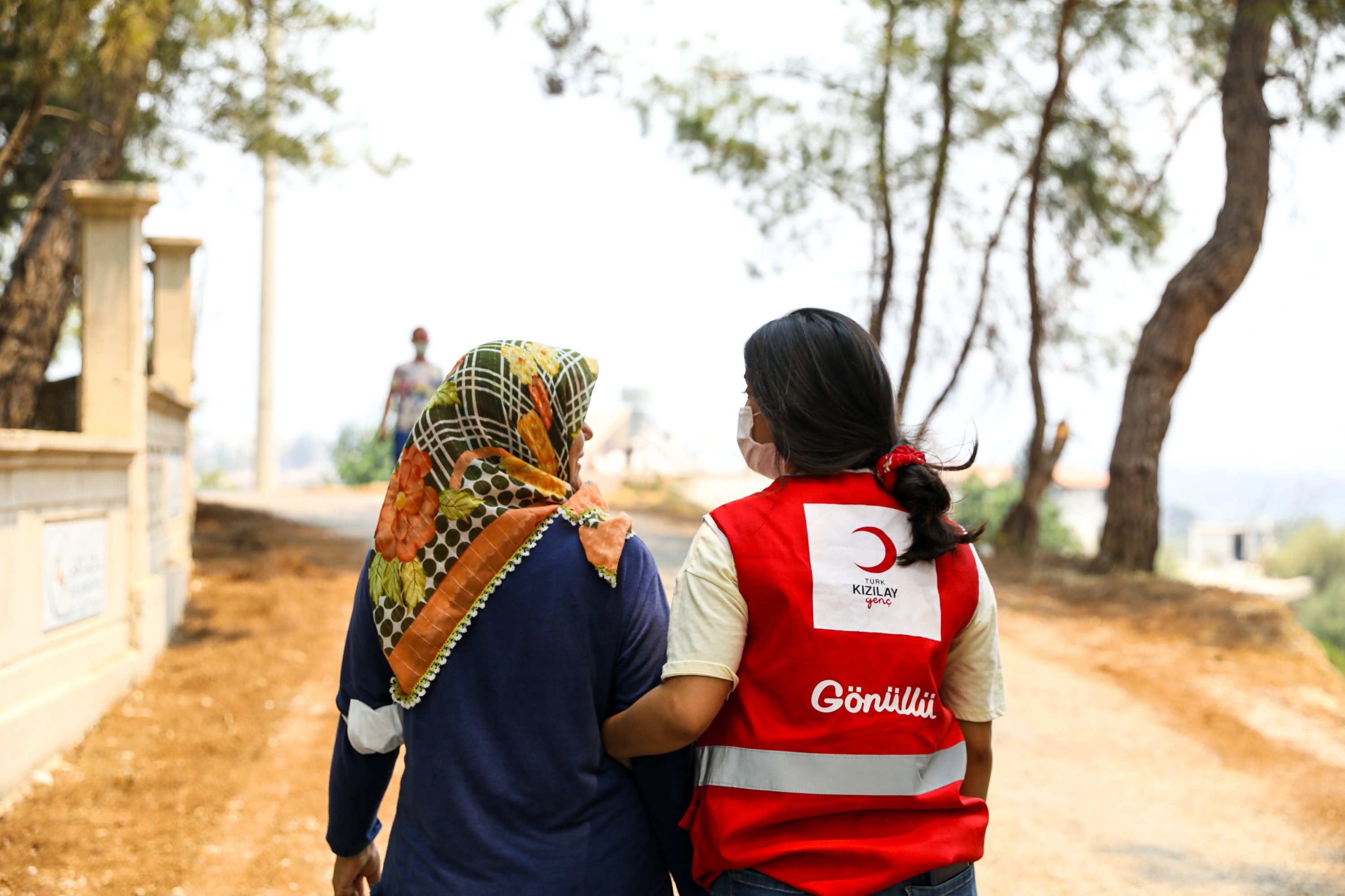
The Turkish Red Crescent (Kızılay) has published a “Psychological First Aid Handbook” that explains simple and practical steps on how to support people affected by disasters, crises and distressing events.
Ahead of World First Aid Day, the handbook aims to make psychological first aid knowledge accessible not only to mental health professionals but also to volunteers, first responders and broader segments of society.
Kızılay emphasizes that events such as earthquakes, floods, fires and epidemics can have profound effects on individuals’ mental health beyond material losses, highlighting the importance of providing support at an early stage to minimize these effects.
The handbook brings together key information from Kızılay’s Psychological First Aid (PFA) training series’ Participant Handbook in a concise and accessible format.
Prepared with reference to guidelines from the Mental Health and Psychosocial Support Hub (MHPSS Hub) of the International Red Cross and Red Crescent Movement, the handbook includes examples tailored to the types of events experienced in Türkiye and within the country’s cultural context.
The handbook defines psychological first aid as a supportive approach that helps people affected by a crisis or emergency calm down, feel safe and cope with the situation without suffering further harm.
The approach is based on three basic steps, “Look, Listen, Link.”
During the “Look” stage, the crisis environment, safety risks and urgent needs are assessed. During the “Listen” stage, affected individuals are approached without judgment, and their needs are identified. During the “Link” stage, people are directed to social support resources, accurate information and the services they need.
Guiding questions and case examples are provided to help practitioners apply each of the three steps.
According to the publication, PFA is not a form of detailed therapy or treatment. Rather, it is a supportive and protective approach that provides individuals with a safe, non-judgmental space to express themselves, focuses on their immediate needs and encourages them to use their own coping mechanisms and draw on social support resources.
Practitioners are advised not to question people about the details of an incident, pressure them to share their feelings, or make unrealistic promises.
The handbook notes that psychological first aid is not limited to mental health professionals, stating that first responders, volunteers and humanitarian workers who have received basic training and acquired the necessary skills can also provide such support.
It emphasizes that skills such as active listening, adopting a non-judgmental approach and helping people remain calm – skills that many people may use unconsciously in everyday life can become effective forms of assistance during crises when supported by accurate information.