The Feb. 6, 2023, earthquakes triggered one of the largest humanitarian responses in Türkiye’s history, mobilizing state institutions, civil society groups and international partners. Within this landscape, the Turkish Red Crescent (Kızılay) emerged as one of the key humanitarian actors, operating from the acute emergency phase through recovery and reconstruction.
Three years on, the organization details how it structures its response, scales up operations and transitions from immediate life-saving interventions to long-term recovery across the 11 affected provinces.
Speaking to Daily Sabah, Kurtuluş Açıksarı, director general of disaster and community services at Kızılay, said the organization’s response in the first 72 hours was guided by rapid impact analysis, decentralized coordination and immediate life-saving interventions tailored to the scale and geography of the disaster.
According to Açıksarı, the first priority following the earthquakes was to determine the scope of impact and the geographical spread of damage. A comprehensive disaster impact analysis was conducted to identify which provinces were affected, to what extent, and what types of needs were emerging on the ground.
“This analysis played a critical role in determining how resources should be directed,” he said. “Based on the findings, interventions were planned region by region, with coordination through our response centers and provincial branches.”
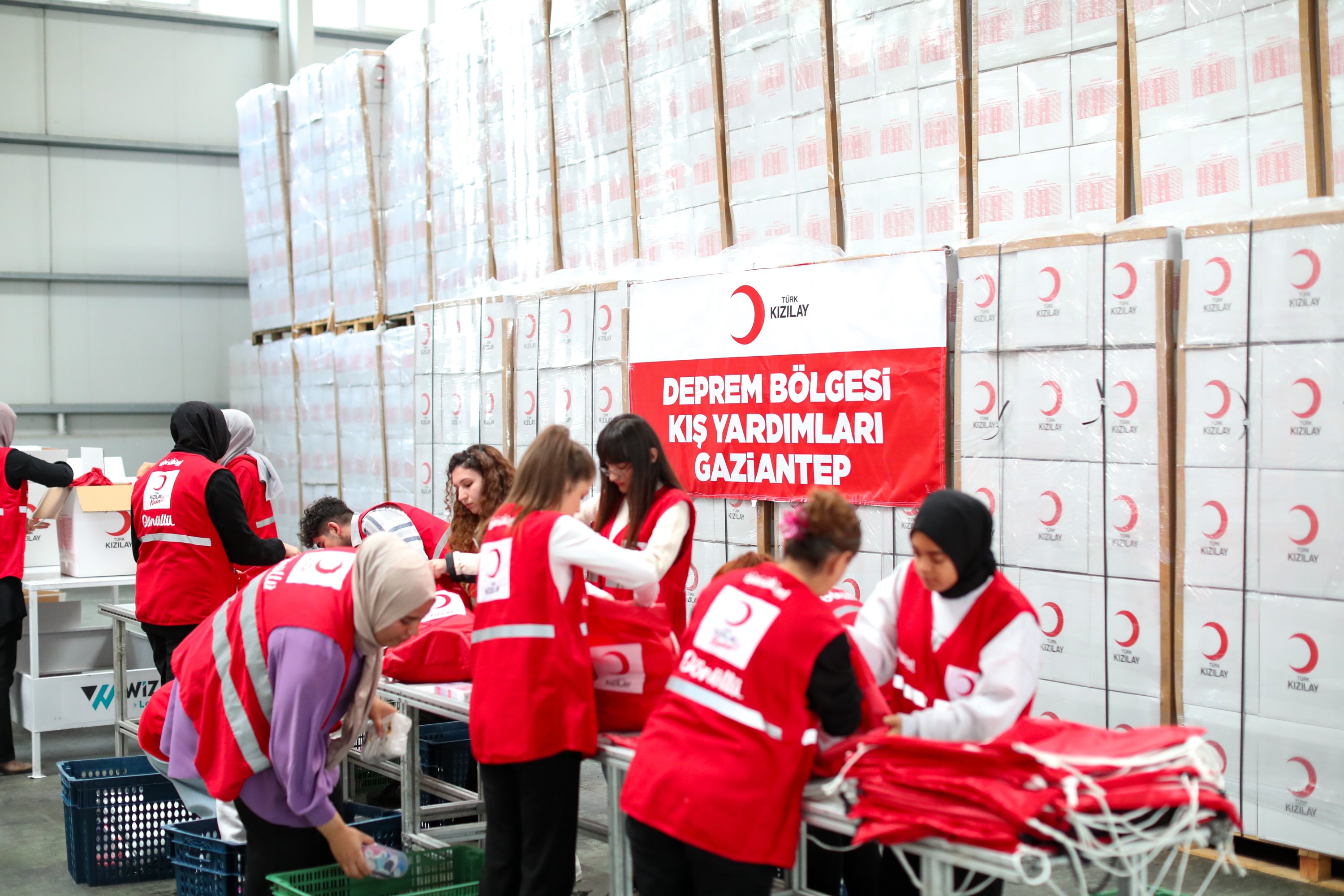
Field kits and mobile kitchens were dispatched to affected areas, accompanied by experienced personnel. Catering vehicles were positioned at strategically selected locations, taking into account accessibility and the concentration of disaster victims, and food distribution activities began immediately. In provinces with soup kitchens, production was initiated within the first 24 hours under the instructions of provincial branch heads.
Following confirmation of the disaster, personnel from different units were mobilized under the coordination of the Disaster Management and Climate Change Directorate. At the same time, all volunteer networks nationwide were activated.
Within the first 24 hours, volunteers reached the disaster zone, while local volunteers across southern Türkiye, including Adana, Adıyaman, Diyarbakır, Gaziantep, Hatay, Kahramanmaraş, Kilis, Malatya, Osmaniye and Şanlıurfa, took on active roles from day one. Volunteers registered in the Volunteer Management System applied for earthquake-specific assignments and were deployed accordingly.
To support logistics, existing logistics centers in the region were immediately activated, and Temporary Logistics Centers (GLM) were established to expand capacity and manage incoming aid.
Each newly established regional command unit was supported by a GLM, with shipment vehicles dispatched accordingly. In total, six GLMs were established across five provinces.
Açıksarı noted that damaged infrastructure and disrupted communication lines posed significant challenges in the early days, affecting coordination and access to the disaster zone due to collapsed roads and bridges.
Operational coordination with the Disaster and Emergency Management Authority (AFAD), relevant ministries and local authorities was conducted through crisis desks established at both provincial and national levels. The presence of representatives from all relevant institutions ensured joint tracking of needs, task sharing and operational alignment.
International coordination with the Red Cross and Red Crescent partners was managed through Kızılay’s International Programs and Partnerships Directorate and the Disaster Recovery Programs Coordination Unit under the Disaster Management and Climate Change Directorate.
This structure ensured that international funds were used and reported in line with global standards, while maintaining transparency, traceability and accountability.
Through these mechanisms, Açıksarı said, a functioning and sustained joint working platform was established at both national and international levels.
Beneficiary identification for cash assistance, shelter support and other services relied on social assessments, field observations, official data and information obtained from relevant institutions. Individual and household needs were assessed alongside previous aid received, existing resources and coping capacities.
These assessments were conducted in coordination with provincial directorates of the Ministry of Family and Social Services, under the principle of “the right assistance to the right person.”
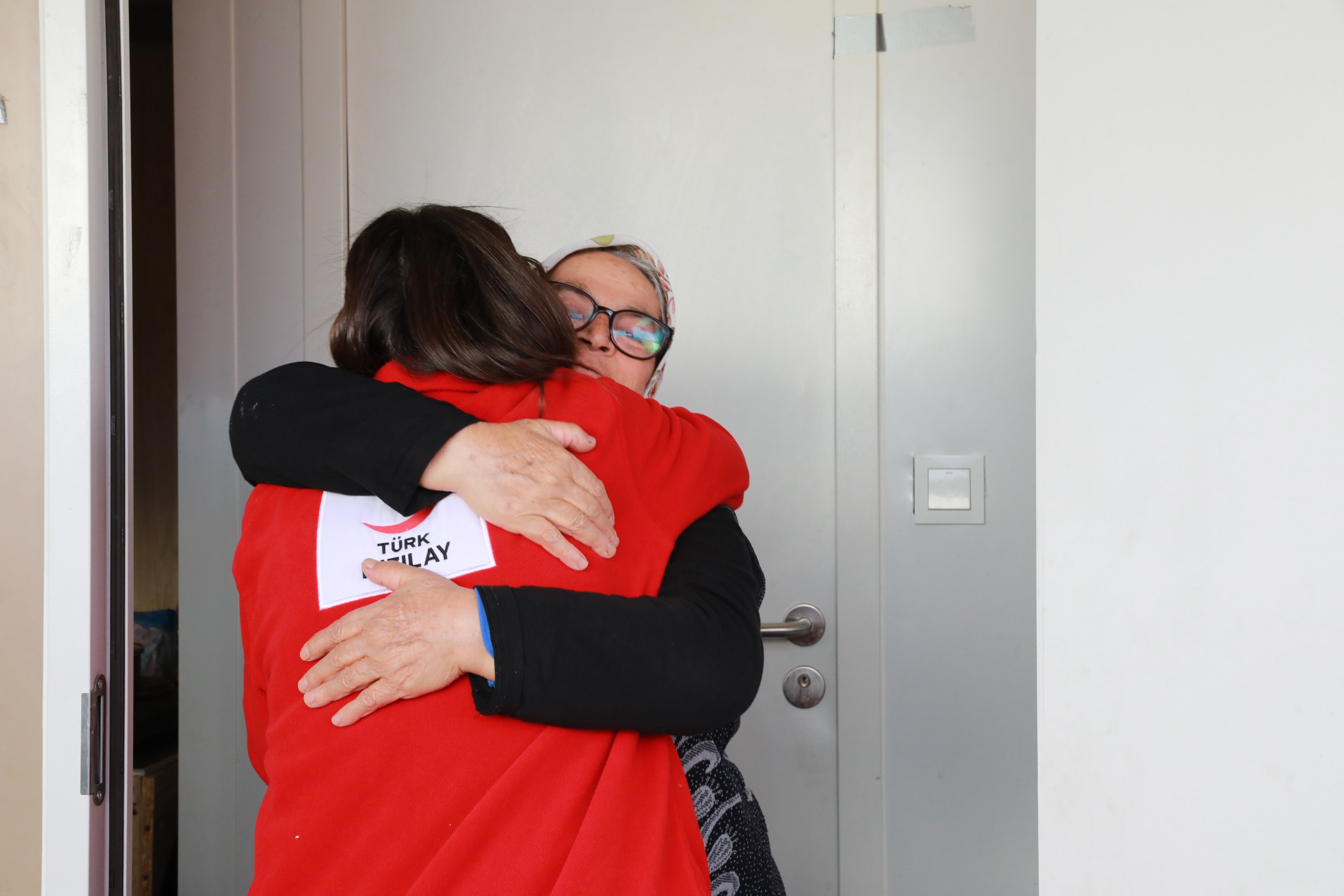
Home visits by social service professionals addressed not only material needs but also access to education and services, psychosocial support requirements and protection risks such as violence, neglect, abuse and child labor.
Special attention was given to socio-economic recovery, including support for farmers and tradespeople. Case management plans were implemented through a holistic, multi-component approach.
Within multi-purpose cash assistance programs, older people, persons with disabilities, women living alone and children were prioritized based on vulnerability. During winter months, heaters, blankets and container repair kits were distributed to improve living conditions.
All services were planned in coordination with local authorities and partners to minimize duplication, while donor requirements and institutional accountability standards were strictly observed.
In total, Kızılay established 14 regional command units across the 11 affected provinces. Operations involved 2,538 staff members and 75,995 volunteers.
For recovery efforts, Community Service Centers were established at 10 locations across Adıyaman, Gaziantep, Hatay, Kahramanmaraş, Malatya and Osmaniye. These centers operated with a multidisciplinary team of 130 specialists, including clinical psychologists, psychologists, counselors, social workers, child development experts, protection specialists and interpreters.
Field teams received training through a comprehensive model designed to enhance both technical expertise and psychological resilience. All newly assigned staff were onboarded through a mentoring system known as "İyilik Rehberim" ("My Kindness Guide"), ensuring rapid adaptation to institutional culture and field operations.
Training extended beyond theory, incorporating case analysis, practical field applications and continuous supervision by experienced professionals. Leadership development programs and coaching were provided to managers to strengthen operational governance.
Training topics included case management, gender-based violence, child protection, psychotherapy-focused approaches, community-based health and volunteer management.
These programs were also offered to partner institutions to strengthen local capacity. Volunteers received short but intensive orientation and response training, primarily conducted in the field with the participation of experts and academics.
Supervision mechanisms ensured that personnel were not left unsupported when applying their training in challenging field conditions. Advanced psychosocial training, including EMDR and trauma-focused therapies, was delivered to ensure evidence-based support for affected populations.
Açıksarı emphasized that many Red Crescent staff were themselves affected by the earthquakes, with some losing colleagues and family members.
“Feb. 6 remains a deeply painful reminder for our institution,” he said.
Despite carrying both survivor and responder roles, many staff continued their duties, describing destroyed neighborhoods not merely as rubble but as parts of their personal histories.
While this created a significant emotional burden, operations continued uninterrupted due to strong professional commitment and institutional solidarity.
To support staff well-being, supervision services were activated, and “Employee Support Kits” were distributed to encourage self-care. Living containers were provided for personnel, and working conditions were gradually improved through the establishment of standardized Community Service Centers.
Drawing on experience dating back to the 1999 Marmara earthquake and subsequent international operations, Kızılay implemented its Community Center model in an unprecedentedly integrated structure following the Feb. 6 disasters.
For the first time, protection, psychosocial support, socio-economic strengthening, shelter, disaster risk reduction, water and sanitation (WASH), and community-based health services were delivered under a single framework.
Protection-focused cash assistance was also introduced for the first time in recovery operations, alongside safety improvements in living areas based on international standards.
Cash support programs for farmers and small business owners were rolled out at scale, marking a significant expansion of livelihood interventions.
The transition from emergency response to recovery and reconstruction was implemented gradually and in coordination with provincial branches, within the frameworks of the Türkiye Disaster Response Plan (TAMP) and the Türkiye Post-Disaster Recovery Plan (TASİP).
While emergency services prioritized food, shelter, cash and in-kind aid and psychosocial first aid, evolving needs prompted a shift toward recovery-oriented services.
Community centers and branch-led coordination enabled the rollout of long-term psychosocial support, protection services, livelihood programs, social cohesion initiatives and community-based health services.
Strong cooperation with public authorities and local governments helped prevent duplication and ensured effective use of resources, enabling communities to transition toward self-reliance.
Kızılay continues to operate within TAMP and TASİP frameworks, focusing on reducing vulnerability, strengthening social resilience and ensuring that no one is left behind.
In the acute phase, the organization remains a visible front-line actor providing food, shelter, cash assistance and psychosocial support. In the medium and long term, it concentrates on recovery through community centers, livelihood support and social cohesion programs, aiming to transform organized solidarity into lasting social strength.