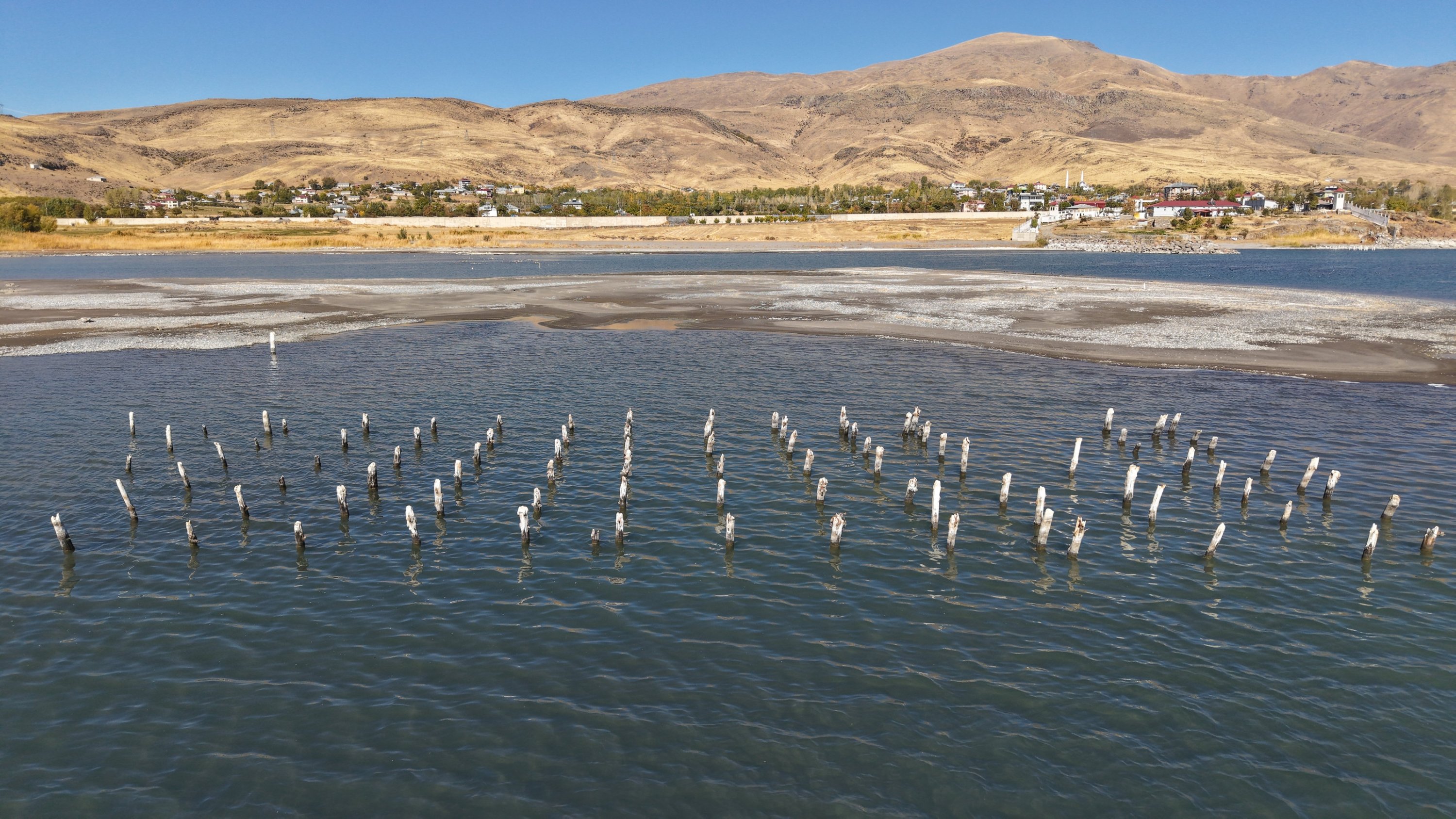
A significant decline in the water level of Lake Van has exposed the wooden supports of a century-old pier along the shore in Muradiye district, highlighting the environmental impact of climate change on the region’s largest lake.
Lake Van, located in eastern Türkiye, is the country’s largest soda lake and a critical natural resource for surrounding communities. In recent years, severe drought and increased evaporation due to shifting weather patterns have accelerated the retreat of its shoreline, causing dramatic changes along the lake’s coast.
In the Ünseli neighborhood of Muradiye, the water has receded approximately 500 meters (1,640.42 feet) from the historical shoreline, revealing structures that have remained submerged for decades. The exposed wooden pier, believed to be over 100 years old, was once a vital transportation point for local residents.
Mustafa Akkuş, a faculty member at the Faculty of Fisheries of Van Yüzüncü Yıl University, described the lake as a key indicator of global climate change due to its unique closed-basin hydrology. “Lake Van does not have an outlet; water inflow comes mainly from winter snowfall and rainfall throughout the year, while water loss occurs primarily through evaporation,” Akkuş said. “Decreased winter snowfall combined with earlier, hotter summers has caused the lake’s water level to drop significantly.”
The environmental shifts have revealed not only piers but also other historical and geological features, including microbialites (mineral formations), remnants of ancient settlements, and various archaeological structures long hidden beneath the water.
“These exposed remains offer a window into the past, revealing the region’s rich cultural and natural history,” Akkuş added. “As the lake continues to recede, more such relics may surface, underscoring both environmental challenges and heritage opportunities.”
Local residents like 87-year-old Mevlüt Bilici recall stories from their ancestors about the pier’s historical role in transportation before it was submerged by rising waters decades ago. “With the lake pulling back now, we see parts of the pier again that we thought were lost forever,” Bilici said.
The visible decline of Lake Van’s water level has raised concerns among environmentalists, scientists, and local communities. It reflects broader climate-related risks facing the region, including impacts on biodiversity, water availability and livelihoods dependent on the lake.