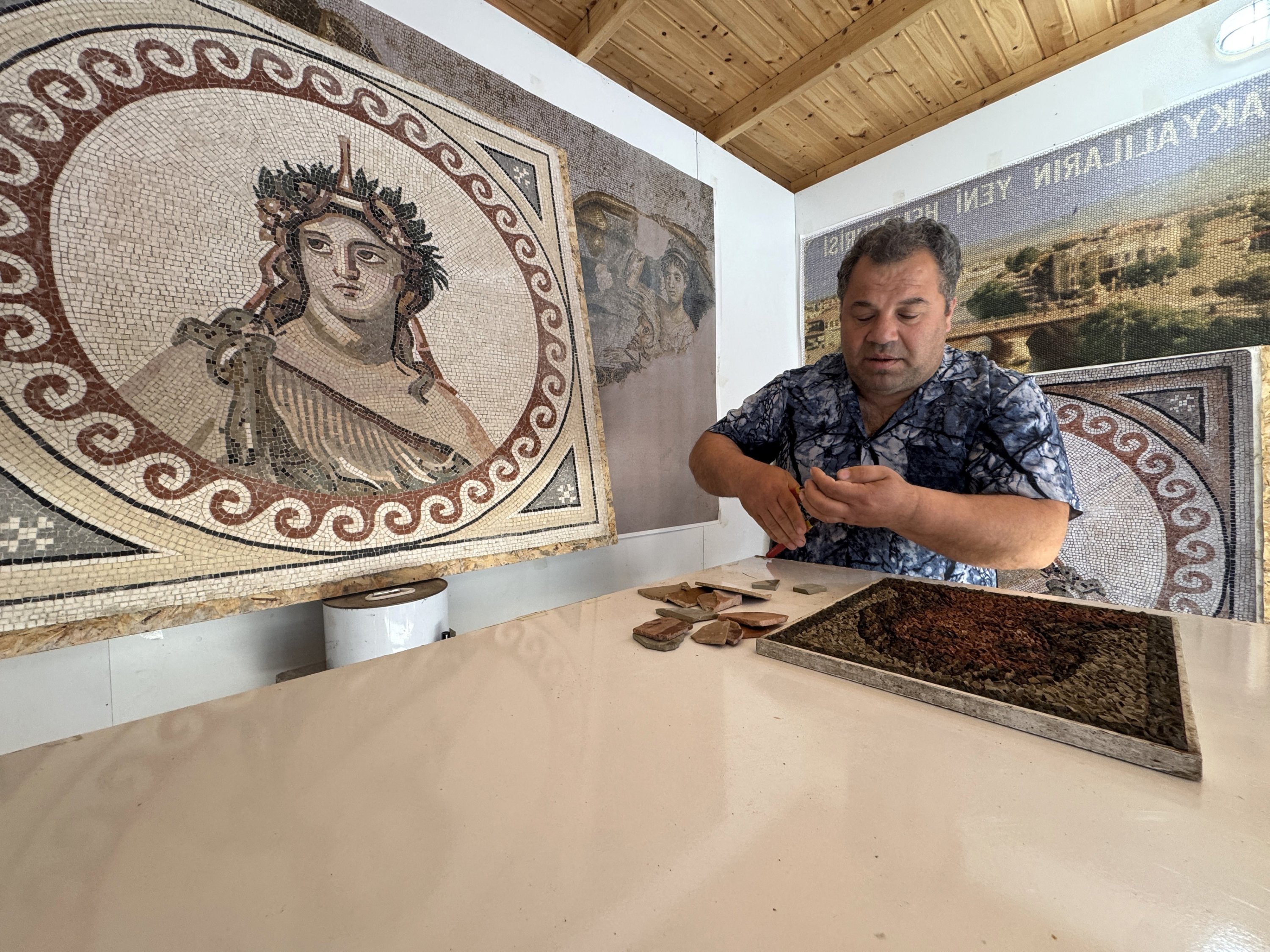
In Hatay, a southern province of Türkiye devastated by earthquakes, the newly established Antakya Gastronomy Market and Culture and Art Market are helping local businesses continue their commercial activities while promoting the city's signature products.
Hatay, a member of UNESCO's "Creative Cities of Gastronomy" network, saw many businesses destroyed or damaged in the Feb. 6, 2023, earthquakes that centered in southeastern Kahramanmaraş province.
To help revive the region's world-renowned cuisine, the Antakya Gastronomy Market was opened on Sept. 27, 2024, in the Odabaşı neighborhood with support from the governor's office and the Eastern Mediterranean Development Agency.
The market, built in the traditional style of Antakya’s historic architecture, features 18 restaurants offering local delicacies such as Antakya künefe, kaytaz böreği, kömbe and Antakya kağıt kebabı, all of which are protected by geographical indication certification.
To support artisans specializing in local handicrafts and preserve the city's cultural heritage, the Culture and Art Market was also established in the Çekmece neighborhood of the Defne district.
The market, set up with the coordination of the Hatay Governor's Office and the Disaster and Emergency Management Authority (AFAD), has welcomed many visitors since its opening on Dec. 20, 2024.
The market showcases products reflecting the city’s culture and includes 82 workshops, seven restaurants, a cafe, a cinema and a meeting hall.
Hatay Governor Mustafa Masatlı told Anadolu Agency (AA) that the earthquakes had a negative impact on the city's commercial life.
He added that 6,180 prefabricated workplaces were built with the help of the AFAD following the disaster. "We provided these workplaces to citizens whose businesses were damaged in the earthquake, allowing them to continue their trade, even if temporarily," Masatlı said.
Masatlı noted that the Antakya Gastronomy Market is both supporting local tradespeople and giving visitors the opportunity to taste the city’s unique flavors.
He also emphasized that the Culture and Art Market was created to allow artists to continue their work in the city. "We invited artists who had left the city to return, and we encouraged people who sell local products to join the market," Masatlı said. "The market is now playing a significant role in our city’s culture, art and commerce. I believe this project is very important for our city’s morale and motivation. Our market is also hosting important concerts thanks to its design. Thankfully, we’re starting to see the smiles and sparkle in the eyes of our people once again."
Masatlı pointed out that the construction of the market followed the Zero Waste Project, led by Emine Erdoğan, the first lady of Türkiye. "Our seven restaurants were built with the 'zero waste' approach, which is a model for the world. During the earthquake, we received help in containers, and after the aid arrived, we repurposed the containers with suitable architectural designs to create restaurants," he said.
Masatlı emphasized that various arts, from silk weaving to wood carving and sculpture to mosaic work, are being preserved at the market, and they plan to continue these efforts.