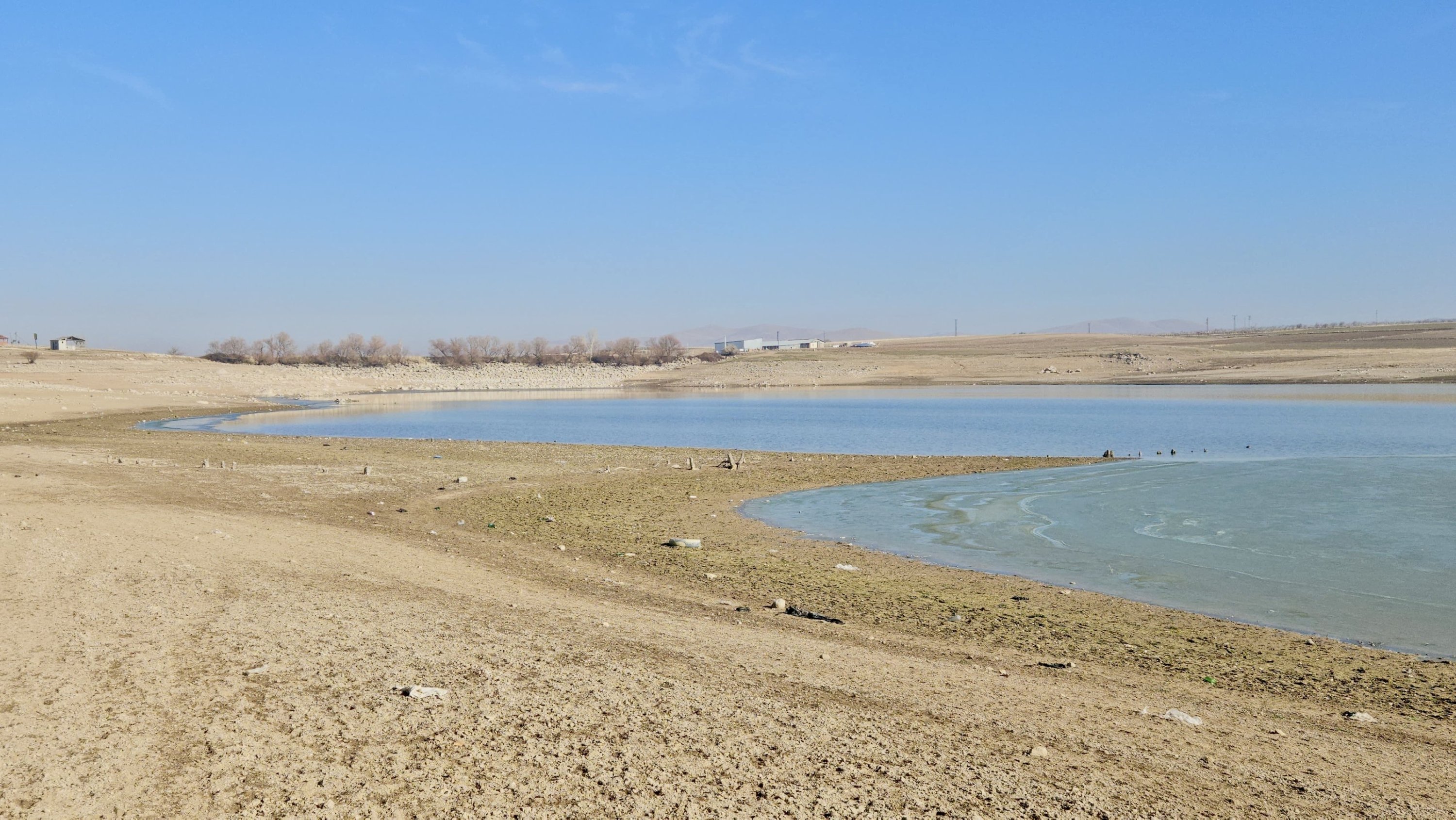
Kırşehir, in central Türkiye, is facing increasing drought pressure after recording one of the lowest rainfall levels in the past 65 years, prompting experts to warn that conscious water use and the adoption of efficient agricultural practices are no longer optional but essential.
According to data from the General Directorate of Meteorology, annual precipitation in Kırşehir has shown a consistent downward trend in recent years, despite short-term fluctuations. In 2025, the province ranked among the regions experiencing the lowest rainfall levels recorded over the last six and a half decades.
Academics from Kırşehir Ahi Evran University (KAEÜ) say the decline in precipitation, combined with above-average temperatures, is placing significant strain on surface and groundwater resources, with visible consequences for agriculture and daily life.
Professor Sultan Kıymaz from the Department of Biosystems Engineering at KAEÜ’s Faculty of Agriculture said rainfall in the province has remained below long-term averages for several consecutive years.
Referring to the General Directorate of Meteorology’s Regional Areal Precipitation Assessment data, Kıymaz noted that between 1991 and 2020, Türkiye recorded an average annual rainfall of 501.3 millimeters, while the Central Anatolia Region received 348.2 millimeters. During the same period, Kırşehir’s average stood at 292.2 millimeters.
She explained that while rainfall levels in 2024 were relatively close to seasonal norms, a sharp decline followed. Last year, total precipitation fell to 378.3 millimeters nationwide, 230.3 millimeters in Central Anatolia, and approximately 213 millimeters in Kırşehir.
Kıymaz also highlighted that rainfall in November and December of last year, as well as in January this year, remained well below expectations, while regional temperatures continued to exceed seasonal averages.
“This combination of low precipitation and higher temperatures has directly affected water reserves,” she said. “Ponds, reservoirs, and other surface water sources have declined significantly, and some have dried up completely. Groundwater levels have also dropped to critical levels.”
She added that irregular rainfall patterns driven by climate change, along with population growth and rising food demand, have intensified pressure on water resources and altered consumption patterns.
Underlining the need for immediate action, Kıymaz said reducing the province’s vulnerability to drought requires both institutional and individual responsibility.
“Our ministry has launched a nationwide water efficiency mobilization, which is an important step. However, individuals also have a role to play. Water must be used consciously,” she said. “In Türkiye, around %77 of water consumption is in agriculture, but domestic and industrial use also place demands on limited resources. Efficient use and proper management are critical.”
Kıymaz stressed that modern irrigation systems, automation, and correct watering techniques could significantly reduce water loss in agriculture, adding that public awareness and education remain insufficient.
“There is no life without water. Awareness must be strengthened, and training programs for both individuals and farmers should be expanded,” she said.
Meanwhile, associate professor Ramazan Ayrancı from KAEÜ’s Department of Field Crops warned that insufficient rainfall could have serious implications for agricultural output, particularly for cereal crops.
“Low rainfall negatively affects germination and tillering stages in cereals,” Ayrancı said. “In areas exposed to water stress, crop development may be delayed and yield losses are likely.”
He emphasized that agricultural planning must account for crop type, soil conditions, regional climate, and expected rainfall levels.
“In this region, priority should be given to crops that consume less water. For cereals, drought-resistant varieties that maintain productivity under dry conditions must be preferred,” he said.
Ayrancı also noted that leaving land fallow during dry years allows rainfall to be stored in the soil, supporting crop emergence in the autumn and helping preserve moisture reserves.
He added that sustainable farming practices, including crop rotation with low water-consumption plants, can help minimize the impacts of drought.
Across Kırşehir, the effects of prolonged dryness are becoming increasingly visible. Many ponds used for agricultural irrigation have reached near-dry conditions, while numerous roadside and village fountains have stopped flowing entirely, underscoring the urgency of coordinated water management and long-term adaptation strategies.