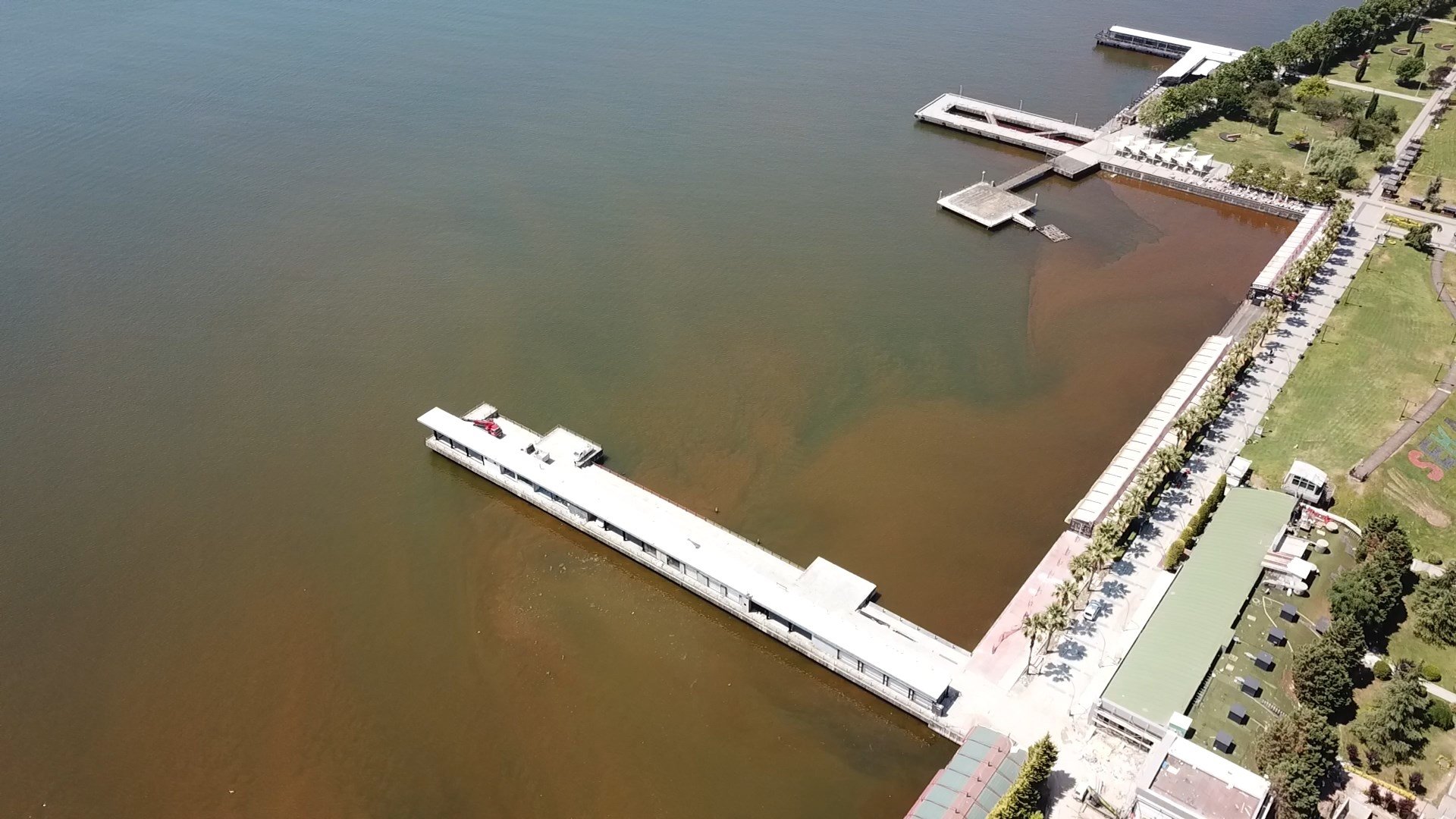
In Izmit, northwestern Türkiye, parts of the coastal waters have turned brown, prompting an investigation and concern.
Aerial footage captured the discolored areas in Izmit Bay, while environmental teams from Kocaeli Metropolitan Municipality have begun sampling to determine the cause.
According to professor Halim Aytekin Ergül of Kocaeli University's Biology Department, the phenomenon is caused by a massive bloom of a phytoplankton group known as dinoflagellates. He explained that this occurrence, although not desirable, is occasionally seen in coastal ecosystems such as Izmit Bay and Gemlik Bay, especially during seasonal transitions when changes in temperature and wind patterns affect marine life.
“This is technically a result of the sudden increase in the population of dinoflagellates, particularly Prorocentrum micans. Though natural, it can harm other organisms in the ecosystem, such as amphipods and macro-benthic species,” Ergül stated.
Even though wastewater treatment plants around Izmit Bay use advanced technology, the dense local population and high discharge levels contribute to such environmental imbalances. Meteorological factors such as wind can stir up nutrient elements in the water, further encouraging such algal blooms.
While Prorocentrum micans does not pose a direct health threat to humans, its presence can disrupt local ecosystems. “In one of our previous studies, we observed that these organisms clogged the gills of amphipods, which fish feed on, causing mass die-offs,” he noted.
Ergül also warned of its link to mucilage (also known as “sea snot”), as Prorocentrum micans is one of the organisms known to contribute to the phenomenon. He stressed the importance of enhancing wastewater treatment plants and limiting discharge to prevent these blooms from recurring.
Ergül highlighted the growing strain on the region's natural capacity due to population increases, citing a report that shows about 30,000 people are added to Kocaeli’s population annually. “Every person added to the population ultimately affects the sea. This burden exceeds what the environment can handle. Long-term planning and serious preventive measures are urgently needed,” he said.