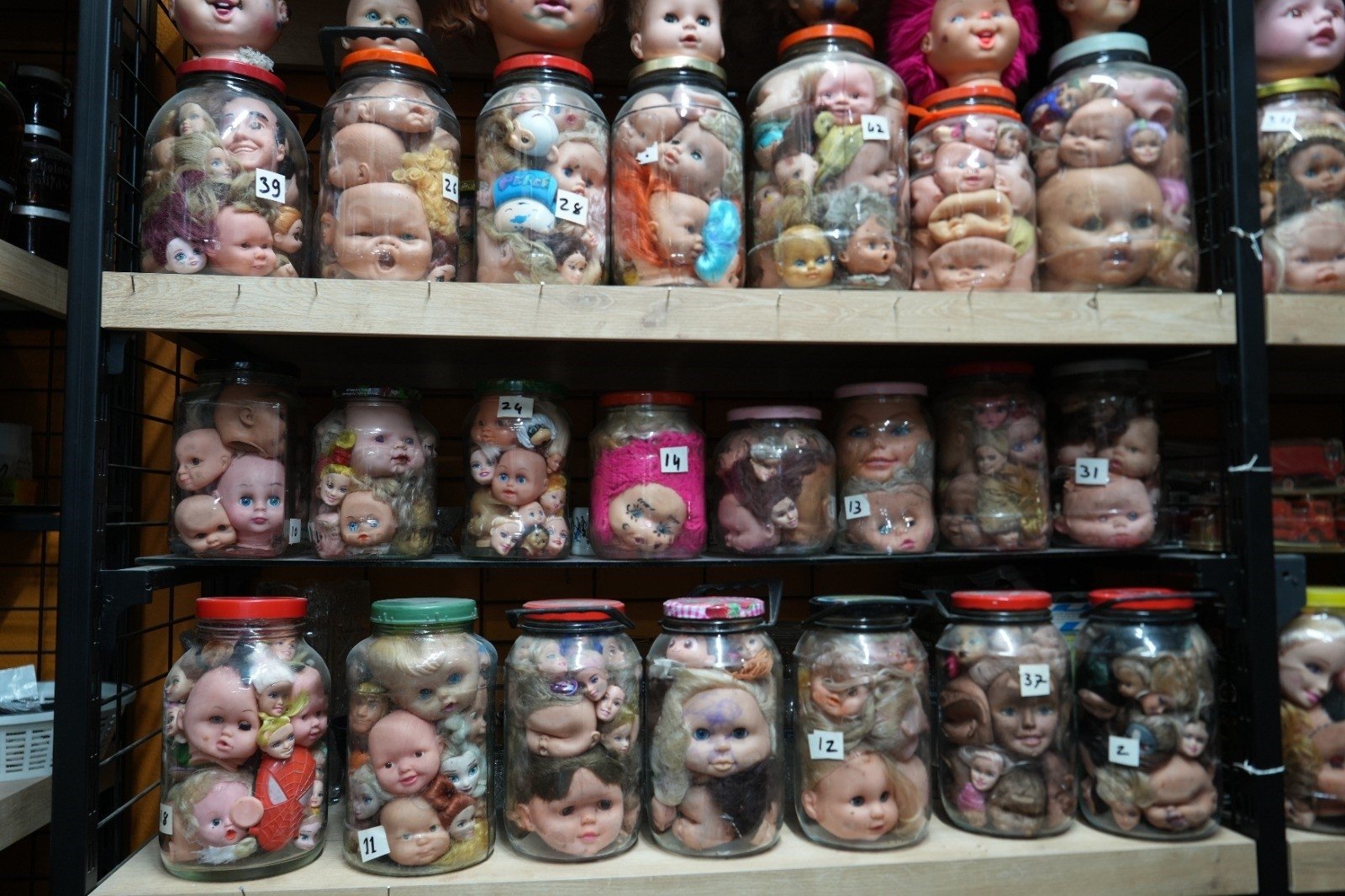
Thousands of toy doll heads stored in jars and aquarium tanks are now on display in Izmit, Kocaeli, in northwestern Türkiye, after an antique shop owner purchased the extensive and unusual collection from a solitary collector who dedicated nearly 50 years to gathering them.
Hamdi Dinibütünoğlu, who runs an antique shop in the Cedit neighborhood of Izmit, said he learned two years ago that an 82-year-old man living alone in Kütahya had amassed a vast assortment of doll heads unlike any other in Türkiye. He traveled to meet the collector, who had begun the accumulation in his mid-30s and continued into his 80s, scouring flea markets, antique stalls, secondhand dealers and even dumpsters for discarded toys.
Dinibütünoğlu said that when he first saw the scene inside the man’s old house, with thousands of heads lined in jars and stacked across every surface, he knew he wanted to take responsibility for the archive. “When I saw it, I said, ‘This must be mine,’” he recalled, noting that persuading the collector took 15 to 20 days. “He did not want to let go. He did not want to speak at first. He was attached to them.”
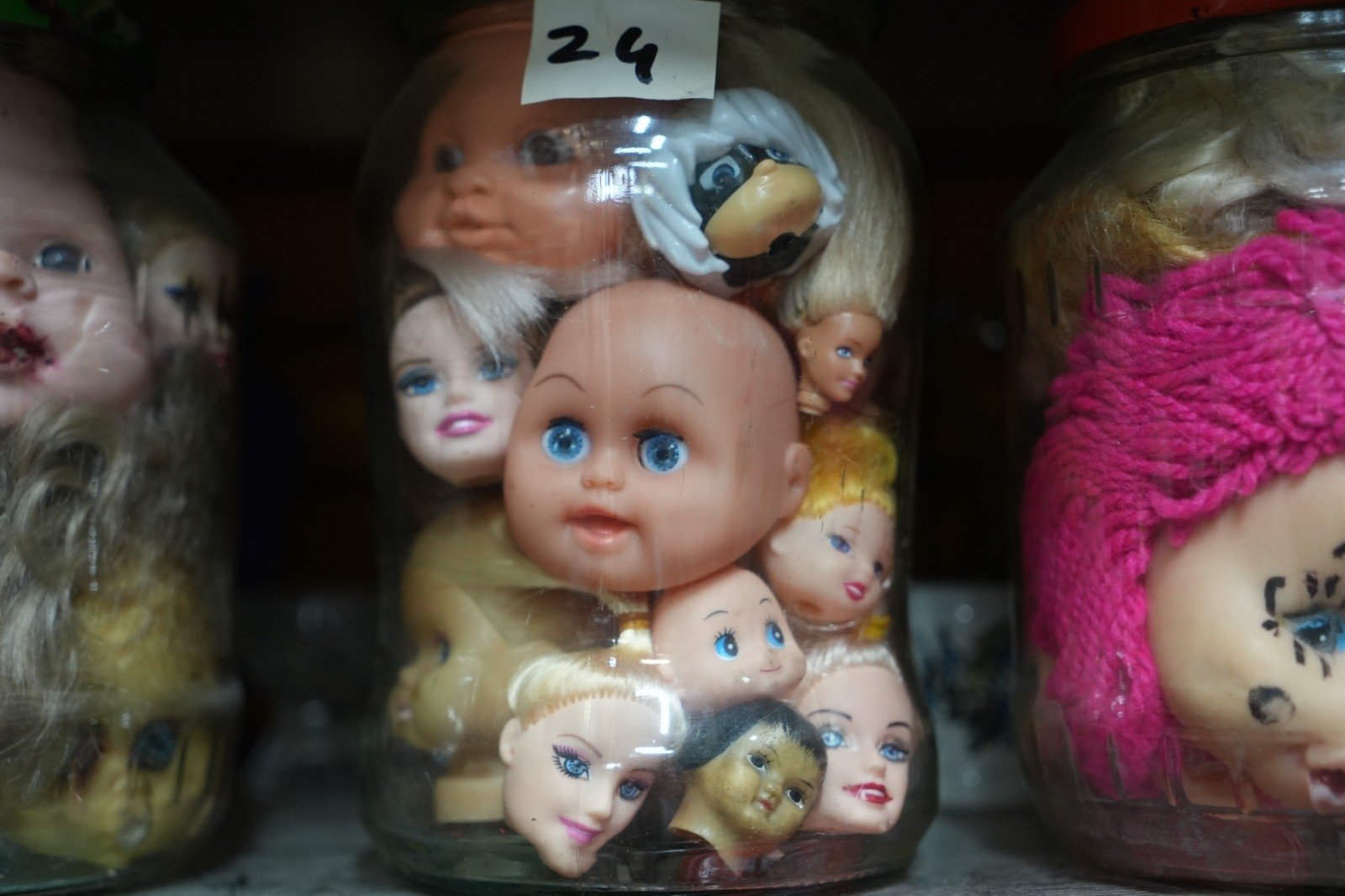
The collector, who died last year, initially stored the dolls with their bodies, Dinibütünoğlu said. But the accumulation grew too large. Over time, he removed the bodies and kept only the heads, which he compressed gently into jars using wooden tool handles to avoid distorting their forms. When his hands weakened and lifting jars became difficult, he moved the display into large aquariums.
The house, according to Dinibütünoğlu, resembled a private museum. Shelves, storage rooms and even a coal cellar were lined with glass containers filled with heads. “He lived completely alone. These were his companions,” he said. “He told me, ‘Babies always smile, son.’ That stayed with me. Babies smile in every culture, every language, every home.”
Dinibütünoğlu said the emotional context shaped his understanding of the collection. “He didn’t want to talk about the origin story,” he said. “He said, ‘Don’t dig there.’ Everyone has a story. His must have been heavy. But he smiled, and he said the dolls always smiled too.”
The pieces range from the 1940s to the early 2000s, with cheerful, sad, stern, exaggerated and porcelain-like faces mixed together. Some have vivid coloring; others are faded or cracked, representing decades of use, abandonment and recovery. Dinibütünoğlu said the collector had rescued many from trash bins or damaged toy lots, referring to them as “discarded but not forgotten objects.”
Reactions to the display vary widely, he said. Some visitors see sweetness, others see horror; some compare the jars to food preserves and ask “what kind of pickles” they are. Children tend to show curiosity, while adults recoil.
“Children don’t fear them. Adults fear them,” Dinibütünoğlu said. “Children see faces that laugh. Adults see what they want to see in their own minds.”
Dinibütünoğlu said the exhibit demonstrates the unpredictability of collectors. “You never know what someone will collect,” he said. “People collected napkins, ribbons and pins. But a lifetime of doll heads is rare. This is the only one of its kind in Türkiye.”
The pieces, all transferred with their jars and aquariums, remain intact in Izmit. Some additional heads remain stored in bags in the shop’s back area, awaiting categorization. Interior designers and horror attraction operators have expressed interest in leasing or purchasing segments, but Dinibütünoğlu said he plans to keep the collection whole to honor its origin.
“He entrusted them to us,” he said. “He didn’t want them to end up in the garbage after he was gone. Now I am the caretaker. He collected them so they would not be alone. They will not be alone.”