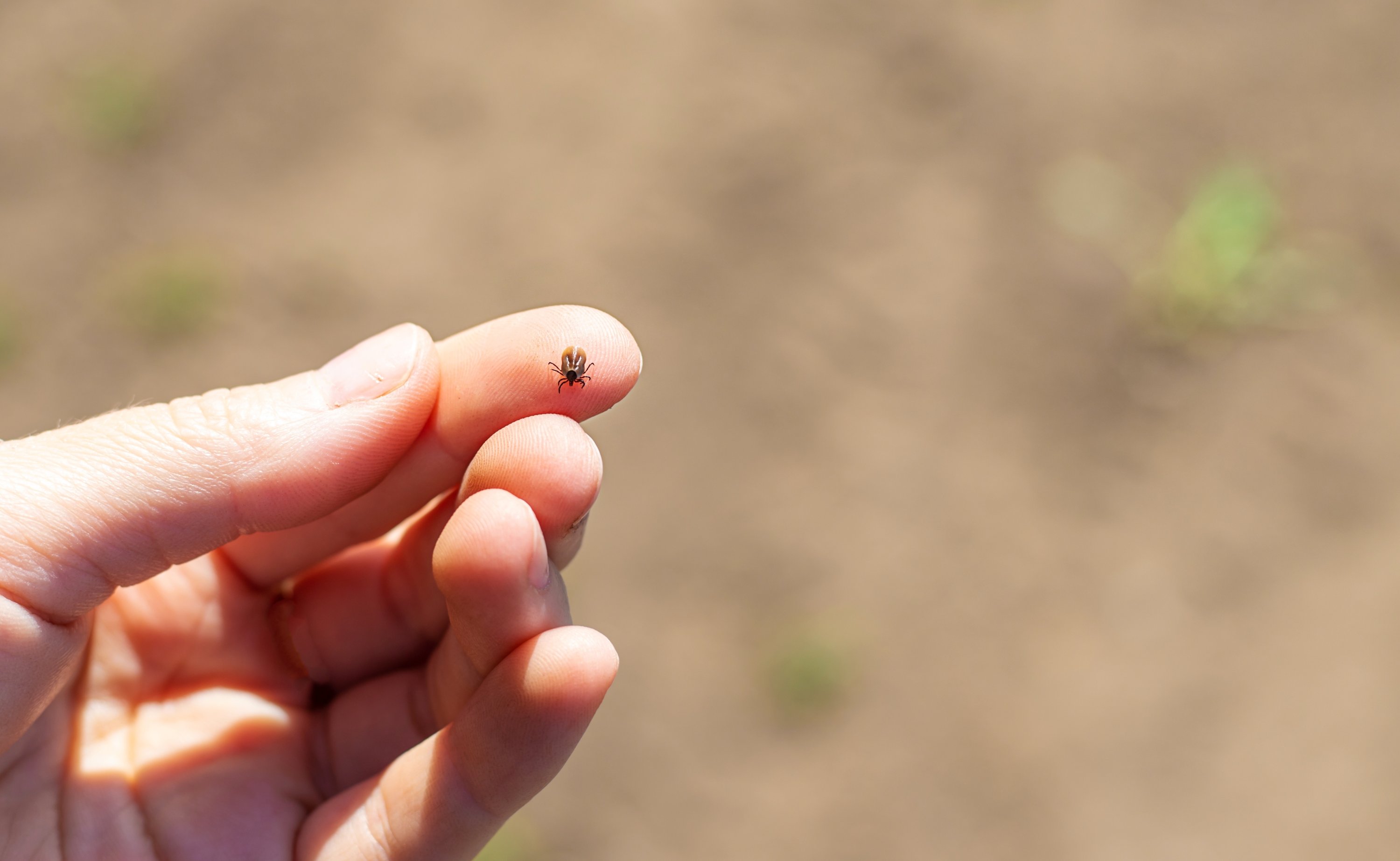
Turkish researchers are developing an artificial intelligence-powered mobile application that will allow users to identify tick species from smartphone photographs and determine whether a tick may be among those associated with Crimean-Congo hemorrhagic fever (CCHF).
The project, titled “A Smartphone-Based Artificial Intelligence Model for Rapid, Low-Cost and Accessible Identification of Tick Species in Türkiye,” is led by Hacettepe University Biology Department faculty member Olcay Hekimoğlu and has received support from the Scientific and Technological Research Council of Türkiye (TÜBITAK).
Researchers will create a comprehensive database of tick species commonly found in Türkiye and important to human and animal health. The database will include photographs taken from different angles and under varying conditions.
The images will be used to train an AI model capable of providing a rapid preliminary identification based on a photograph taken with a smartphone.
The system will initially focus on eight tick species, with particular attention given to Hyalomma marginatum, a species of significance in the transmission of CCHF.
The researchers plan to develop the AI model into a web and mobile application that can eventually be used by farmers, livestock producers, health care workers and people spending time outdoors.
Users will be able to photograph a tick after removing it from the human or animal body and upload the image for analysis. If the photograph is blurry or insufficient for identification, the system will not provide a forced identification but instead ask the user to take another photograph or seek expert evaluation.
Hekimoğlu said the project aims to avoid a system that performs well only under laboratory conditions.
“We will also test the application using different phones, under different lighting conditions and with photographs taken in real-world field environments,” she said.
The application is also being designed to operate offline, allowing it to be used in rural areas where internet access is limited.
Researchers will build the training database using reliable specimens whose species identification will be confirmed through morphological characteristics and DNA analysis.
“We will not simply teach the AI that ‘this is a tick’; we will teach it which image belongs to which species using reliable specimens,” Hekimoğlu said.
The system will be designed to remain updateable, with additional tick species to be incorporated in future versions.
Hekimoğlu said the application is specifically designed to photograph ticks after they have been removed from the body because ticks attached to the skin may have much of their bodies obscured or may change shape as they become engorged.
She stressed that the application's results will not constitute a medical diagnosis but will provide preliminary information about the possible tick species.
CCHF has caused more than 17,000 cases and hundreds of deaths in Türkiye since 2002, according to Hekimoğlu.
She said the project aims to provide faster and more accessible preliminary information about ticks while contributing to scientific data on tick species and their distribution across Türkiye.
The project is planned to run for three years. Researchers will test the AI model under both controlled and real-world conditions before making the application available for public use.