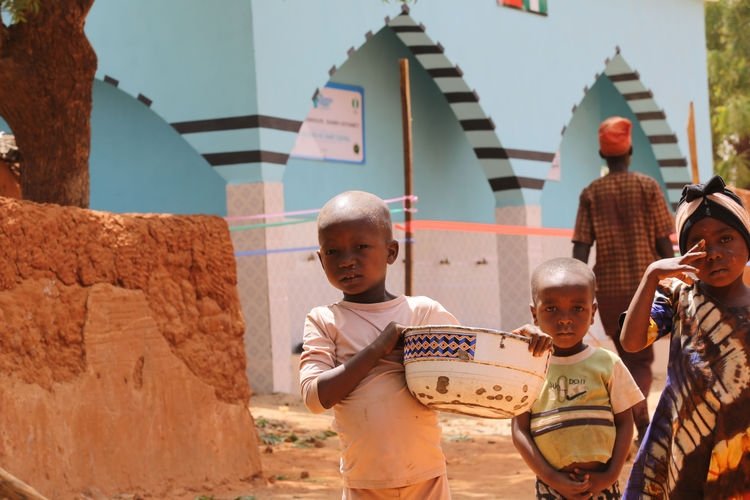
As global water scarcity intensifies and access to clean water becomes an increasingly critical challenge, Türkiye’s water initiatives in Africa are drawing attention for moving beyond conventional well-drilling efforts toward more sustainable and innovative delivery models.
Turkish institutions and nongovernmental organizations operating particularly in Nigeria and Cameroon are prioritizing projects designed to ensure long-term and uninterrupted access to water.
The Nigeria-based Daru’l Erkam Foundation, working in collaboration with various Turkish NGOs, has commissioned nearly 1,000 water wells across 12 states to date. More recently, the organization has shifted its strategic focus toward sustainable water management frameworks.
Within these projects, responsibility for the maintenance and operation of water wells is transferred to local communities, supported by technical training programs and the establishment of water management committees.
Given limited access to energy in rural areas, solar-powered water pumping systems are being widely deployed, reducing operational costs while ensuring a continuous water supply.
The Türkiye Diyanet Foundation (TDV) in Nigeria has shifted its approach to water projects beyond well drilling, emphasizing the importance of hygiene, sanitation and community awareness programs.
In addition to expanding access to water, the TDV integrates education on proper usage and conservation, recognizing its critical role in reducing waterborne diseases, particularly in rural areas.
Projects increasingly incorporate rainwater harvesting, efficient utilization of groundwater resources and water-saving practices, ensuring a more sustainable and long-term impact on local communities.
A similar sustainability-driven approach is being implemented in Türkiye’s water projects in Cameroon.
Dr. Mekki Solmaz, TDV’s Religious Services Counselor in Yaounde, stated that the focus has shifted from simply providing access to water to ensuring continuous and long-term availability.
“In this context, we are implementing solar-powered water pump systems, water storage infrastructure and, in some areas, small-scale distribution networks,” Solmaz said.
He underscored the active involvement of local communities, noting that village-based water committees are established and entrusted with maintenance and operational responsibilities.
Solmaz emphasized that local technical personnel are trained and regular maintenance mechanisms are put in place.
“We have established systems that enable rapid intervention in case of malfunctions. Additionally, through agreements with partner organizations, a structure has been formed to cover repairs for approximately 10 years,” he said.
Referring to frequent power outages in Cameroon, Solmaz noted that all projects are designed to align with solar energy infrastructure.
“In rural areas where electricity access is limited, solar-powered systems both reduce costs and contribute to environmental sustainability,” he added.
Solmaz also indicated that TDV is actively engaged in hygiene and sanitation efforts in Cameroon, with a strong emphasis on awareness programs in schools and local communities.
He reiterated that hygiene education plays a vital role in reducing waterborne diseases, making educational initiatives just as important as physical infrastructure.
Highlighting key challenges in Cameroon, Solmaz pointed to inadequate infrastructure, dispersed rural settlements and limited financing as primary obstacles to water access. He added that Türkiye provides technical and humanitarian support in these areas through various institutions.
Experts underline the importance of prioritizing durable and sustainable systems over short-term solutions that are prone to failure in Africa’s water projects.
Türkiye’s evolving model in the region not only enhances access to water but also strengthens local capacity and promotes the efficient use of resources.
Looking ahead, there are plans to expand these initiatives to additional regions while further reinforcing sustainable practices.