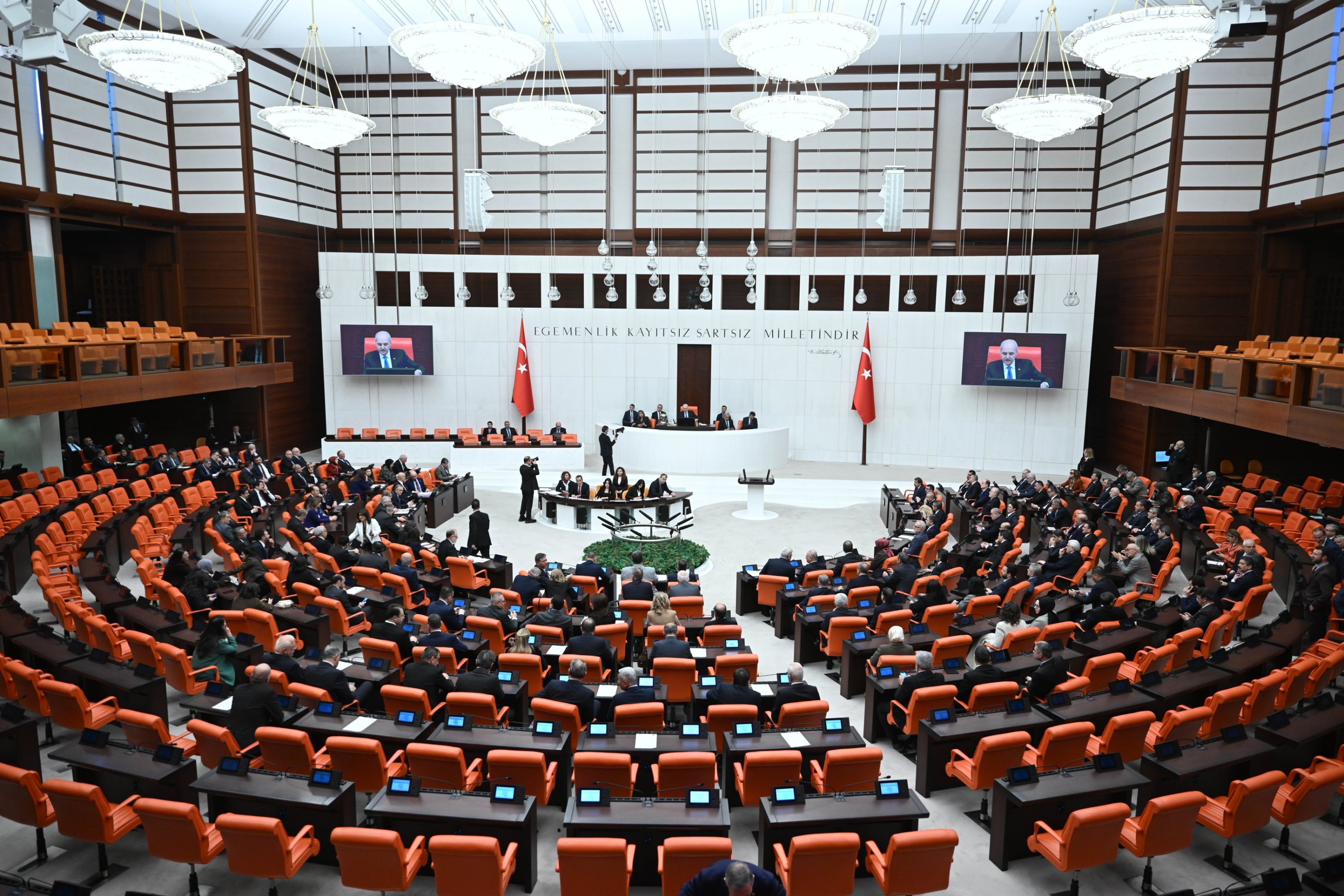
From controlled earthquake detonations to banning cousin marriages, Türkiye’s citizens have sent a series of unusual and thought-provoking requests to the Parliament’s Petition Commission.
Since May 15, 2023, the start of the 28th legislative term, the commission has received 31,441 applications reflecting the wide-ranging concerns and suggestions of citizens from all walks of life. The presidency board has reviewed 29,819 of the petitions, a quarter of which were submitted by women.
Among the submissions, some proposals stand out for their unconventional nature. Citizens have requested measures such as controlled explosions of fault lines to prevent major earthquakes, making Cabotage Day a public holiday, mandatory retirement for public employees over 65, and providing members of parliament with courses on religious culture, ethics, and decorum.
Other proposals focused on supporting jailed inventors, restricting social media use for individuals over 50, and mandating daily religious programming on television.
Some citizens also called for semi-closed swimwear requirements on beaches, the introduction of a “citizenship salary” for unemployed youth, and even the closure of some organizations, citing perceived societal harm.
Sunay Karamık, president of the Petition Commission, emphasized that these petitions provide valuable insight into societal priorities. “Parliament’s Petition Commission is not only a forum for complaints but also a platform for identifying societal needs and developing practical solutions,” Karamık said.
He highlighted the importance of on-site inspections carried out by commission members, noting that these visits allow them to directly observe the challenges raised in petitions and ensure that proposed solutions are grounded in practical, real-world evidence.
Karamık added that the Petition Commission is among the few institutional mechanisms in Türkiye that maintains direct engagement with citizens. “Our role goes beyond evaluating individual applications,” he explained. “We also identify broader societal needs reflected in these submissions and develop concrete pathways to address them.”
As a tangible example, he pointed to the commission’s recommendation that led to the official declaration of May 22 as “Financial Literacy Day,” published in the Official Gazette. He noted that the success of this initiative stems from careful analysis of citizen requests, productive collaboration with relevant institutions, and strategic efforts to bring these issues into the public sphere.
“Through these efforts, the Petition Commission demonstrates that it is not simply a forum for complaints, but a platform where citizen input drives practical, solution-oriented initiatives,” he concluded.