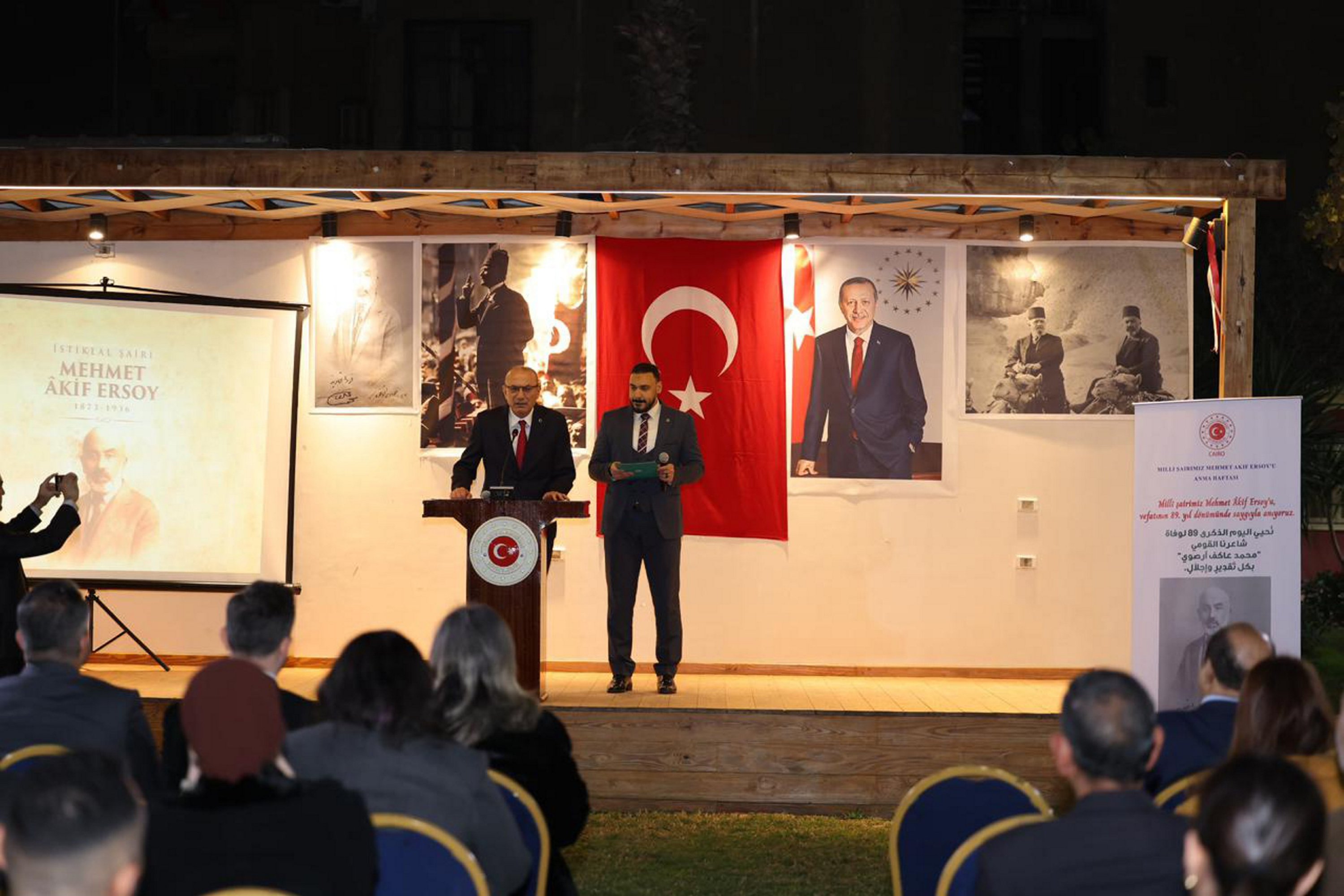
Türkiye marked the 89th anniversary of the death of Mehmet Akif Ersoy, the author of the National Anthem, with a formal commemoration ceremony held at Türkiye’s Embassy in Cairo on Sunday, underscoring his enduring literary, intellectual and historical legacy as well as his close ties with Egypt.
The ceremony, attended by more than 100 guests, brought together representatives from Egypt’s cultural and artistic circles, students of the Yunus Emre Institute (YEE), diplomats and members of the media. The program highlighted Ersoy’s role not only as a poet and intellectual but also as a key moral voice of the Turkish National Struggle.
As part of the event, the YEE delivered a detailed presentation outlining Ersoy’s life, intellectual worldview, major works and the nearly decade-long period he spent in Egypt. Particular emphasis was placed on his academic career in Cairo, where he taught Turkish Language and Literature at Cairo University and cultivated close relations with leading cultural and political figures of the time. Organizers also noted that the house where Ersoy lived in the Helwan district of Cairo remains standing today.
The program featured recitations of the National Anthem and Ersoy’s renowned poem “To the Martyrs of Çanakkale,” performed in both Turkish and Arabic, reflecting the shared cultural resonance of his work and its continued relevance across linguistic and national boundaries.
Speaking at the ceremony, Türkiye’s Ambassador to Cairo Salih Mutlu Şen said the National Struggle was won not only through military means but also through faith, conviction and moral strength. He stressed that the National Anthem, written by Ersoy, powerfully embodies this spirit, while noting that Ersoy played a critical role during the struggle by traveling across Anatolia and delivering sermons that reinforced unity and resistance among the public.
Şen also described “To the Martyrs of Çanakkale” as a defining symbol of the Turkish nation’s epic resistance during the World War I, adding that the National Anthem represents the nation’s rebirth and collective resolve. He concluded by expressing appreciation to Egypt for having hosted Ersoy for many years, emphasizing the historical and cultural bonds between the two countries.