Türkiye marked the 103rd anniversary of the republic’s founding on Thursday with ceremonies, military demonstrations and cultural performances, as communities across the country commemorated the establishment of the republic on Oct. 29, 1923.
Events brought together residents, students, veterans, military personnel and local officials, with celebrations highlighting the country’s independence struggle, regional traditions and the legacy of founder Mustafa Kemal Atatürk.
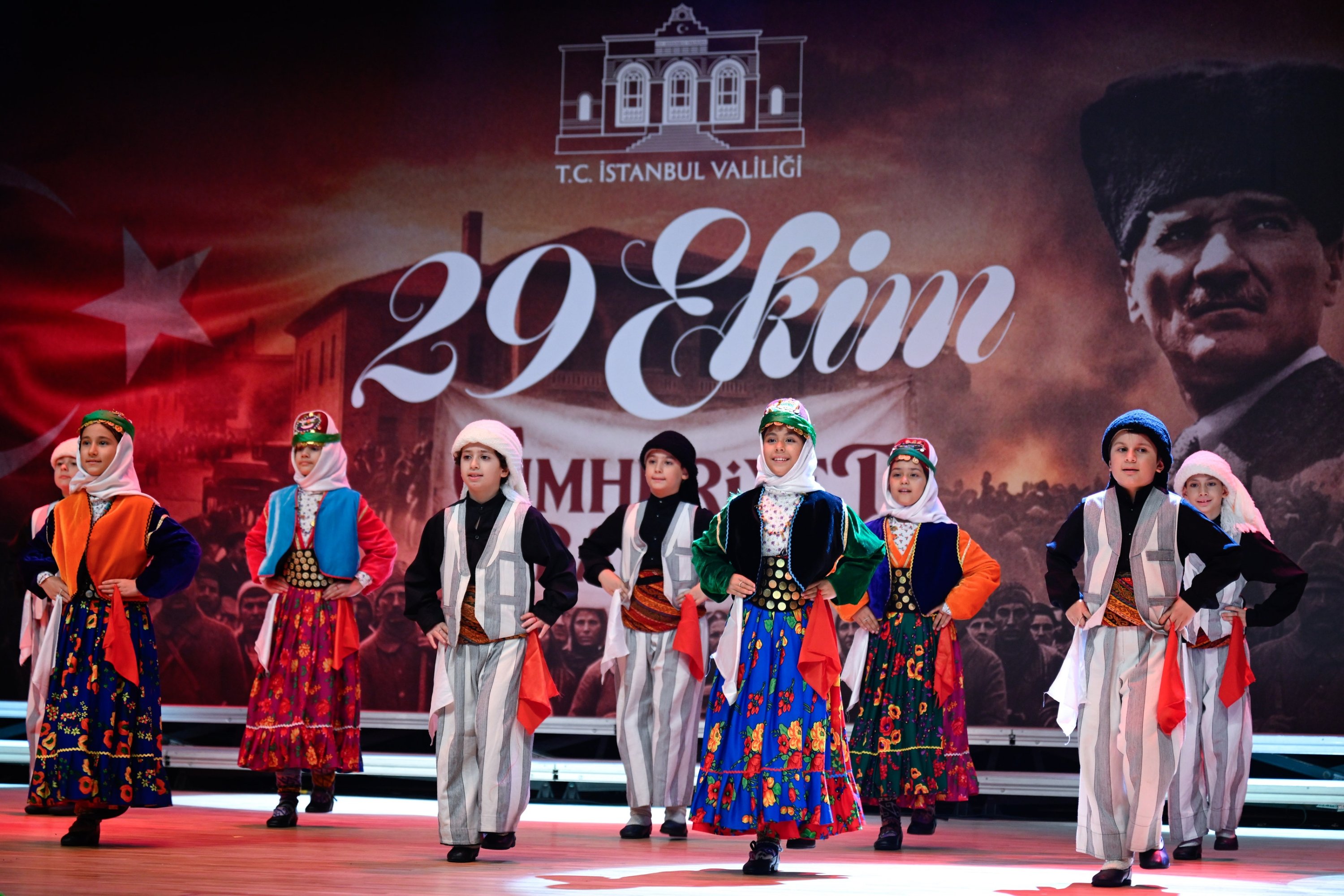
In Istanbul, officials and residents gathered for a ceremony featuring student musicians and folk dances representing different regions. Governor Davut Gül called on younger generations to preserve the republic’s legacy through education, production and development.
Military demonstrations provided some of the day’s most distinctive scenes. In Samsun, a coastal city in the Black Sea region where the national struggle for independence began in 1919, a coast guard helicopter flew overhead carrying a Turkish flag. Commandos also performed demonstrations, followed by a concert from a military band.
In Kastamonu, in Black Sea province, commandos demonstrated close-combat techniques, while ceremonies elsewhere included performances by military units and traditional bands.
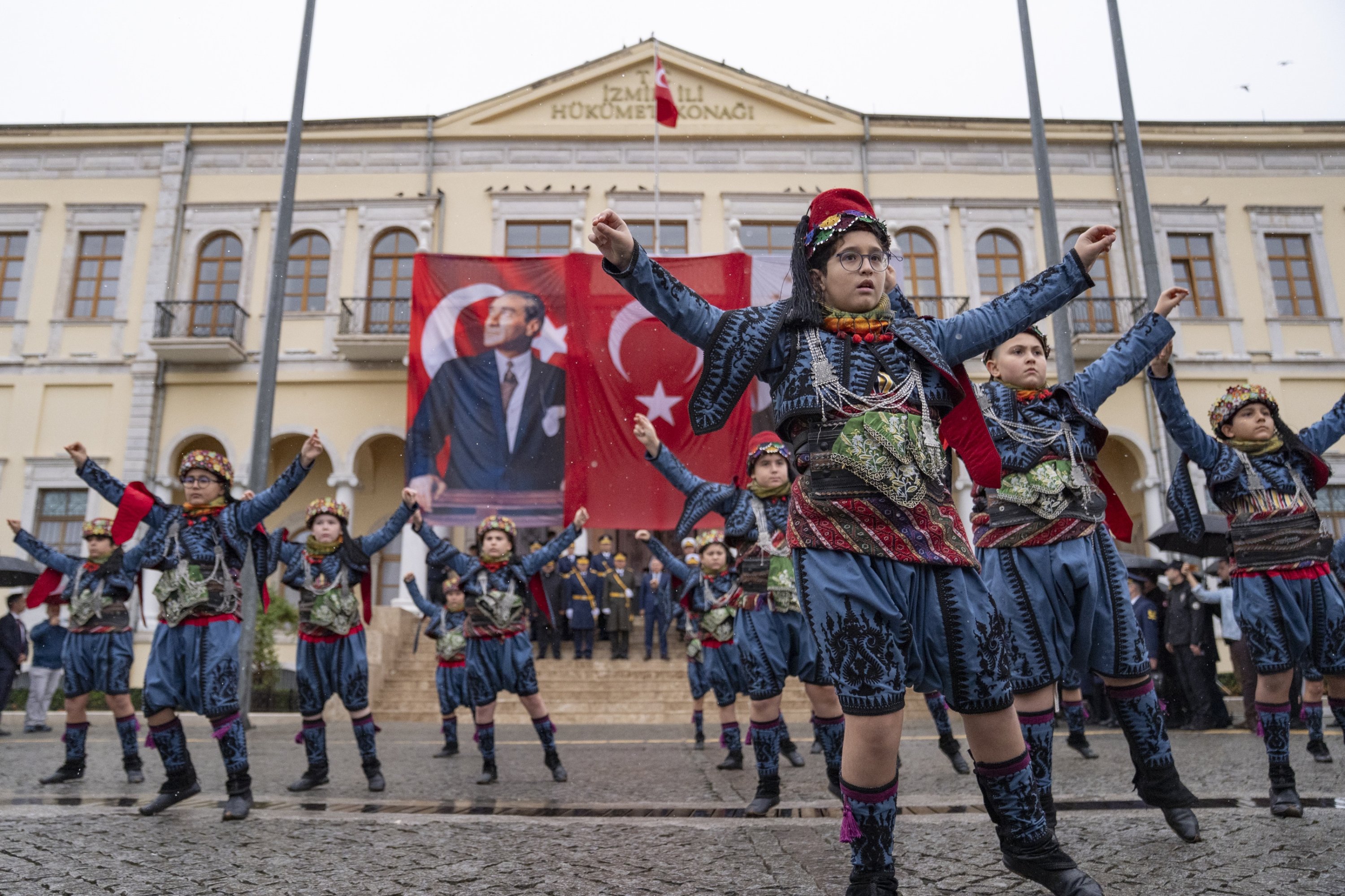
In Izmir, in western Türkiye, celebrations included folk dances and a Turkish flag woven by teachers, students and residents over several days. The flag was presented to Governor Süleyman Elban before officials laid wreaths at the Atatürk Monument in Cumhuriyet Square.
Cultural heritage featured prominently in celebrations across the country.
In Mardin, in southeastern Türkiye, the Languages and Religions Children’s Choir performed songs and folk music in four languages, reflecting the city’s diverse cultural and linguistic traditions.
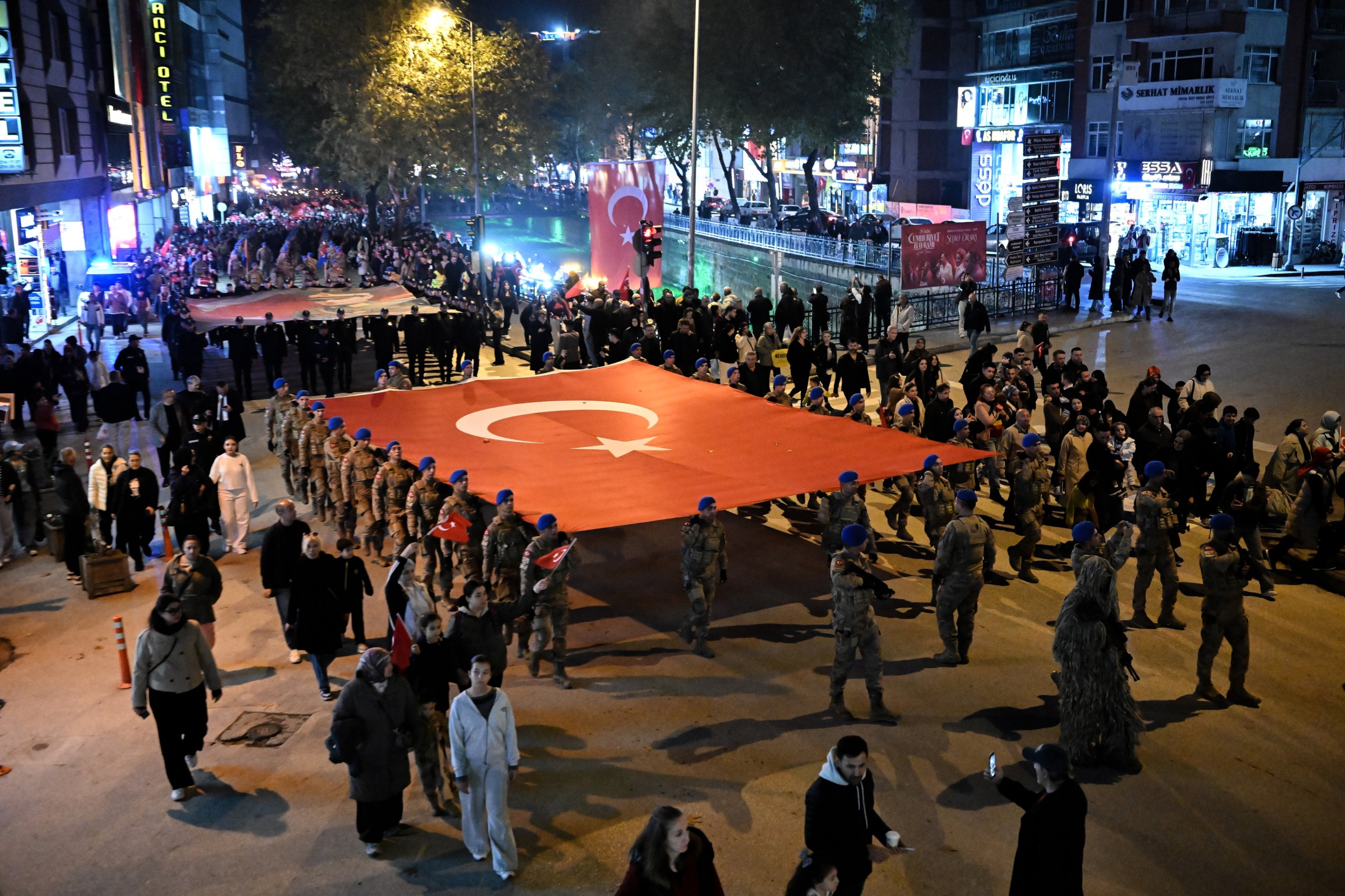
In Çankırı, in central northern Türkiye, a traditional performance showcased local cultural heritage. In Amasya, in the Black Sea region associated with the Amasya Circular of 1919, residents gathered in a square carrying Turkish flags.
Students across the country participated in poetry readings and performances, while winners of Republic Day art, poetry and essay competitions received awards.
In speeches delivered across western, central, eastern and southeastern Türkiye, provincial governors highlighted the independence struggle that preceded the Republic’s founding and the importance of preserving its legacy for future generations.
The Republic of Türkiye was declared by the Grand National Assembly (TBMM) of Türkiye on Oct. 29, 1923, following a yearslong struggle to secure the country's independence and establish a government based on national sovereignty.
The process began with the occupation of parts of the country by Allied powers. Atatürk’s arrival in Samsun on May 19, 1919, marked a turning point in the national movement for independence. The Erzurum and Sivas congresses later that year helped unite the movement around independence and national sovereignty.
The opening of the TBMM in Ankara on April 23, 1920, established a new center of political authority based on national sovereignty. Turkish forces subsequently secured victory in the War of Independence, and the Treaty of Lausanne, signed on July 24, 1923, secured international recognition of Türkiye's independence and sovereignty.
Ankara had been designated the capital on Oct. 13, 1923, but the country's system of government remained unresolved. A political crisis emerged later that month after the government resigned and efforts to form a new cabinet failed.
Atatürk and Ismet Inönü prepared a constitutional amendment to establish the republic formally. Parliament approved the proposal on Oct. 29, 1923, declaring the Republic of Türkiye with the unanimous vote of the 158 lawmakers present.
Atatürk was then elected the country's first president, receiving all 158 votes. The declaration established the republic as the system of government and gave institutional form to the principle of national sovereignty.
A decree issued in October 1924 introduced arrangements for commemorating the anniversary, and legislation adopted in April 1925 formally established Oct. 29 as a national holiday.