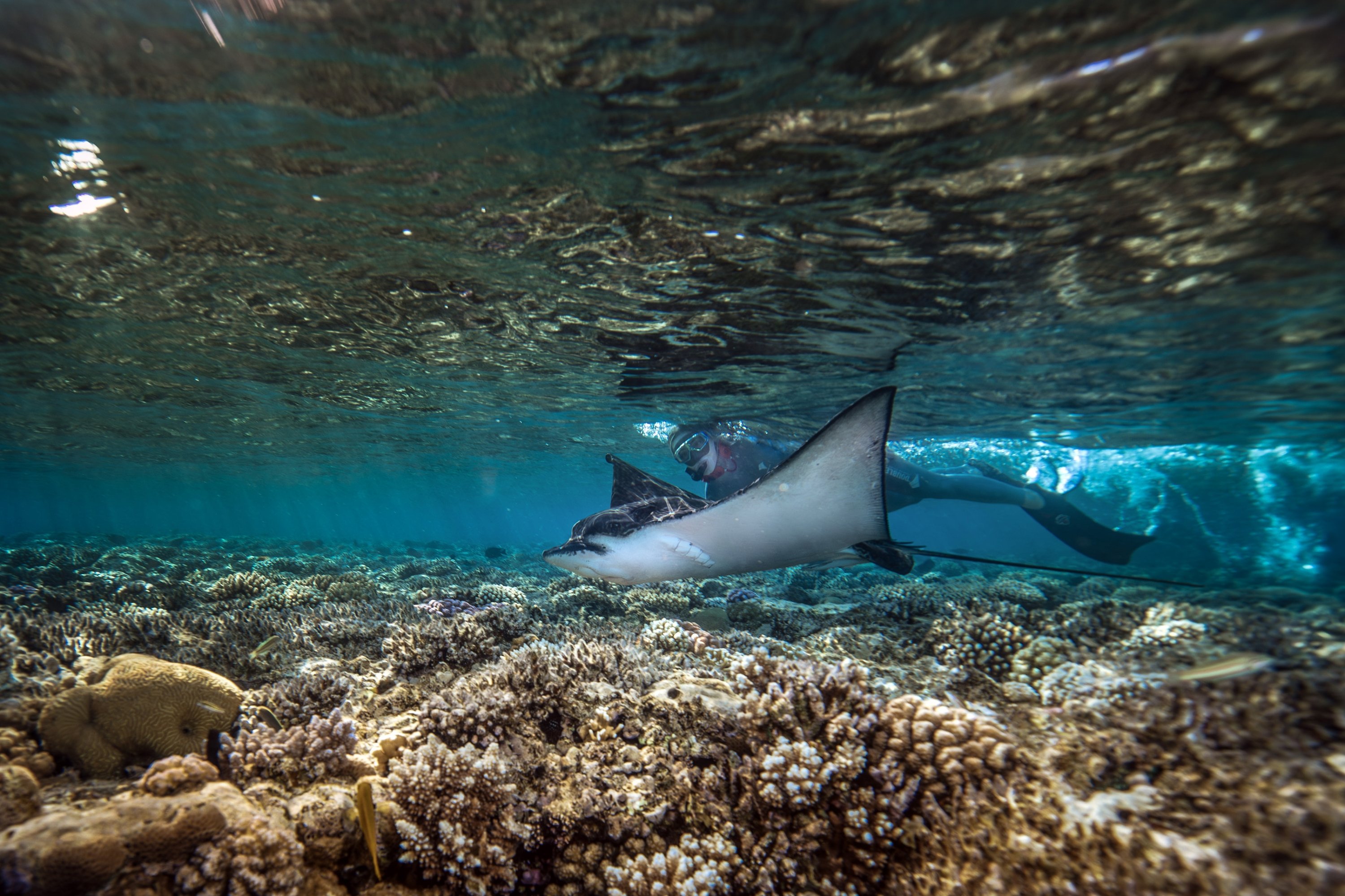
As the world marks World Oceans Day on June 8, marine scientists are warning that oceans are approaching critical ecological limits under the combined pressures of climate change, pollution and biodiversity loss, while highlighting COP31 in Antalya as a key opportunity to place ocean issues at the center of global climate discussions.
Established by the U.N. in 2008, World Oceans Day aims to raise awareness about the importance of oceans and the growing challenges they face. This year's theme calls for a renewed relationship between humanity and the oceans, emphasizing their role in sustaining life and regulating the Earth's climate.
Experts say oceans have long served as a buffer against climate change by absorbing a significant share of carbon emissions and excess heat generated by human activities. However, rising sea temperatures, acidification, oxygen depletion, plastic pollution and habitat degradation are increasingly threatening marine ecosystems worldwide.
Dr. Cem Gazioğlu, director of the Institute of Marine Sciences and Management at Istanbul University, said oceans are under unprecedented pressure from multiple environmental stressors.
"Oceans absorb nearly one-third of global carbon emissions and more than 90% of excess heat caused by human activities, but their capacity to continue providing these services is being tested," Gazioğlu said.
He noted that discussions emerging from the recent U.N. Ocean Conference should be closely linked to preparations for COP31, arguing that climate policy and ocean governance can no longer be addressed separately.
Scientists also point to challenges in achieving the global "30x30" conservation target, which seeks to place at least 30% of the world's land and marine areas under effective protection by 2030. While the goal has gained international support, limited financing continues to hinder implementation efforts.
Plastic pollution remains another growing concern. Experts warn that millions of tons of plastic entering the oceans each year eventually break down into microplastics, which are now widely found throughout marine food chains.
The effects of climate change are becoming increasingly visible in the seas surrounding Türkiye. Researchers cite recurring mucilage risks in the Marmara Sea, declining oxygen levels in the Black Sea, marine heat waves in the Mediterranean and mounting coastal pressures in the Aegean Sea as signs of a rapidly changing marine environment.
Marine scientists say stronger monitoring systems, satellite-supported observation networks and artificial intelligence-based early warning technologies will be essential for improving marine management and adaptation strategies in the years ahead.
Dr. Barış Salihoğlu, director of the Institute of Marine Sciences at Middle East Technical University, said Antalya's hosting of COP31 presents a strategic opportunity for Türkiye to promote ocean-related solutions within international climate negotiations.
"We should view COP31 not only as a climate summit but also as a strong Ocean COP because some of the most visible impacts of climate change are occurring in marine ecosystems," Salihoğlu said.
He added that warming waters, acidification, oxygen loss, plastic pollution and habitat destruction are advancing simultaneously, requiring a comprehensive approach that goes beyond traditional conservation efforts.
"Today, the discussion is no longer only about protecting the seas. It is about redesigning how humanity interacts with and uses marine resources," he said.
Meanwhile, scientists monitoring regional waters report significant ecological shifts across the Mediterranean and Black seas.
Dr. Bayram Öztürk, president of the Turkish Marine Research Foundation (TÜDAV), said the Mediterranean has been undergoing a process of "tropicalization" while the Black Sea has shown signs of "Mediterraneanization" over the past several decades.
According to Öztürk, warming waters have accelerated the spread of non-native species, particularly those migrating from the Red Sea through the Suez Canal. The number of such species established in the Mediterranean has risen dramatically over the past century, reshaping marine ecosystems and highlighting the growing impact of climate change on biodiversity.