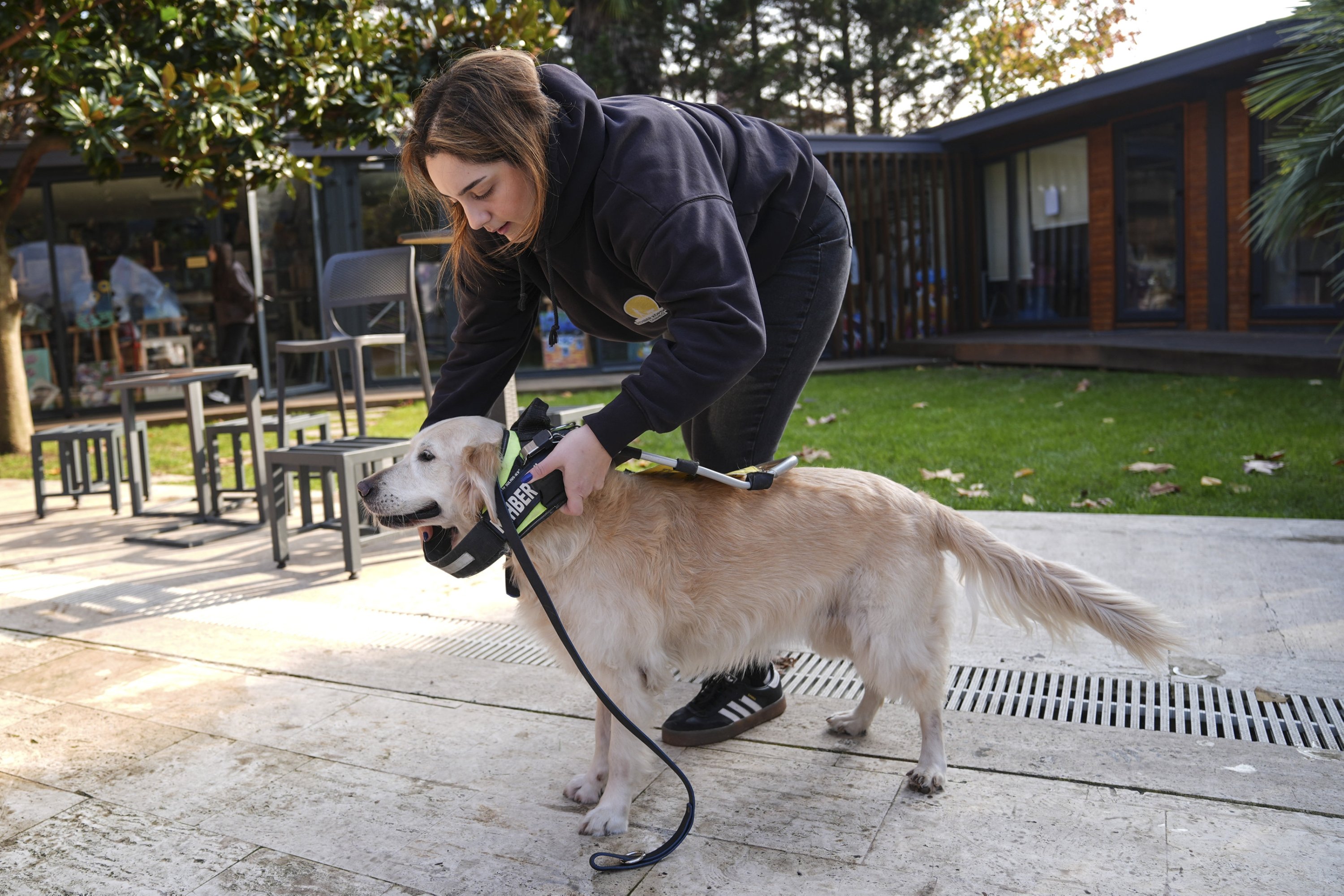
Guide dogs play a critical role in empowering visually impaired individuals by enabling safe, swift and independent mobility. These specially trained dogs undergo an extensive preparation period of over two years, encompassing everything from early socialization as puppies to acclimatization with their task harnesses and mastering complex navigation skills without hesitation. This rigorous training ensures that guide dogs can effectively assist their handlers in overcoming physical obstacles and confidently engaging in everyday life.
The importance of guide dogs cannot be overstated. They serve as indispensable companions who help visually impaired people navigate sidewalks, stairs, doors, and other environmental challenges by accurately detecting obstacles and changes in direction. This not only enhances the safety of their users but also significantly boosts their confidence, allowing them to participate in social and public life on equal footing.
In Türkiye, the Guide Dogs Association is at the forefront of training and providing guide dogs to support visually impaired individuals in gaining greater independence and self-assurance. Potential guide dogs are carefully selected from an early age based on stringent health and temperament criteria. Breeds that exhibit strong social tendencies, heightened attentiveness, and rapid adaptability to various environmental stimuli are generally preferred for this demanding role.
Puppies are introduced into the program at approximately 2 months old, initially entering the care of volunteer foster families where their foundational training begins. During this phase, puppies learn essential social skills, including toilet training, adapting to indoor living, interacting with people, navigating public transportation, and becoming comfortable with different surfaces and crowded environments. This stage is crucial in preparing them for the challenges ahead.
Following the completion of the foster family period, the dogs transition to professional training where they acquire more specialized skills. Their curriculum includes path following, obstacle detection, stair and door navigation, safe stopping and starting, awareness of traffic flow, and techniques to keep their handlers away from potential hazards. This phase ensures the dogs can perform their duties reliably in real-world conditions.
Matching the right guide dog to the right visually impaired individual is a carefully managed process. Trainers assess the dog’s personality and physical capabilities alongside the prospective user’s lifestyle, mobility needs and environmental context to ensure an optimal pairing. This compatibility is vital for a successful working relationship.
Once paired, the user and guide dog begin joint training, initially practicing routes and commands under the supervision of an instructor. The training then extends to real-life scenarios such as the user’s home, workplace, and daily routines. This comprehensive approach ensures that tasks like using public transport, safely navigating traffic, detecting obstacles, and effective communication between dog and handler are flawlessly executed.
The support provided by the Guide Dogs Association does not end with delivery. Regular follow-up evaluations are conducted to monitor the well-being of both the dog and the user, with additional training provided if necessary. Financial responsibilities related to food, veterinary care, and general upkeep of the guide dogs are covered by the program, while users maintain the dog’s welfare.
Guide dogs retire after serving for approximately 8 to 10 years, after which they are placed with suitable families to enjoy their retirement comfortably.
Currently, Türkiye has 11 active guide dogs. Nurdeniz Tunçer, a visually impaired lawyer and president of the Guide Dogs Association, shared insights on the organization’s nine years of active work in this field. She highlighted the progress made since their first guide dog, Kara, began service, noting the increased accessibility to public transportation, entertainment venues, courthouses, and other public spaces. Tunçer also pointed out ongoing challenges, such as some taxi drivers refusing to accept guide dogs, and called for greater public awareness and sensitivity.
Tunçer personally attests to the invaluable support her guide dog Kara provides throughout daily life, whether commuting to work, socializing, or running errands. “Her paw is always on my foot, that’s how she keeps me in control,” Tunçer explains.
“When the harness is on, she knows her duty and protects me outside. They are a part of us, my eyes, my child, my friend. We go to work together, travel together. A dog takes two years to be trained. We are raising awareness, but to increase the number of guide dogs, we need a dedicated school and more trainers,” he said.
Emphasizing the etiquette around guide dogs, Tunçer requests that when people see a guide dog harness, they refrain from touching or calling the dog. These animals must maintain focus to perform their vital duties effectively.
Burcu Bora, a guide dog and mobility trainer, further detailed the training process, which starts from the dog’s birth. Puppies typically enter the program through donations at 8-10 weeks old and remain with volunteer families for about a year, during which they develop social skills, learn basic commands, and get accustomed to busy environments and public transportation.
Professional training with the dogs lasts three to six months and focuses on harness familiarization and obstacle management. “The dog chooses its profession,” Bora says, “either guide dog or therapy dog. Guide dogs serve for eight to 10 years.”
The matching process is meticulous. “Not every dog is suitable for every visually impaired person. We study the dog’s physical and character traits and conduct interviews and home visits with applicants. The dog also ‘chooses’ the visually impaired person. If the dog stays with me during visits, it usually means it has not bonded well. If the dog goes to the visually impaired person, we start training. The pair trains together for about a month, learning basic commands and adapting to social life," Bora said.
Using treats and voice cues makes the training more effective, Bora adds.