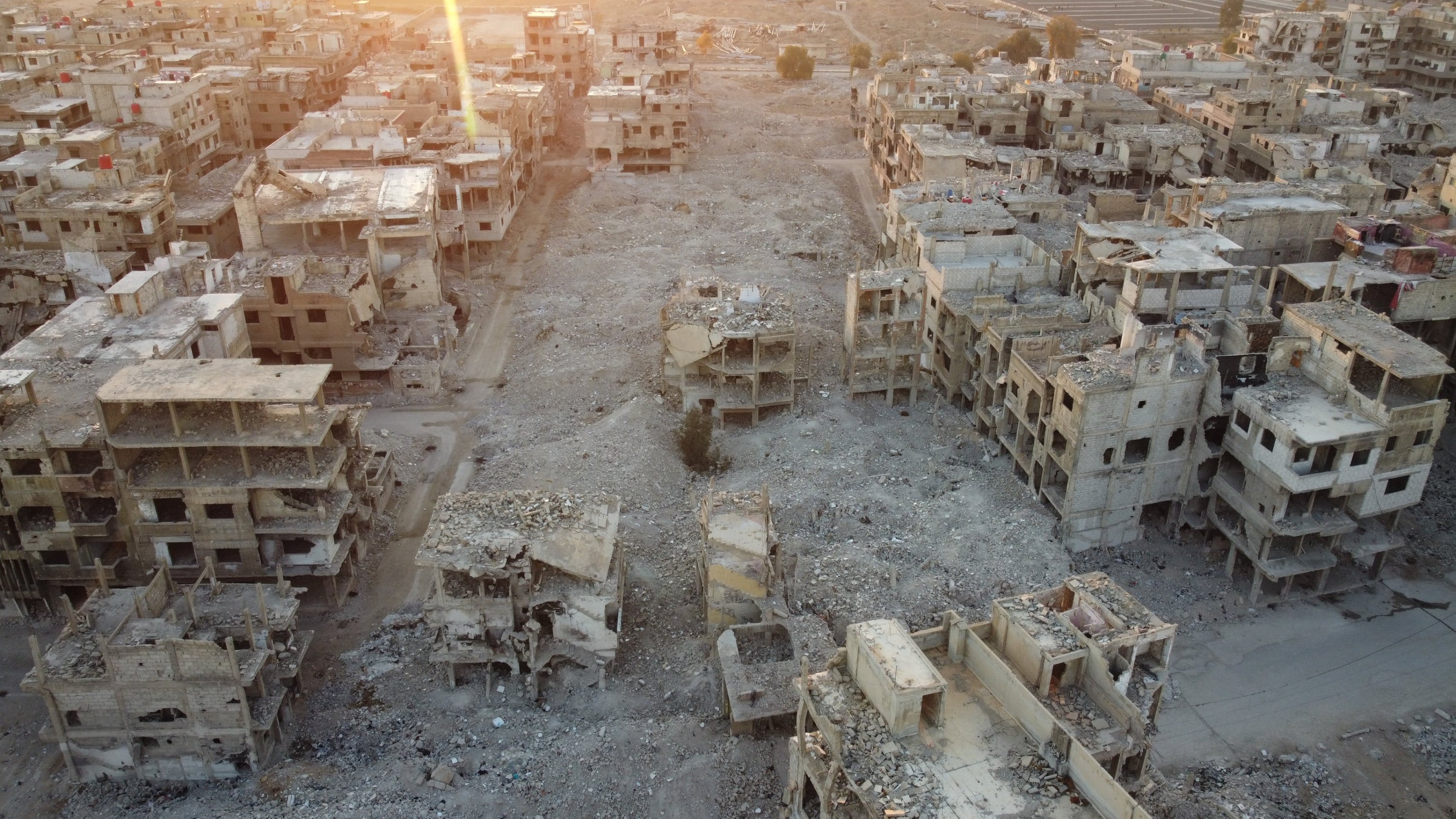
A report released by the Human Rights and Equality Institution of Türkiye (TIHEK) says the former Bashar Assad regime committed widespread war crimes and crimes against humanity throughout Syria’s civil war, citing field investigations and direct testimonies from victims.
Published on the first anniversary of the fall of the Assad government, the report aims to document violations committed over more than a decade of conflict, preserve evidence and victim memory, and support international accountability efforts.
Syrian opposition forces entered Damascus on Dec. 8, 2024, ending the rule of Assad, who governed from 2000 until 2024 after succeeding his father, Hafez Assad, Syria’s president from 1970 to 2000.
The TIHEK report presents testimonies and material evidence indicating the regime’s use of chemical weapons, as well as systematic practices of enforced disappearance, torture, extrajudicial executions and mass killings targeting civilians.
According to the institution, the report was prepared by a dedicated investigative team operating under the principle that international investigation into these crimes is both a legal and moral obligation, and that comprehensive documentation is essential for criminal accountability.
As part of the documentation process, TIHEK investigators conducted interviews in Gaziantep with representatives of Syrian human rights organizations, including the Association of Detainees and the Disappeared of Saydnaya Prison. Victims also provided firsthand accounts of abuses they suffered.
The team carried out field visits to Aleppo, Idlib, Damascus, Homs and Hama, inspecting detention facilities such as Saydnaya Prison and al-Balouna Military Prison. Investigators also documented mass grave sites, including Khan al-Assal in the countryside of Aleppo province, where an estimated 16,000 people are believed to have been buried.
Testimonies were collected from forcibly displaced civilians, survivors of aerial bombardments, victims of chemical attacks in Eastern Ghouta, as well as paramedics and civil defense workers involved in rescue operations.
On Aug. 21, 2013, regime forces carried out a chemical weapons attack in Eastern Ghouta, killing more than 1,400 civilians, including hundreds of women and children, an event widely regarded as one of the deadliest chemical attacks in the conflict.
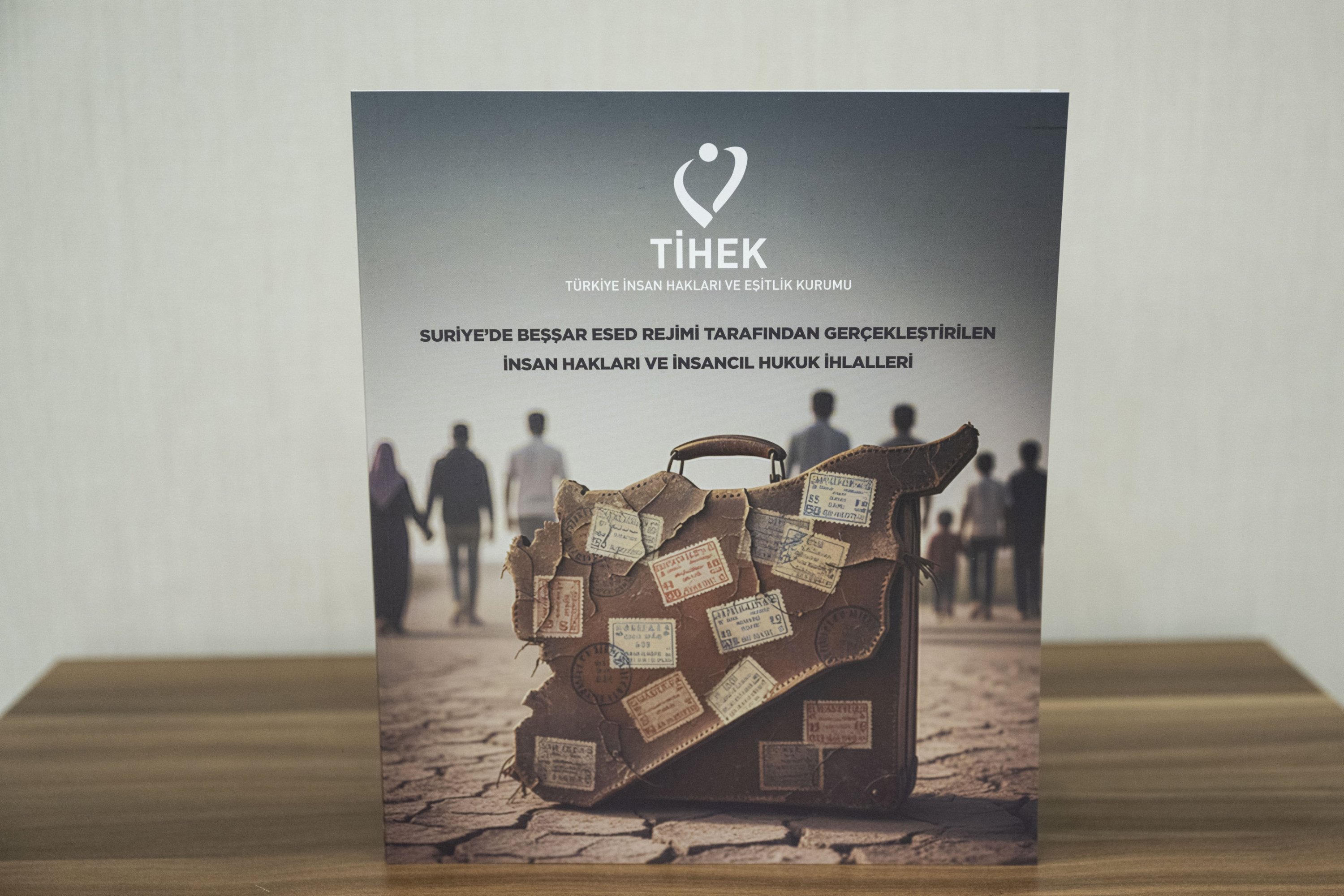
The report states that the Assad regime disregarded both Syria’s 2012 Constitution and its obligations under international conventions, resulting in an estimated 600,000 deaths since 2011, nearly half of them civilians. Many of those deaths occurred during mass killings, it said.
Witnesses told investigators that the regime pursued a deliberate strategy of depopulating opposition-held areas using barrel bombs, cluster munitions and chemical weapons.
A displaced civilian living in camps in Azaz, in the countryside of Aleppo province, said intense aerial and artillery bombardments forced residents to flee during winter with little more than the clothes they were wearing. He said those who remained were targeted by barrel bombs, while those attempting to escape were fired upon.
The report documents chemical attacks in Khan Shaykhun and Eastern Ghouta that killed more than 100 people and injured hundreds, most of them children, through the use of sarin gas.
Witnesses said regime forces later bombed affected areas with barrel bombs to destroy evidence. A civil defense official in Douma told investigators that entire neighborhoods were burned and flattened to prevent forensic teams from collecting proof of chemical weapon use.
One of the most detailed sections of the report focuses on Saydnaya Prison, where former detainees described systematic torture, inhumane detention conditions and near-daily executions.
Former prisoners said executions were carried out at night and that detainees were forced to listen as death sentences were read out. One witness described a so-called “salt room,” where bodies were left to decompose due to the lack of burial facilities.
The report details torture methods including suspension by limbs, beatings with cables, confinement in rubber tires, electric shocks, sexual violence and prolonged deprivation of food and medical care.
In a separate testimony related to a cemetery in Douma, a witness said regime forces exhumed graves after retaking the area and transferred bodies to unknown locations to conceal the causes of death and obstruct investigations into chemical weapons use.
TIHEK concluded that the Assad regime committed widespread and systematic violations between 2011 and 2024, including mass killings, enforced disappearances, torture, the use of banned weapons and the deliberate destruction of civilian areas.
The institution urged the international community and U.N. member states to prosecute those responsible through international justice mechanisms and the principle of universal jurisdiction. It also called for independent criminal investigations into chemical attacks attributed to the regime.