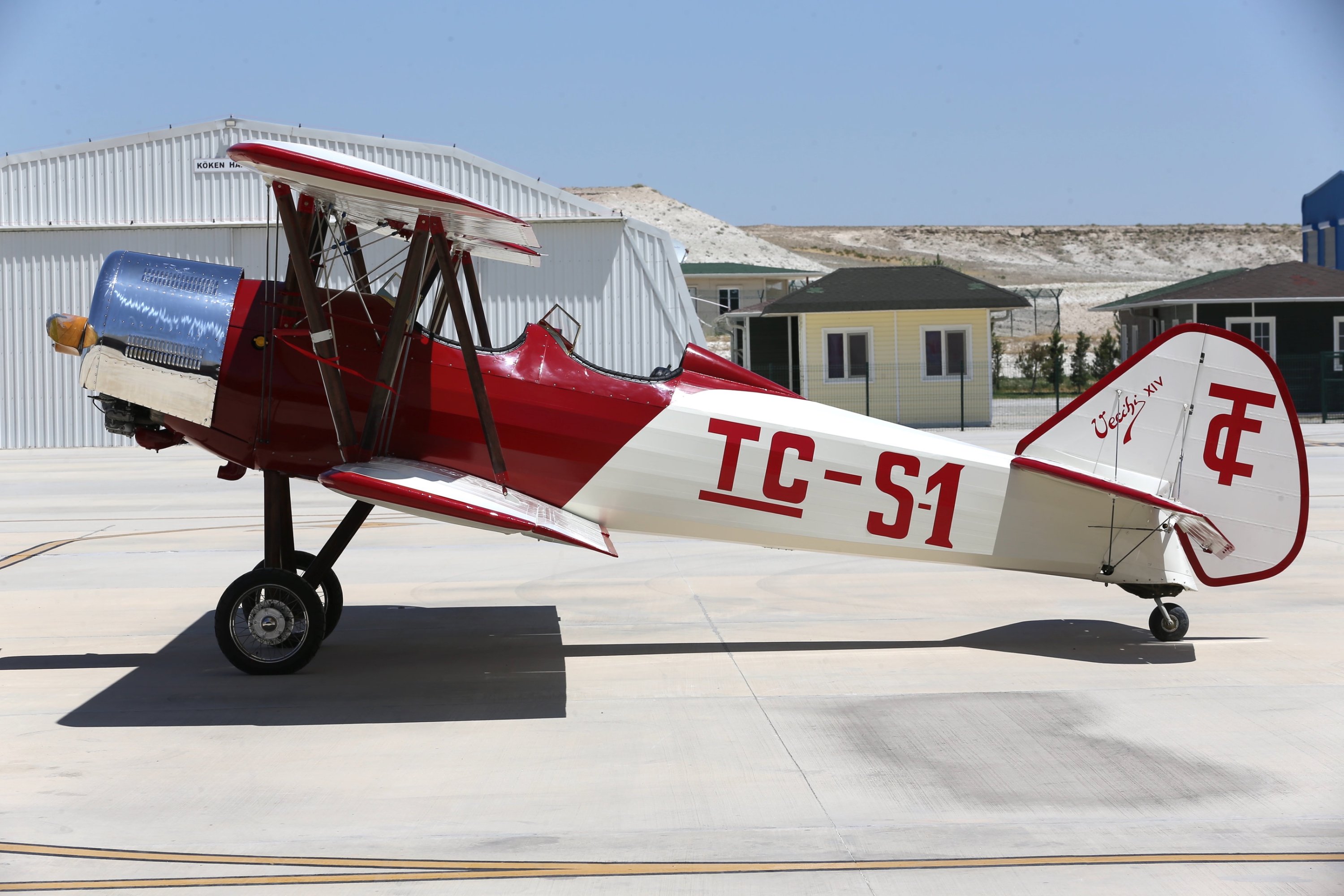
The replica of the “Vecihi XIV,” the first certified airplane designed and built by the unforgettable figure of Turkish aviation, aviator Vecihi Hürkuş, has successfully completed its test flights.
The Vecihi XIV, originally designed and built by the inspiring Hürkuş in 1930, was reproduced by Mach Teknik in collaboration with the Sivrihisar Aviation Club Association and the M.S.Ö. Air and Space Museum.
The project, which began about five years ago and was postponed for various reasons, was completed thanks to the dedicated efforts of the team led by stunt pilot Ali Ismet Öztürk.
After intensive work over the past six months, a replica was produced that shares about 75% similarity with the original plane created by Hürkuş.
Following the successful completion of test flights, the Vecihi XIV replica will be added to the inventory of the M.S.Ö. Air and Space Museum after a launch event scheduled for tomorrow.
The replica of Vecihi XIV will make its first public flight in September at the Sivrihisar Air Shows in Eskişehir.
Ali Ismet Öztürk said that the project was born out of Vecihi Hürkuş's passion for aviation.
Öztürk said they found no existing replicas of the first certified Turkish airplane. “We wanted to create a flying replica. Everything happens in its time. Now the time has come. We started working at the beginning of last year. We had planned some things long before. Within six months, we were able to complete the plane. We are very happy about that,” he said.
Öztürk explained that there are no surviving technical drawings of the Vecihi XIV model. He added: “There are some photos, but they were not very useful. So we decided to design an E-75 fuselage and work on that. Thus, we started with an E-75 fuselage and tried to shape it as closely as possible to the appearance of the Vecihi XIV. For the engine, we chose the Continental R670, one of the most popular engines of the 1940s, not the 1930s. This engine is safer. Apart from that, we tried to develop the project as closely as possible to Vecihi Hürkuş’s original design.”
Öztürk noted that there might be significant aerodynamic differences between the 1930 design and the new plane but estimated about 70%-75% similarity.
Acknowledging that others might have different opinions, he said: “We could not find the plans for this plane anywhere. If we had the plans, we might have increased the similarity percentage. But since we didn’t have the plans, we had to face today’s realities. We proceeded within the safety framework required."
"In such projects, taking off and landing safely is crucial, and we paid close attention to this. We needed a suitable propeller. Inside the plane are very simple instruments, just like the original Vecihi XIV. There isn’t much detail. Our plane is designed as a replica that can fly safely and return safely. After entering the museum inventory, we expect it to fly on special occasions,” he said.
Öztürk said the project brought them spiritual happiness as well: “Hopefully, future generations will continue flying this plane, remembering Vecihi Bey. Besides me, five or six friends worked devotedly. We always acted together, not just to solve one problem but to address all issues. What emerged is truly a beautiful product. I believe we have a very safe plane.”
He added that the plane has completed 10 test flights so far, and no problems have been encountered during the tests.