Daily Sabah logo

Politics
Diplomacy Legislation War On Terror EU Affairs Elections News Analysis
TÜRKİYE
Istanbul Education Investigations Minorities Expat Corner Diaspora
World
Mid-East Europe Americas Asia Pacific Africa Syrian Crisis Islamophobia
Business
Automotive Economy Energy Finance Tourism Tech Defense Transportation News Analysis
Lifestyle
Health Environment Travel Food Fashion Science Religion History Feature Expat Corner
Arts
Cinema Music Events Portrait Reviews Performing Arts
Sports
Football Basketball Motorsports Tennis
Opinion
Columns Op-Ed Reader's Corner Editorial
PHOTO GALLERY
JOBS ABOUT US RSS PRIVACY CONTACT US
© Turkuvaz Haberleşme ve Yayıncılık 2025

Daily Sabah - Latest & Breaking News from Turkey | Istanbul

  • Politics
    • Diplomacy
    • Legislation
    • War On Terror
    • EU Affairs
    • Elections
    • News Analysis
  • TÜRKİYE
    • Istanbul
    • Education
    • Investigations
    • Minorities
    • Expat Corner
    • Diaspora
  • World
    • Mid-East
    • Europe
    • Americas
    • Asia Pacific
    • Africa
    • Syrian Crisis
    • Islamophobia
  • Business
    • Automotive
    • Economy
    • Energy
    • Finance
    • Tourism
    • Tech
    • Defense
    • Transportation
    • News Analysis
  • Lifestyle
    • Health
    • Environment
    • Travel
    • Food
    • Fashion
    • Science
    • Religion
    • History
    • Feature
    • Expat Corner
  • Arts
    • Cinema
    • Music
    • Events
    • Portrait
    • Reviews
    • Performing Arts
  • Sports
    • Football
    • Basketball
    • Motorsports
    • Tennis
  • Gallery
  • Opinion
    • Columns
    • Op-Ed
    • Reader's Corner
    • Editorial
  • TV

Birthplace, bloodline and beyond: A look at how citizenship is granted around the world

by

PARIS Nov 02, 2018 - 12:00 am GMT+3
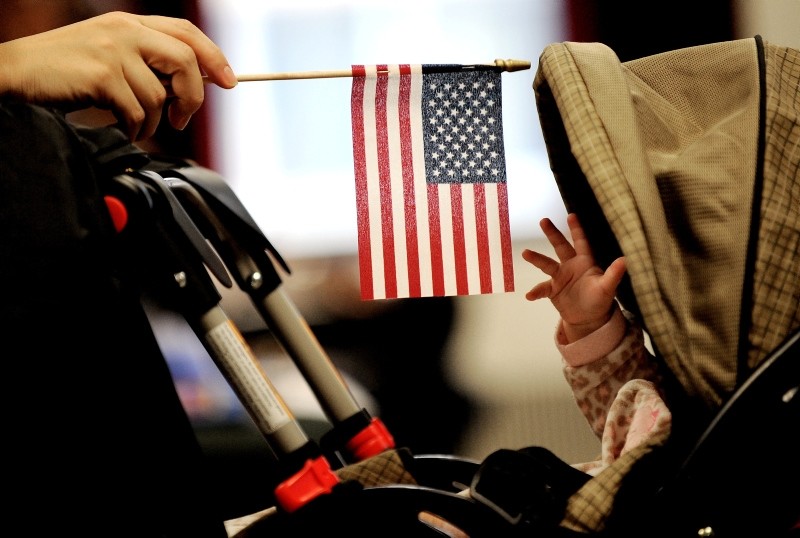
A baby reaches for an American flag held by her mother during naturalization ceremony at a federal building in New York, January 14, 2011. (EPA Photo)
by Nov 02, 2018 12:00 am

U.S. President Donald Trump has vowed to abolish birthright laws that automatically give children born in the country the status of U.S. citizens regardless of the nationality of their parents.

Only around 30 other countries allow similar "jus soli", or "right of the soil", citizenship; most at least require one or both parents to also be citizens.

Here is a global snapshot:

Citizenship by birth

Besides the United States, birthright citizenship is common in the Americas including in Argentina, Canada, Chile, Ecuador and Mexico.

It usually does not apply, however, for children born to foreign diplomats or military personnel.

An exception is Colombia where citizenship is granted if the parents are citizens or can prove they were residents at the time of birth.

Outside the Americas, Pakistan is one of the rare countries to grant "jus soli" citizenship.

It established this right in 1951 for any person born there after that date, apart from children of foreign diplomats and "of enemy alien born", which is taken to mean India.

Citizenship by descent

For much of the rest of the world a child takes the citizenship of their parents in terms of "jus sanguinis", or the "right of blood".

Often this requires one or both parents to be citizens of the country concerned, unless they are determined to be stateless, as in the case of some refugees.

In Britain, for example, a child is granted citizenship if at least one parent is British or is officially "settled" and holds permanent residence.

All about the father

In the Middle East and North Africa "jus sanguinis" is often only accorded via the father.

Egypt, for example, automatically gives citizenship to children born on its soil with an Egyptian father but those with an Egyptian mother must apply for this right.

An exception is Algeria, which grants citizenship through both the father and the mother.

In Asia, Afghanistan also follows the bloodline through the father only.

A mixture

Some countries accord citizenship through both birthplace and bloodline, such as Belgium, France, Luxembourg and Spain.

A child born in Spain, for example, automatically becomes Spanish if at least one parent is also born there; if neither are Spanish citizens, the child would still have the right to citizenship after one year's residency.

Germany introduced a similar conditional birthright citizenship in 2000.

Toughening the rules

Some countries have massively tightened their citizenship requirements in recent years to drop a simple "jus soli" birthright, such as Britain in 1983 and Australia in 1986.

India from 1987 required at least one parent to have citizenship and further restricted the law in 2004 to require both parents to be Indian.

In 2004 Ireland voted to remove the automatic right to citizenship by birth for children of foreign nationals by requiring the parents to have lived there for three out of four previous years.

Special cases

Israel does not grant automatic birthright citizenship unless at least one parents is a citizen but it does have a "Law of Return" allowance for people married to a Jew or with a Jewish relative up to a grandparent.

Most countries also allow people to acquire citizenship as adults, for example through marriage or residency and often with other requirements, such as fluency in the national language or special contributions.

Vietnam, for example, demands that aspiring citizens change their names, meaning Brazilian footballer Fabio Santos is now Phan Van Santos.

Cambodia granted citizenship to Angelina Jolie in 2005 for her charity and conservation work.

  • shortlink copied
  • Last Update: Nov 02, 2018 8:14 pm
    KEYWORDS
    world
    The Daily Sabah Newsletter
    Keep up to date with what’s happening in Turkey, it’s region and the world.
    You can unsubscribe at any time. By signing up you are agreeing to our Terms of Use and Privacy Policy. This site is protected by reCAPTCHA and the Google Privacy Policy and Terms of Service apply.
    No Image
    Tourism wind blows across the roof of Istanbul's Grand Bazaar
    PHOTOGALLERY
    • POLITICS
    • Diplomacy
    • Legislation
    • War On Terror
    • EU Affairs
    • News Analysis
    • TÜRKİYE
    • Istanbul
    • Education
    • Investigations
    • Minorities
    • Diaspora
    • World
    • Mid-East
    • Europe
    • Americas
    • Asia Pacific
    • Africa
    • Syrian Crisis
    • İslamophobia
    • Business
    • Automotive
    • Economy
    • Energy
    • Finance
    • Tourism
    • Tech
    • Defense
    • Transportation
    • News Analysis
    • Lifestyle
    • Health
    • Environment
    • Travel
    • Food
    • Fashion
    • Science
    • Religion
    • History
    • Feature
    • Expat Corner
    • Arts
    • Cinema
    • Music
    • Events
    • Portrait
    • Performing Arts
    • Reviews
    • Sports
    • Football
    • Basketball
    • Motorsports
    • Tennis
    • Opinion
    • Columns
    • Op-Ed
    • Reader's Corner
    • Editorial
    • Photo gallery
    • DS TV
    • Jobs
    • privacy
    • about us
    • contact us
    • RSS
    © Turkuvaz Haberleşme ve Yayıncılık 2021