Daily Sabah logo

Politics
Diplomacy Legislation War On Terror EU Affairs Elections News Analysis
TÜRKİYE
Istanbul Education Investigations Minorities Expat Corner Diaspora
World
Mid-East Europe Americas Asia Pacific Africa Syrian Crisis Islamophobia
Business
Automotive Economy Energy Finance Tourism Tech Defense Transportation News Analysis
Lifestyle
Health Environment Travel Food Fashion Science Religion History Feature Expat Corner
Arts
Cinema Music Events Portrait Reviews Performing Arts
Sports
Football Basketball Motorsports Tennis
Opinion
Columns Op-Ed Reader's Corner Editorial
PHOTO GALLERY
JOBS ABOUT US RSS PRIVACY CONTACT US
© Turkuvaz Haberleşme ve Yayıncılık 2025

Daily Sabah - Latest & Breaking News from Turkey | Istanbul

  • Politics
    • Diplomacy
    • Legislation
    • War On Terror
    • EU Affairs
    • Elections
    • News Analysis
  • TÜRKİYE
    • Istanbul
    • Education
    • Investigations
    • Minorities
    • Expat Corner
    • Diaspora
  • World
    • Mid-East
    • Europe
    • Americas
    • Asia Pacific
    • Africa
    • Syrian Crisis
    • Islamophobia
  • Business
    • Automotive
    • Economy
    • Energy
    • Finance
    • Tourism
    • Tech
    • Defense
    • Transportation
    • News Analysis
  • Lifestyle
    • Health
    • Environment
    • Travel
    • Food
    • Fashion
    • Science
    • Religion
    • History
    • Feature
    • Expat Corner
  • Arts
    • Cinema
    • Music
    • Events
    • Portrait
    • Reviews
    • Performing Arts
  • Sports
    • Football
    • Basketball
    • Motorsports
    • Tennis
  • Gallery
  • Opinion
    • Columns
    • Op-Ed
    • Reader's Corner
    • Editorial
  • TV
  • World
  • Mid-East
  • Europe
  • Americas
  • Asia Pacific
  • Africa
  • Syrian Crisis
  • Islamophobia

2nd wave of locusts threatens millions in Africa

by Associated Press

KAMPALA Apr 10, 2020 - 1:05 pm GMT+3
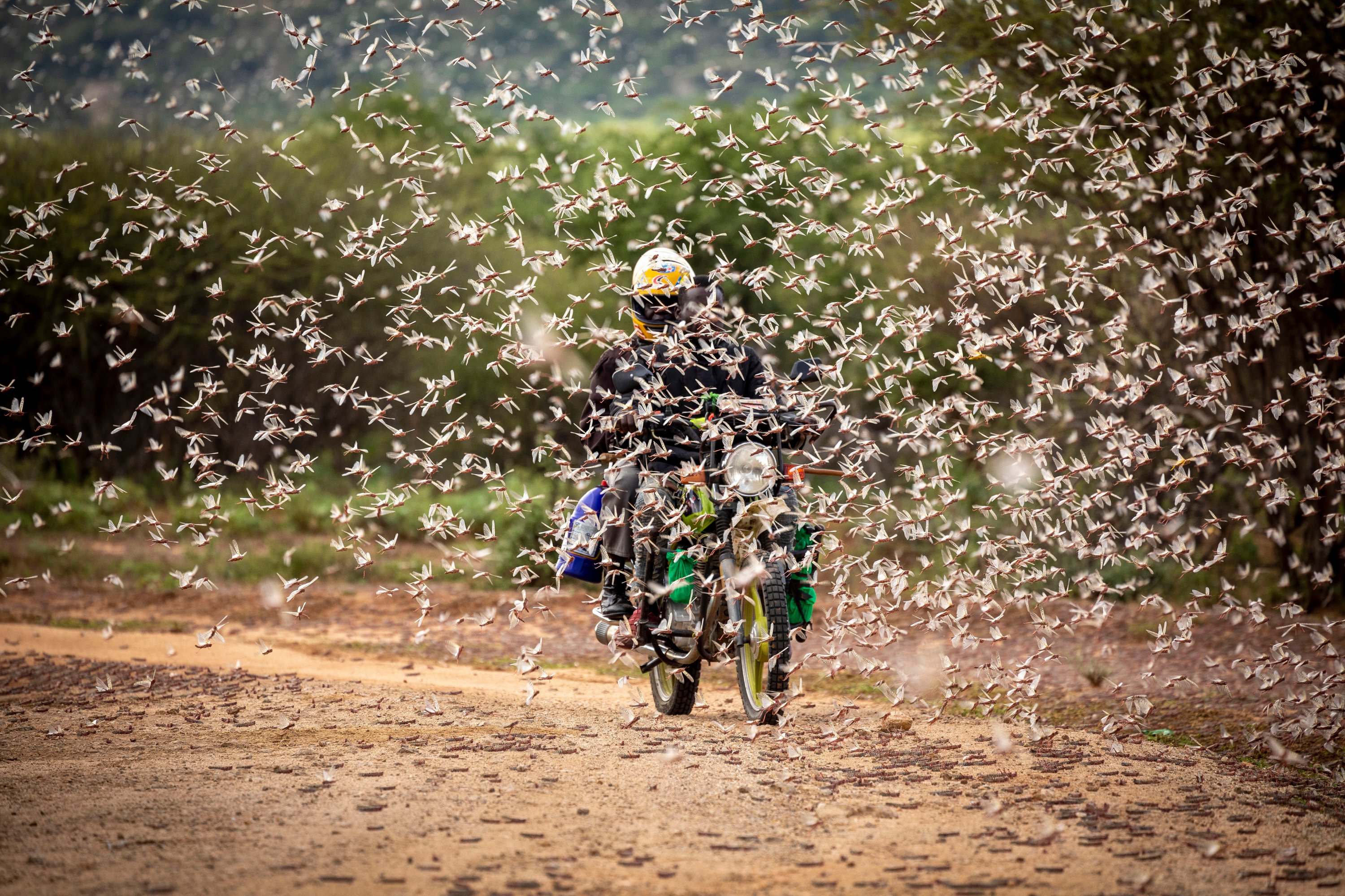
A motorcyclist rides through a swarm of desert locusts, Kipsing, Kenya, March 31, 2020. (AFP Photo)
by Associated Press Apr 10, 2020 1:05 pm

Weeks before the coronavirus spread through much of the world, parts of Africa were already threatened by another kind of plague, the biggest locust outbreak some countries had seen in 70 years. Now the second wave of the voracious insects, some 20 times the size of the first, is arriving. Billions of the young desert locusts are winging in from breeding grounds in Somalia in search of fresh vegetation springing up with seasonal rains.

Millions of already vulnerable people are at risk. And as they gather to try to combat the locusts, often in vain, they risk spreading the virus – a topic that comes a distant second for many in rural areas.

It is the locusts that “everyone is talking about,” said Yoweri Aboket, a farmer in Uganda. “Once they land in your garden they do total destruction. Some people will even tell you that the locusts are more destructive than the coronavirus. There are even some who don’t believe that the virus will reach here.”

The U.N. Food and Agriculture Organization has called the locust outbreak, caused in part by climate change, "an unprecedented threat” to food security and livelihoods. Its officials have called this new wave some 20 times the size of the first.

The locusts are “invading the Eastern Africa region in exceptionally large swarms like never seen before," the Nairobi-based Climate Prediction and Application Center said.

Aerial spraying is the only effective way to control the locust outbreak. After the locusts crossed into Uganda for the first time since the 1960s, soldiers resorted to using hand-held spray pumps because of difficulties in obtaining the needed aircraft.

Other countries face similar challenges. In Ethiopia, where some 6 million people live in areas affected by the locust outbreak, the infestation if unchecked “will cause large-scale crop, pasture and forest-cover loss, worsening food and feed insecurity,” the FAO says. Bands of immature locusts are forming in areas that include the country’s breadbasket, the Rift Valley region, it said. Ethiopia’s agriculture minister has said efforts are underway to deploy six helicopters against the infestation that could last until late August. But ministry spokesman Moges Hailu spoke of an ominous sign: The locust swarms are now appearing in locations where they had not been previously sighted.


  • shortlink copied
  • Last Update: Apr 10, 2020 5:21 pm
    KEYWORDS
    locust swarm africa fao uganda ethiopia
    The Daily Sabah Newsletter
    Keep up to date with what’s happening in Turkey, it’s region and the world.
    You can unsubscribe at any time. By signing up you are agreeing to our Terms of Use and Privacy Policy. This site is protected by reCAPTCHA and the Google Privacy Policy and Terms of Service apply.
    No Image
    Reopened after restoration, Istanbul’s Galata Tower attracts visitors
    PHOTOGALLERY
    • POLITICS
    • Diplomacy
    • Legislation
    • War On Terror
    • EU Affairs
    • News Analysis
    • TÜRKİYE
    • Istanbul
    • Education
    • Investigations
    • Minorities
    • Diaspora
    • World
    • Mid-East
    • Europe
    • Americas
    • Asia Pacific
    • Africa
    • Syrian Crisis
    • İslamophobia
    • Business
    • Automotive
    • Economy
    • Energy
    • Finance
    • Tourism
    • Tech
    • Defense
    • Transportation
    • News Analysis
    • Lifestyle
    • Health
    • Environment
    • Travel
    • Food
    • Fashion
    • Science
    • Religion
    • History
    • Feature
    • Expat Corner
    • Arts
    • Cinema
    • Music
    • Events
    • Portrait
    • Performing Arts
    • Reviews
    • Sports
    • Football
    • Basketball
    • Motorsports
    • Tennis
    • Opinion
    • Columns
    • Op-Ed
    • Reader's Corner
    • Editorial
    • Photo gallery
    • DS TV
    • Jobs
    • privacy
    • about us
    • contact us
    • RSS
    © Turkuvaz Haberleşme ve Yayıncılık 2021