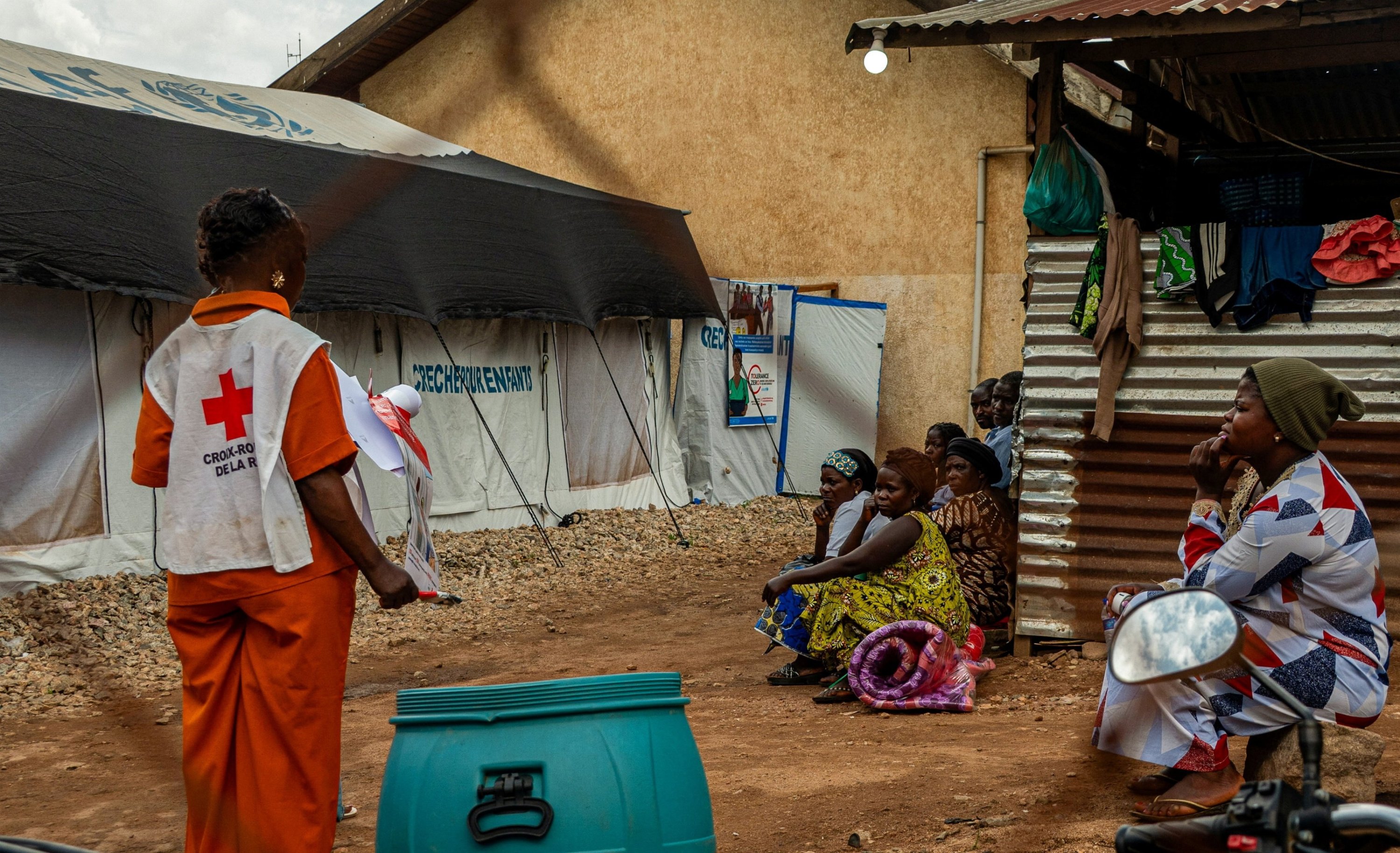
The Ebola outbreak in the Democratic Republic of Congo is spreading into remote rural communities despite declining infections in some of the areas initially hardest hit, with violence by armed groups threatening efforts to contain the deadly virus.
Six months into the outbreak, cases have fallen in several early epicentres, including Bunia and surrounding areas in Ituri province. Some treatment centres are now operating at half capacity, suggesting progress in parts of the country, U.N. emergency relief coordinator Chikwe Ihekweazu said during a briefing in Geneva.
But the decline has not been matched elsewhere. Infections continue to rise or persist in isolated communities where poor infrastructure, difficult terrain and insecurity make it harder for health workers to reach patients and prevent further transmission.
"Progress is fragile and not enough," Ihekweazu said, warning against interpreting improvements in individual locations as evidence that the wider outbreak is under control.
The World Health Organization (WHO) has stressed the need to respond more quickly to infections in remote areas, where delays in identifying cases and establishing treatment facilities could allow the virus to spread further.
Security remains the biggest obstacle.
Julien Harneis, the U.N. Ebola response coordinator with the Office for the Coordination of Humanitarian Affairs (OCHA) in Bunia, said armed violence had become an immediate threat to both civilians and the medical teams working to contain the outbreak.
In recent days, "more people were killed by ADF violence than by Ebola," Harneis said in Geneva.
He called for the threat posed by the Allied Democratic Forces (ADF), an armed group linked to Islamic State, to be taken more seriously and for stronger action to stop its attacks.
The danger was underscored in early November when ADF fighters killed 66 civilians in an attack in eastern Congo, including three health workers. Three health facilities were also looted and burned, according to the African Union's public health agency, Africa CDC.
The assault disrupted the Ebola response in an area where health workers were already struggling to maintain surveillance and trace people who had come into contact with infected patients.
Patients, including suspected and confirmed Ebola cases, fled health facilities, while more than 1,000 contacts were reportedly lost to follow-up. Several confirmed cases could not immediately be accounted for, raising fears that infections could go undetected and spread to other communities.
The destruction of medical facilities has also deprived vulnerable populations of essential treatment and further complicated efforts to establish safe conditions for containing the virus.
The current outbreak, caused by the Bundibugyo virus (BDBV), was declared on May 15, 2026. It is the largest Ebola outbreak in the DRC's history and the second-largest recorded globally.
By mid-November, the country had reported more than 11,000 confirmed cases and over 5,400 deaths across eight provinces and approximately 68 health zones. The reported case fatality rate was approaching 49%, although thousands of patients had recovered.
Health authorities have expanded treatment capacity, diagnostic services and community outreach since the outbreak began. The number of laboratories capable of testing for the virus has also increased substantially, allowing health teams to identify infections more quickly.
However, the geographical spread of the disease has complicated containment efforts.
Ituri remains the most heavily affected province, but transmission patterns have shifted in recent weeks, with North Kivu reporting notable increases. While infections have declined in earlier hotspots such as Bunia, Mongbwalu, Rwampara and Nizi, other areas continue to experience sustained transmission.
WHO officials have also reported hundreds of new infections each week, highlighting the difficulty of containing the outbreak despite progress in some locations.
The eastern DRC has endured years of conflict involving multiple armed groups, leaving communities displaced, infrastructure damaged and basic services severely limited.
The ADF has operated in the region for years, carrying out attacks against civilians, security forces and health facilities. Its violence has created an increasingly dangerous environment for humanitarian workers, particularly those attempting to reach isolated communities.
For Ebola response teams, insecurity can mean suspended operations, delayed testing, interrupted contact tracing and limited access to patients requiring urgent care. Attacks on health facilities also undermine community confidence and make it harder to maintain consistent medical services.
The outbreak response has expanded considerably, with health authorities increasing the availability of diagnostic testing, treatment beds and medical personnel. Clinical trials involving potential vaccines and treatments targeting the Bundibugyo virus have also begun.
But these measures depend on health workers being able to reach affected populations safely.
In areas controlled or threatened by armed groups, medical teams face difficulties transporting supplies, establishing treatment centres and monitoring people who may have been exposed to the virus. The destruction of health facilities further reduces the capacity to respond when new infections emerge.
WHO and its partners have repeatedly stressed that controlling the outbreak requires more than expanding medical resources. Community engagement, reliable surveillance and access to remote populations are equally important.
The outbreak has also raised concerns beyond the DRC, with neighbouring countries reporting imported or secondary infections during the wider regional health emergency. Continued surveillance and cross-border coordination remain essential to prevent further transmission.
For humanitarian officials, the challenge is increasingly twofold: containing a deadly virus while protecting the people tasked with stopping it.
The decline in infections across some of the original hotspots offers evidence that containment measures can work. But as the disease reaches communities where medical assistance is difficult to deliver, renewed violence threatens to reverse those gains.