Efforts to end the conflict in eastern Congo – a key step in U.S. President Donald Trump’s plans to unlock a mining boom – are set to begin by Sunday, but the fate of a small rebel faction is proving a major sticking point.
A U.S.-brokered peace deal, signed last month by the foreign ministers of Congo and Rwanda, aims to halt a surge in violence sparked by the rapid resurgence of M23 rebels in the Democratic Republic of the Congo.
The United Nations and Western governments accuse Rwanda of backing the M23 to gain access to Congo’s rich mineral resources, while Kigali insists its forces are targeting a serious threat from the Democratic Forces for the Liberation of Rwanda, or FDLR – a rebel group made up of Rwandan Hutu fighters, including some linked to the 1994 genocide.
However, security analysts and diplomats say the FDLR’s fighting force has dwindled to a few hundred and poses little battlefield threat.
The peace agreement explicitly requires Congo to “neutralize” the FDLR as Rwanda withdraws its forces from Congolese territory, underscoring the group’s central role in the success or failure of Trump’s diplomatic push.
Both Congo’s operations against the FDLR and Rwanda’s withdrawal are supposed to begin by Sunday and conclude by the end of September.
U.N. experts said in a report this month that Rwanda, along with M23, is trying to seize control of mineral-rich territory. Rwanda responded that the presence of the “genocidal” FDLR “necessitates the defense posture in our border areas.”
The U.N. experts also accused Congo’s military of relying on the FDLR in its fight against M23. A spokesperson for Congo’s government did not respond to a request for comment, but Kinshasa has said it is committed to ensuring that any threat posed by the FDLR is “definitively eradicated,” including through voluntary disarmament. It has also accused Rwanda of using the FDLR as a pretext for deploying troops on Congolese soil.
Josaphat Musamba, a Congolese researcher and Ph.D. candidate at Ghent University who studies the conflict, said it would not be possible for Congo to clear the region of FDLR fighters while M23 still holds much of the territory where the group operates.
“It would be feasible if the Rwandan-backed rebellion were not active and threatening to conquer other territories,” Musamba said.
Jason Stearns, a political scientist at Simon Fraser University in Canada who specializes in Africa’s Great Lakes region, said a lack of progress against the FDLR could give Rwanda justification to delay its withdrawal, derailing Washington’s timeline.
“It would be fairly easy for Rwanda to claim that Congo is not abiding by its side of the deal – that its operations against the FDLR are not serious enough, have not been successful enough – and therefore to drag its feet,” Stearns said.
A spokesperson for Rwanda’s government did not respond to a request for comment on its approach to the FDLR. Rwandan President Paul Kagame said July 4 that Rwanda was committed to implementing the deal, but warned it could fail if Congo did not fulfill its promise to neutralize the FDLR.
Trump said July 9 that the presidents of Congo and Rwanda would travel to the United States “in the next couple of weeks” to sign the peace agreement. They are also expected to finalize bilateral economic packages that could bring billions of dollars in investment to countries rich in tantalum, gold, cobalt, copper, lithium and other critical minerals. No date has been announced.
While Washington has hosted negotiations between Congo and Rwanda, Qatar has led separate direct talks between Congo and M23. On Saturday, the two sides agreed to sign a peace deal by Aug. 18. M23 currently has no concrete plans to withdraw from the territory it holds.
The FDLR has urged Trump not to greenlight a Congolese offensive against it.
In a July 2 letter to Trump, Victor Byiringiro, the FDLR’s acting president, said any attack on the group would endanger Congolese civilians and more than 200,000 Rwandan refugees.
In written responses to Reuters, FDLR spokesperson Cure Ngoma said only “a frank, sincere, and inclusive dialogue among Rwandans” could bring peace. Rwanda has repeatedly ruled out negotiations with the group.
Trump expects Congo and Rwanda to honor the peace deal, “which will foster lasting stability and prosperity in the region,” White House spokesperson Anna Kelly said in response to Reuters’ questions about the FDLR’s future.
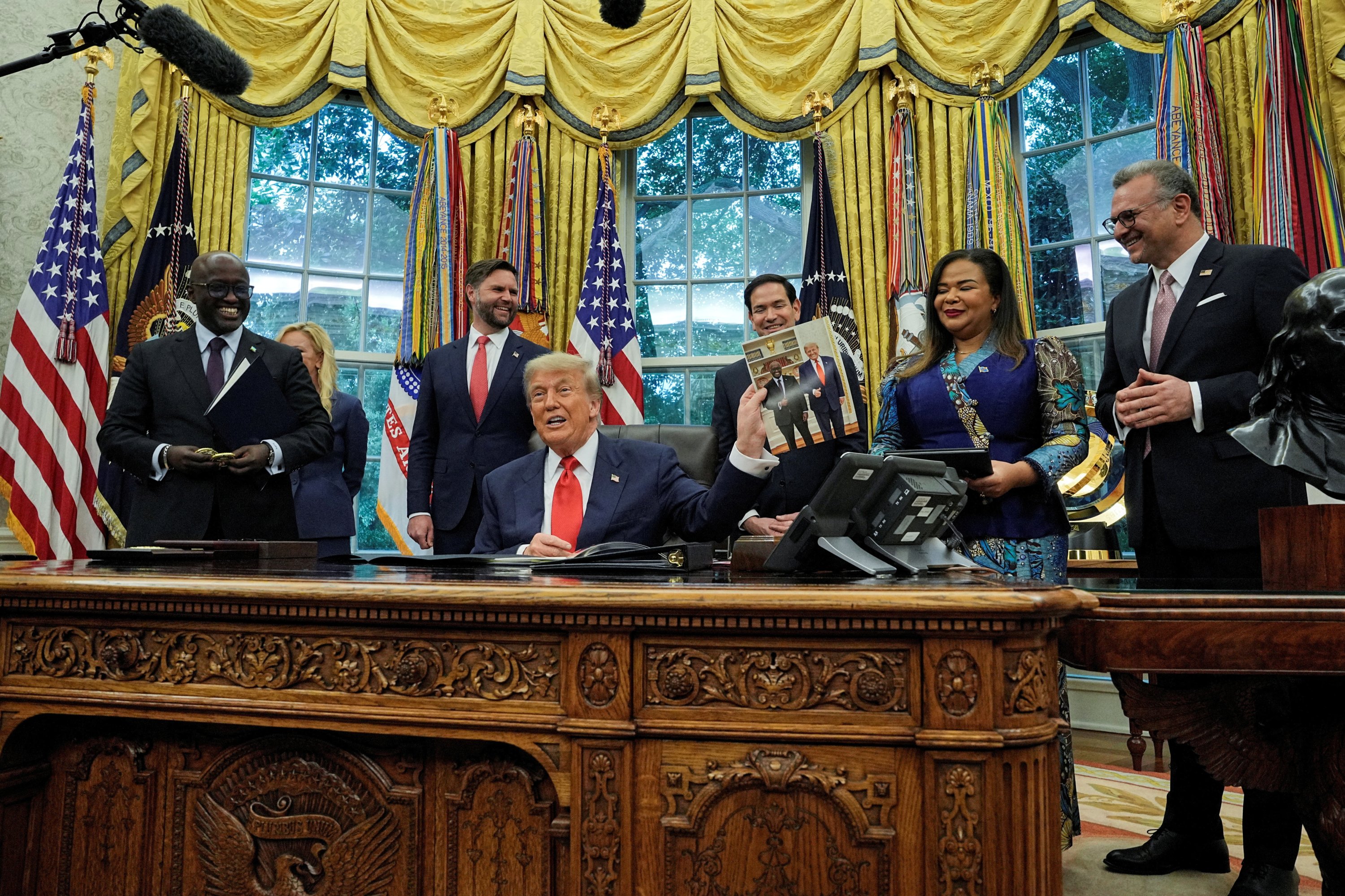
“All armed groups must lay down their arms and work within the framework of the peace process,” she said.
The fighting has killed thousands and displaced hundreds of thousands more this year, fueling fears of a return to the kind of full-scale regional war that killed millions in Congo from 1998 to 2003.