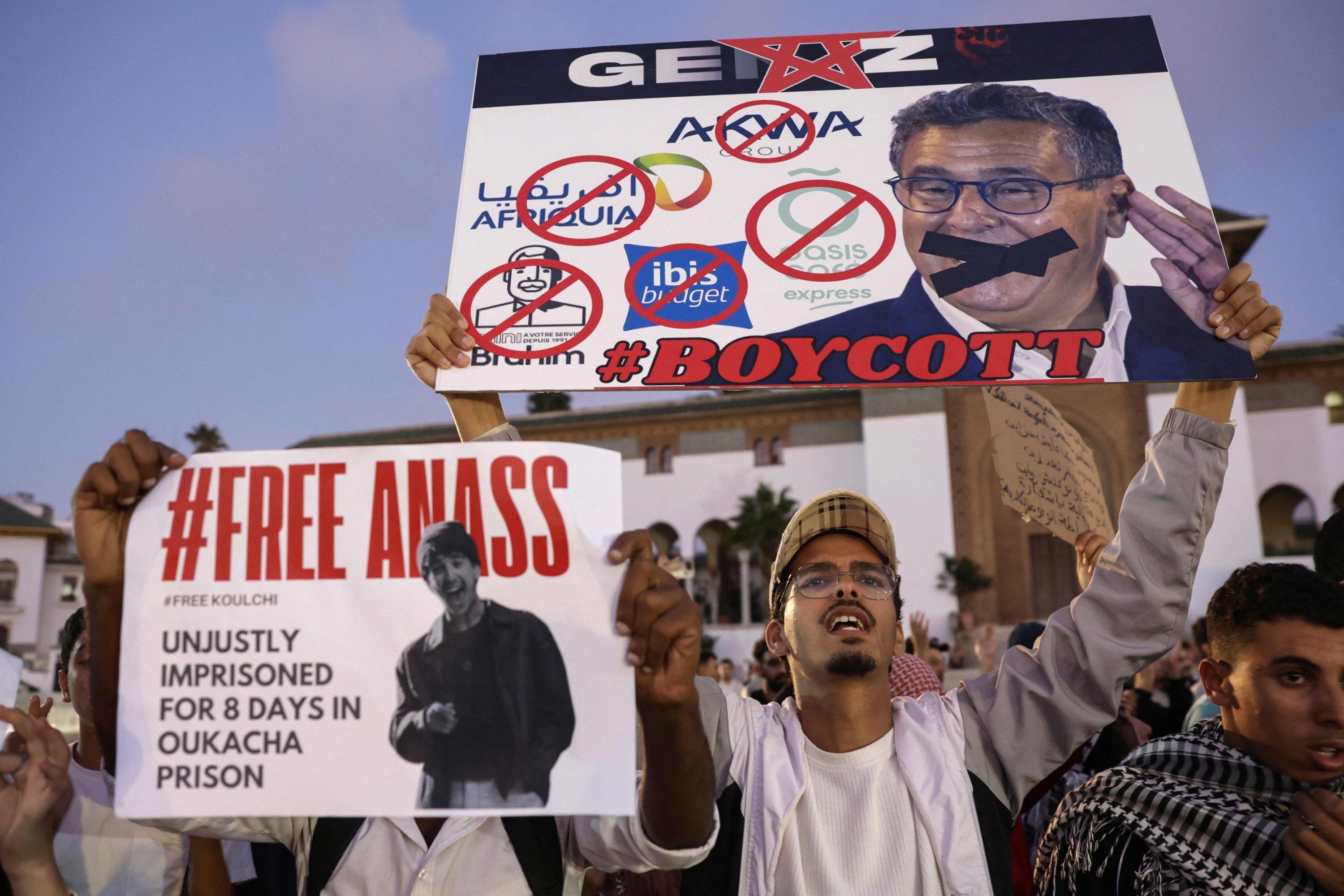
Morocco's so-called Generation Z 212 movement announced Monday it will organize peaceful sit-ins across most Moroccan cities next Saturday, marking a return to the streets after a brief pause.
The announcement comes despite the government reiterating its willingness to engage in dialogue with the group.
The statement follows a wave of demonstrations held between Sept. 27 and Oct. 9, during which protesters called for sweeping reforms in education, health care and a serious crackdown on corruption.
According to the movement’s communique, "after responsible internal discussions and a broad vote by members via the Discord platform," activists decided to maintain their peaceful protest strategy while diversifying their methods of action.
The group also revealed plans to expand its earlier campaign to boycott certain products, promising to unveil its objectives and tactics gradually.
Reaffirming its core demands, Generation Z 212 called for access to quality education, decent health care for all citizens, stronger anti-corruption measures, greater accountability for public officials and the immediate release of all detainees arrested for peaceful protest activity.
Since late September, the collective, which boasts over 210,000 members on the Discord messaging app, has been organizing near-daily gatherings across the country, drawing hundreds of young participants.
However, momentum appeared to wane last Thursday, on the eve of a highly anticipated speech by King Mohammed VI, who urged the government to accelerate social reforms. According to Agence France-Presse (AFP) reporters, only a few dozen demonstrators turned out in Rabat and Casablanca that evening.
"We call on all Moroccan youth and citizens at large to mobilize massively in support of this movement until our demands are met," the group said in its statement. The movement’s founders remain anonymous and have also urged citizens to join a nationwide boycott campaign, though they have not specified its targets.
Generation Z 212 emerged in mid-September, sparked by public outrage over the deaths of eight pregnant women who had been admitted for cesarean sections at the public hospital in Agadir, southern Morocco, an incident that ignited anger over the state of the country’s health care system.