For Ethiopian refugee Helana Wolde, leaving South Africa is no longer a realistic option.
As thousands of demonstrators marched across the country demanding that foreigners leave, the 49-year-old locked his home, stayed indoors with his wife and three South African-born children, and watched the protests unfold on television. When the demonstrations ended, he reopened his small grocery shop in downtown Durban, hoping it would survive another wave of anti-immigrant violence.
It did.
Many neighboring migrant-owned businesses were not as fortunate.
After fleeing political persecution in Ethiopia more than two decades ago, Wolde says there is nothing left for him to return to.
"I have no place, no property, no family," he said, explaining that his brothers have been imprisoned back home.
His story reflects the difficult reality facing thousands of migrants who remain in South Africa despite rising hostility. While more than 25,000 people reportedly left the country before this week's nationwide protests, many refugees and asylum-seekers say they have nowhere else to go.
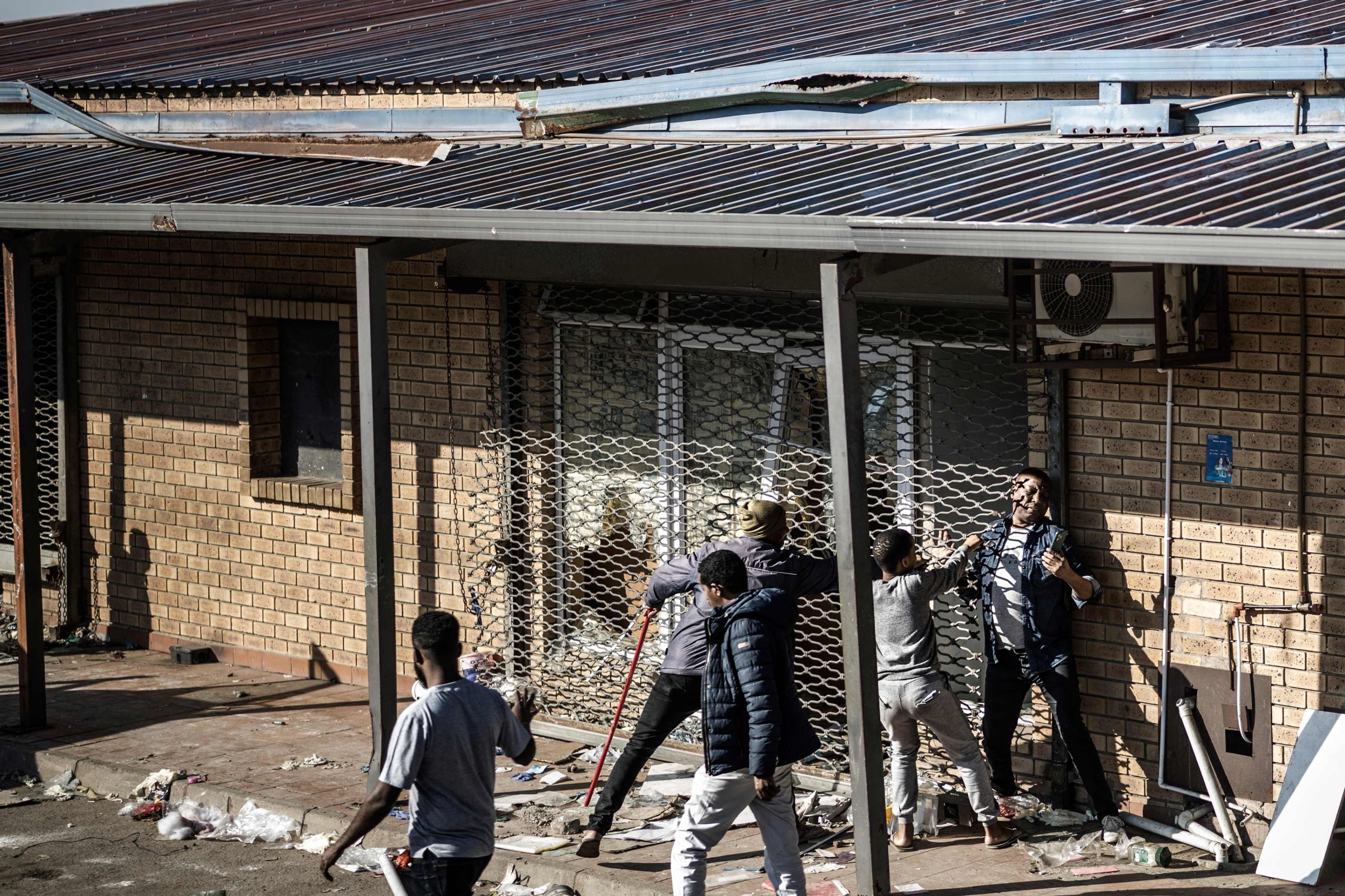
Tuesday's demonstrations were largely peaceful, but violence erupted in several communities as migrant-owned shops were looted and vandalized.
Among the victims was Daniel Abide, an Ethiopian shop owner in Clermont township outside Durban.
One of his two convenience stores was stripped bare by looters overnight. The other escaped damage.
Abide, who has lived in South Africa for 10 years, employs a South African worker and says migrants are creating opportunities rather than taking them away.
"Foreigners are not taking jobs from South Africans," he said. "We are starting small businesses here. We are paying rent."
He hopes to reopen the destroyed shop despite the financial setback.
Residents said businesses owned by Somali and Pakistani nationals were also attacked. Outside one damaged store, workers hurried to repair shattered doors before nightfall, fearing looters might return.
South Africa's anti-immigration movement has gained momentum as frustration grows over unemployment, crime and struggling public services.
The group leading the protests, March and March, insists it is campaigning only against undocumented immigration rather than foreigners in general.
Its leader, Jacinta Ngobese, argues that migrant-owned businesses have displaced local entrepreneurs.
"This economy belongs to our people and it has been hijacked," she told supporters during Tuesday's march.
Ngobese has called for weekly demonstrations every Thursday until the government's immigration policies are tightened, including demands for mass deportations.
Although organizers reject accusations of xenophobia, migrants say they are frequently harassed regardless of their legal status.
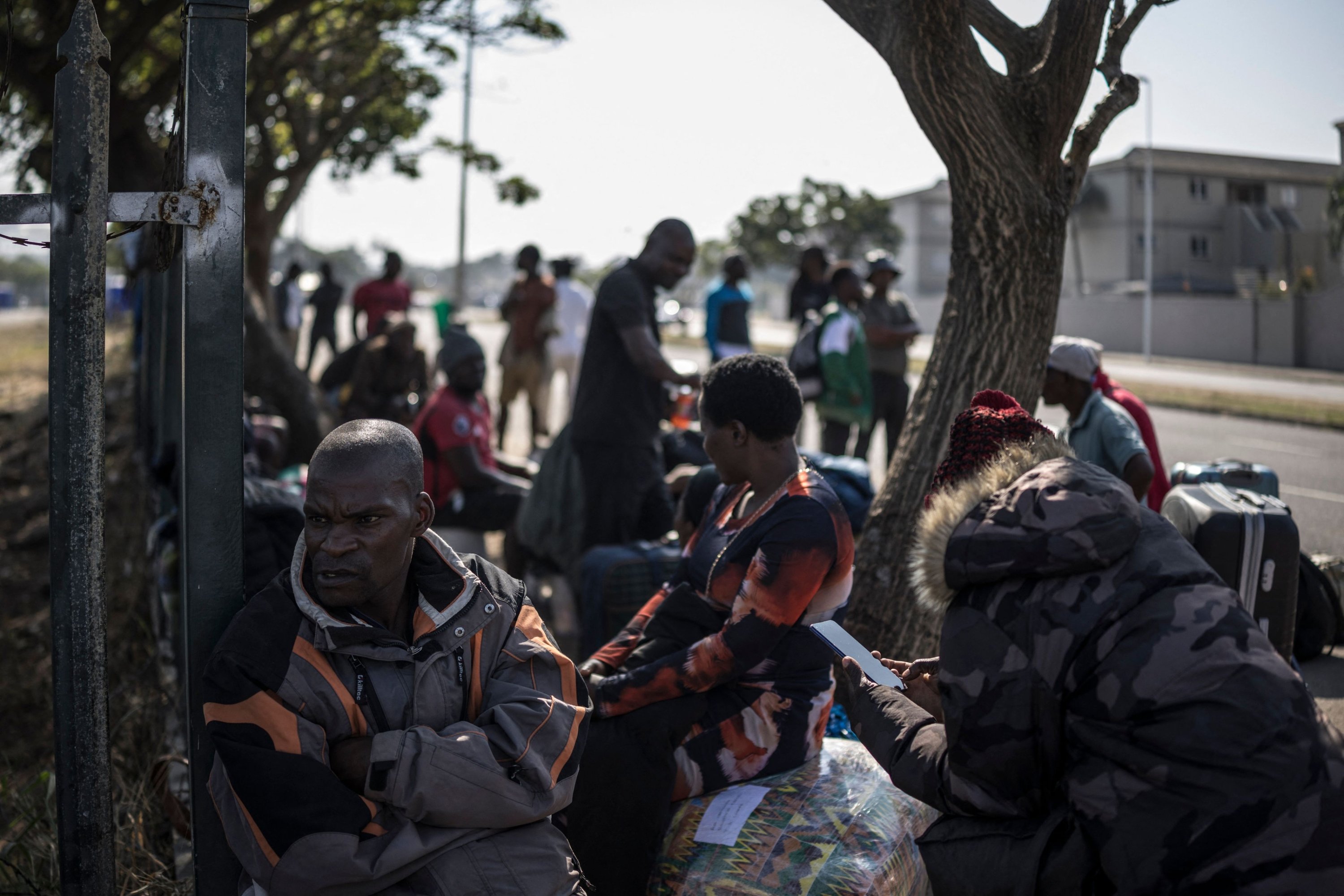
Many report being stopped by civilians demanding identity documents, even though South African authorities have repeatedly stated that only police officers have the legal authority to request immigration papers.
South Africa hosts more than 167,000 refugees and asylum-seekers, according to the United Nations, while its overall immigrant population stands at roughly 3 million, about 4 percent of the country's population.
That proportion is relatively low compared with several other African nations. Uganda hosts around 1.8 million refugees, Chad more than 1.2 million and Kenya about 850,000.
Researchers have consistently found little evidence that immigration is responsible for South Africa's economic struggles, despite widespread public perceptions linking migrants to unemployment and crime.
Still, refugees say fear has become part of everyday life.
Wolde now keeps a laminated folder containing his refugee permit, tax records and bank statements within easy reach.
He often shows the documents several times a day to police officers or anyone questioning whether he belongs in the country.
Even so, customers have stopped visiting his business.
"Now business is no good," he said. "Everybody is scared to come here."
This is not his first experience with anti-foreigner violence.
He survived a shooting in 2008 and endured previous waves of xenophobic unrest in 2015 and 2021.
Despite everything, he says he will stay.
"I make business here. I don't know why they're angry."
The protests have also sparked fresh diplomatic tensions between South Africa and Ghana following the death of a Ghanaian migrant.
Ghana's Foreign Ministry said Bashiru Isak, 40, was shot and killed during anti-immigrant demonstrations in Cape Town's Khayelitsha township and lodged an official protest with Pretoria.
South Africa rejected the accusation, describing Ghana's account as inaccurate and insisting that no deaths were recorded during Tuesday's nationwide protests.
Justice Minister Mmamoloko Kubayi accused Ghana of spreading misinformation that unfairly portrays South Africa as xenophobic.
"It is concerning that Ghanaian authorities continue to communicate false information about South Africa regarding developments on irregular migration," Kubayi said.
Foreign Ministry spokesman Chrispin Phiri urged governments to verify information through diplomatic channels before making public statements, saying recent claims from Ghana had not been properly substantiated.
Police offered a different account of the killing, saying a 35-year-old Ghanaian was fatally shot inside a barbershop on Monday during what investigators believe was an attempted extortion.
According to police, unidentified gunmen entered the shop, demanded money and shot the victim before fleeing.
Authorities also disputed the victim's identity, the date of the incident and the location provided by Ghana.