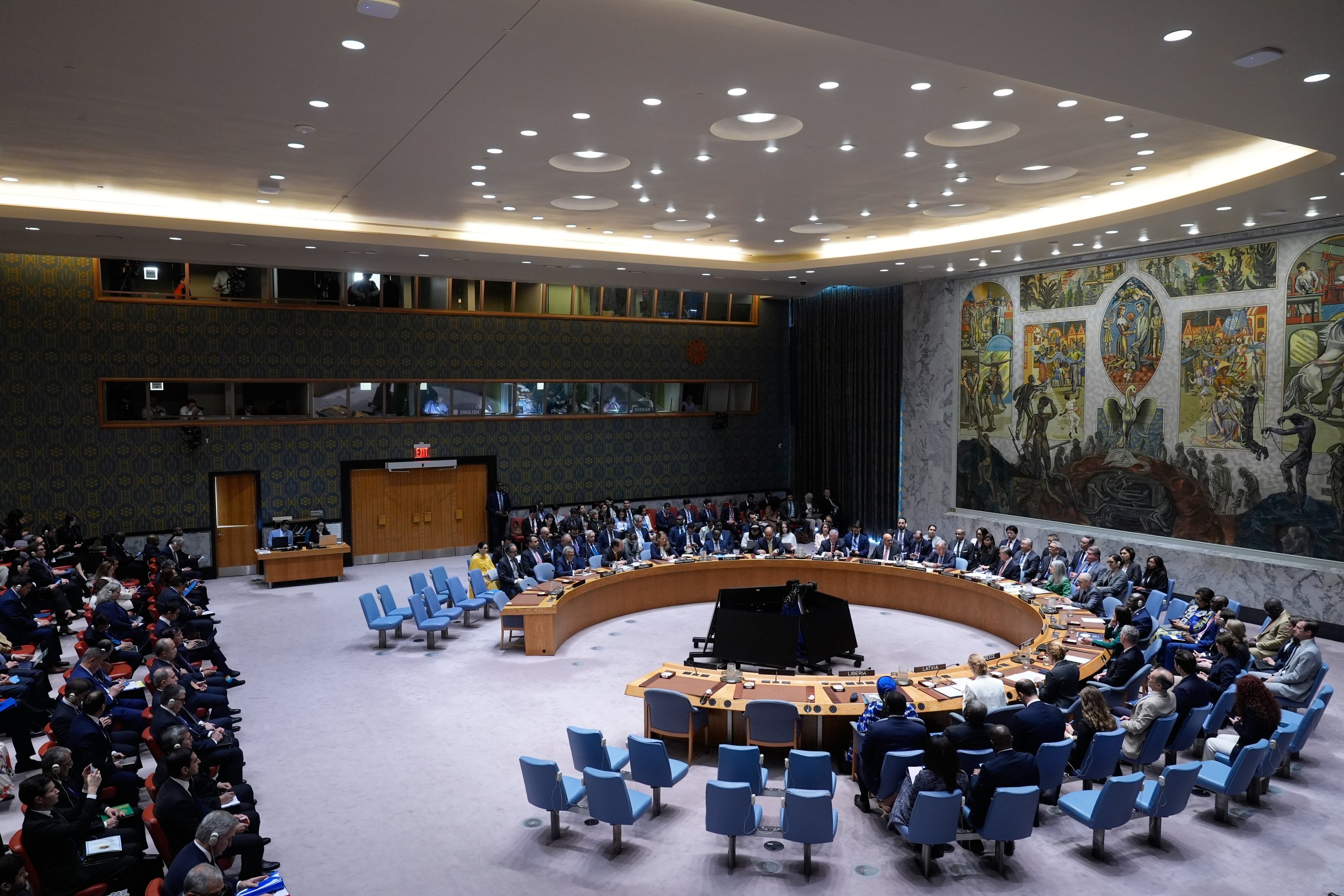
The U.N. Security Council Tuesday welcomed an agreement by Libya’s rival political entities that could pave the way for elections within two years.
The U.N.-backed deal, signed in the capital Tripoli on Aug. 30, was hailed as a step toward holding much-delayed national elections in the deeply divided country.
Jerome Bonnafont, France's permanent representative to the United Nations, who is presiding over the Security Council this month, called the agreement "an important step towards delivering free, fair, transparent" national elections, as well as "advancing the unification of Libya's institutions to fulfill the aspirations of the Libyan people."
Bonnafont stressed the importance of "this agreement being supported by all Libyan stakeholders, and encouraged them to work towards its implementation."
The Security Council also voiced "full support" for Special Representative of the Secretary for Libya Hanna Tetteh, Bonnafont added.
The oil-rich North African country has struggled to recover from the chaos that followed the 2011 NATO-backed uprising that toppled longtime ruler Moammar Gadhafi.
Two governments are currently vying for power: the U.N.-recognized administration in Tripoli led by Prime Minister Abdul Hamid Mohammed Dbeibah and a rival in the east backed by military commander Gen. Khalifa Haftar.
The road map, unveiled in August 2025 by the United Nations, calls for reforming the country's electoral framework, unifying its divided executive institutions and facilitating broader political dialogue.