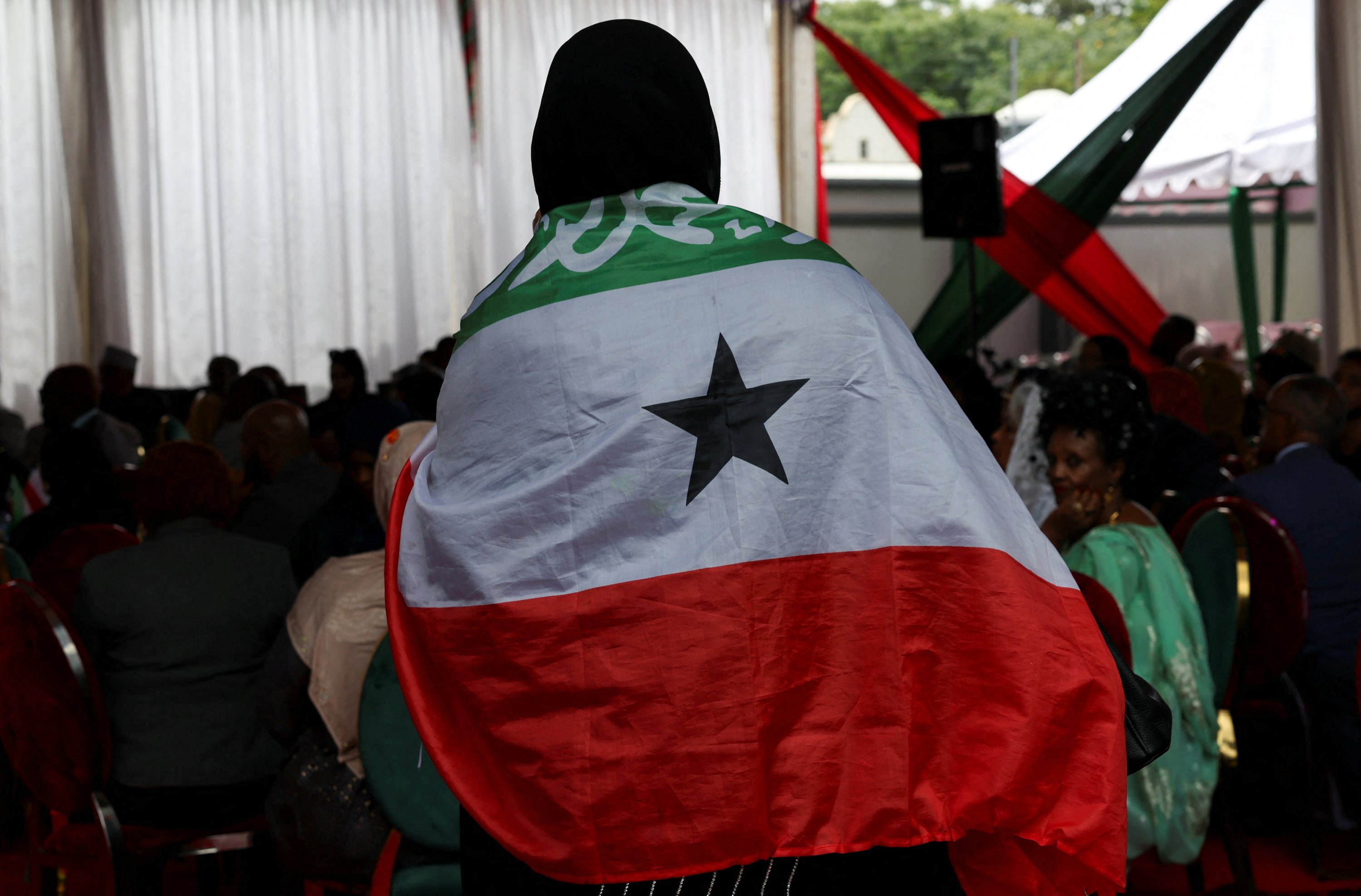
The U.N. Security Council will convene an emergency meeting Monday as global backlash grew over Israel's controversial recognition of Somaliland as an independent state.
Ahead of the session, 21 predominantly Muslim countries issued a joint statement late Saturday warning of "serious repercussions" from the Israeli decision on "peace and security in the Horn of Africa" and in the wider Red Sea region.
Somaliland, a Muslim-majority region in northern Somalia with a population of a few million, has enjoyed some autonomy for over three decades.
However, Israel on Friday became the first country in the world to recognize the territory's independence, drawing Somali and international condemnation.
The decision came just days before Somalia is due to assume the rotating presidency of the U.N. Security Council.
The joint statement, published by Qatar, outlined the 21 countries' "unequivocal rejection" of the Israeli move, warning that it "constitutes a grave violation of the principles of international law."
The statement also condemned "attempts to forcibly expel the Palestinian people out of their land," after reports that the recognition was connected to efforts to relocate Palestinians from Gaza.
Somaliland official Abdirahman Dahir Adam claimed on Israeli broadcaster Channel 12 on Saturday that the move had nothing to do with Israel's war on Gaza.
According to Israeli Prime Minister Benjamin Netanyahu's office, the recognition was made "in the spirit of the Abraham Accords," which saw several Arab countries formally recognize Israeli independence.
The Times of Israel newspaper pointed out that the United Arab Emirates, Bahrain and Morocco – who all joined the Abraham Accords – were not among the signatories of the joint statement on the recognition of Somaliland.
That claim, however, did little to prevent condemnations from Türkiye, European, Middle Eastern and African countries, as well as international organizations.
Turkish Foreign Ministry spokesperson Öncü Keçeli said that Israel’s statement recognizing Somaliland constitutes a new example of unlawful actions by the Netanyahu government, aimed at creating regional and global instability.
He stressed that the move amounts to open interference in Somalia’s internal affairs, noting that decisions related to the future of the country and its northern breakaway region must reflect the will of all Somalis.
Keçeli also reaffirmed Türkiye’s commitment to peace and security in the Horn of Africa, adding that Ankara firmly supports Somalia’s territorial integrity and will continue to stand with the Somali people.
Somali President Hassan Sheikh Mohamud said Israel’s move is "against international law" and constitutes unacceptable interference in Somalia’s internal affairs, stressing that "Somalia & its people are one: inseparable by division from a far."
The Somali Foreign Ministry rejected the step as unlawful, reaffirming the country’s sovereignty and territorial integrity under international and regional charters.
Somalia’s Southwest State President Abdiaziz Hassan Mohamed also condemned the move in a statement on US social media company X saying: "I firmly reject PM Netanyahu’s declaration recognizing Somaliland."
He further added: "This violates international law and threatens Somalia’s sovereignty and unity."
Egypt’s Foreign Minister Badr Abdelatty, in the meantime, held phone calls with his counterparts from Somalia, Türkiye, and Djibouti, rejecting and condemning Israel’s decision, according to the Foreign Ministry.
The ministry stressed that any unilateral action violating Somalia’s sovereignty or undermining its stability, including attempts to impose parallel entities, is unacceptable.
The African Union (AU) also rejected any recognition of Somaliland, reaffirming its unwavering commitment to Somalia’s unity, sovereignty and territorial integrity.
"The Chairperson of the Commission, Mahmoud Ali Youssouf, firmly rejects any initiative or action aimed at recognizing Somaliland as an independent entity," the bloc said in a statement on X, warning that such moves risk undermining peace and stability across the continent.
It added that Somaliland remains an integral part of the Federal Republic of Somalia.
The Gulf Cooperation Council’s secretary-general, Jasem Mohamed Albudaiwi, condemned and rejected Israel’s decision to recognize Somaliland, warning it could undermine stability in the Horn of Africa and set a dangerous precedent that risks increasing regional tension and conflict.
Arab League Secretary-General Ahmed Aboul Gheit called Israel’s decision unacceptable, describing it as a clear violation of international law.
He warned that unilateral recognition constitutes interference in Somalia’s internal affairs and sets a dangerous precedent.
US President Donald Trump said Friday he did not intend to immediately follow Israel in recognizing Somaliland.
"Everything is under study ... We’ll study it. I study a lot of things and always make great decisions and they turn out to be correct," Trump told the New York Post in a phone interview.
On Somaliland’s proposal to provide the US with access to a port on the strategically significant Gulf of Aden, Trump responded dismissively, saying: "Big deal."
Qatar also voiced firm opposition, calling the decision to recognize Somaliland a dangerous precedent and a unilateral step that violates international law and infringes on Somalia’s sovereignty, unity, and territorial integrity.
In a statement, the Gulf nation's Foreign Ministry rejected any attempts to establish or impose parallel entities that would undermine Somalia’s unity, reaffirming full support for Somalia’s legitimate institutions and for preserving the country’s security and stability.
The ministry added that Israel should instead recognize the State of Palestine and work to end the war in the Gaza Strip, accusing Israel of undermining international legitimacy and fueling regional instability.
Qatar’s Emir Tamim bin Hamad Al Thani told Somali President Hassan Sheikh Mohamud in a phone call that Doha fully supports Somalia’s sovereignty and territorial integrity.
The European Union on Saturday said respecting Somalia's unity, sovereignty and territorial integrity is "key for the peace and stability of the entire Horn of Africa region," following Israel's recognition of Somaliland as an independent state a day earlier.
In a statement, the bloc said it "reaffirms the importance of respecting the unity, the sovereignty and the territorial integrity of the Federal Republic of Somalia," in line with its Constitution and the charters of the African Union and the UN.
The EU said it "encourages meaningful dialogue between Somaliland and the Federal Government of Somalia to resolve long-standing differences."
Saudi Arabia said Israel’s step entrenches "unilateral, separatist measures" and contradicts international law. In a statement, the Saudi Foreign Ministry underscored the kingdom’s "full support" for the sovereignty of Somalia and the unity and integrity of its territory.
Riyadh also rejected "attempts to impose parallel entities" that undermine Somalia’s stability and said it backs the country’s legitimate state institutions.
Palestine’s Foreign Ministry also reaffirmed support for Somalia’s unity, sovereignty and political independence, rejecting Israel’s recognition of Somaliland as a move that undermines the country's stability and poses a regional threat.
It accused Tel Aviv of using Somaliland within broader destabilizing policies, including toward Palestinians in Gaza.
Hamas on Saturday rejected Israeli plans to forcibly displace Palestinians from Gaza, including to Somaliland, following Tel Aviv’s recognition of the breakaway region.
In a statement, the group said it rejects " the exchange of recognition between Somaliland and the criminal Zionist entity," describing the move as "a dangerous precedent" and "an unacceptable attempt to gain false legitimacy."
Iran on Saturday strongly condemned Israel’s recognition of Somaliland as a "flagrant violation of Somalia’s sovereignty and territorial integrity."
Foreign Ministry spokesperson Esmail Baghaei described the move as "malicious," stressing the need for "preserving the national sovereignty, unity, and territorial integrity" of Somalia, and said it fits in with Israel’s policy "to destabilize countries in the region and exacerbate insecurity in the Red Sea and the Horn of Africa."
Backing condemnations by the OIC and AU, Baghaei urged "decisive action" by the international community to "neutralize this expansionist and threat-creating move by the occupying regime."