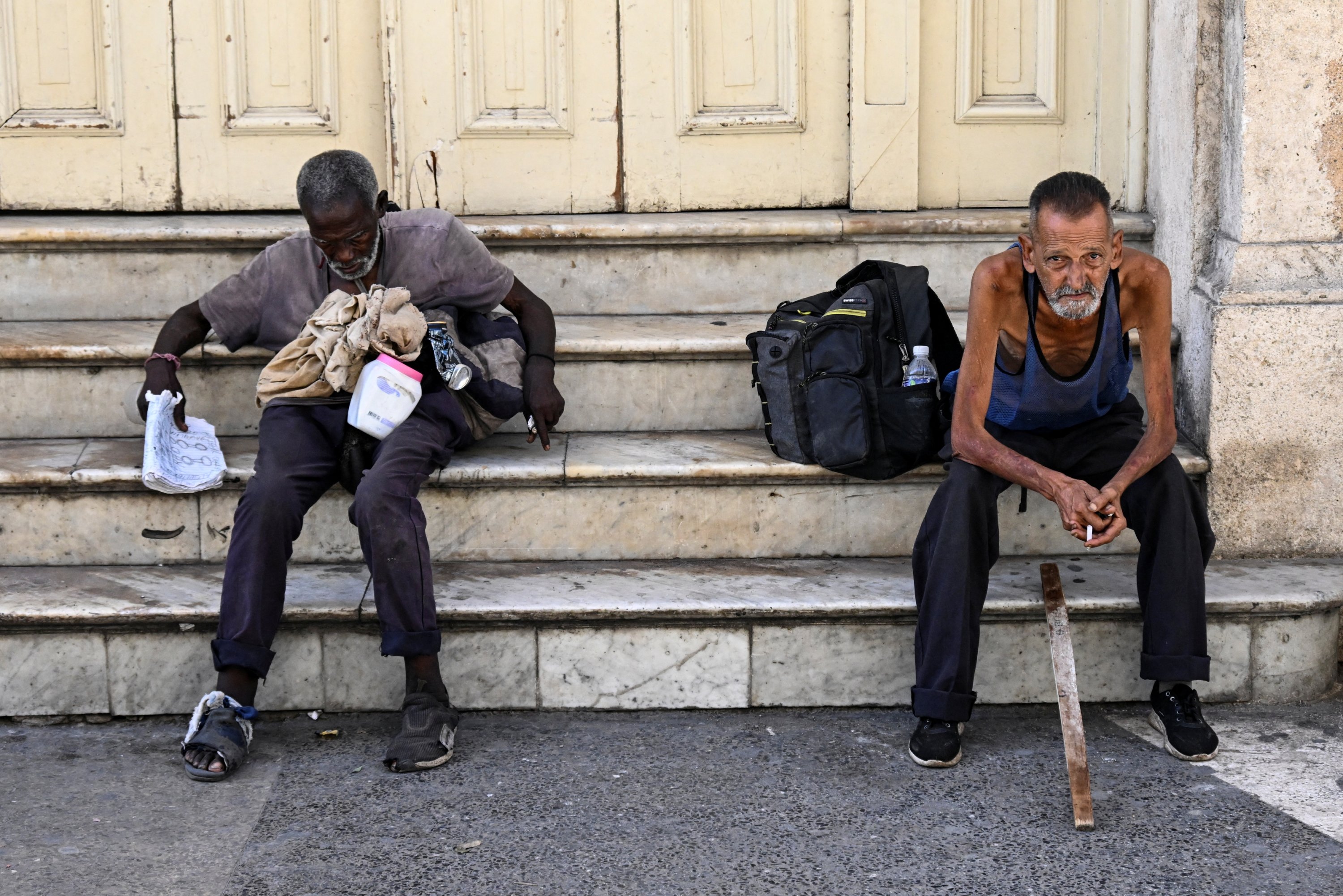
Nearly 94% of Cubans are living in extreme poverty, while eight in 10 have skipped at least one meal because they lacked food or money, according to a new report by the Madrid-based Cuban Observatory for Human Rights.
The percentage of Cubans living in extreme poverty rose from 89% in 2025 to 94% this year, according to the report, which uses the World Bank's extreme poverty threshold as a reference.
The study found that 68% of respondents reported monthly household incomes below 20,000 Cuban pesos, equivalent to about $30.
Power outages were identified as the country's most urgent social problem, followed by food shortages, the cost of living, health care, salaries, and insecurity.
The report also highlighted deteriorating housing conditions, saying nearly half of respondents live in homes requiring repairs. Some 25% said their homes need urgent repairs, while 7% reported living in housing at risk of collapse.
The deterioration of public services was another major concern. Respondents gave particularly negative assessments of the electricity system, followed by garbage collection, telephone and internet services, sewage systems, and health care.
The report said 95% of respondents view the government's management negatively or very negatively, while 84% said they did not trust the economic measures implemented by authorities to address the crisis.
Half of those surveyed said they expect a favorable and significant change for the Cuban people within the next six months.
Meanwhile, 76% said they want future changes to include both political and economic reforms, while 9% favored economic changes only.
Yaxys Cires, director of strategy at the Spanish-based group, described the findings as evidence of the "growing impoverishment of Cuban families."
The survey was conducted between June 27 and July 29 across all 15 Cuban provinces and 79 municipalities, using face-to-face interviews assisted by mobile devices.
The sample was stratified by place of residence, gender, age, and racial group, according to the group.