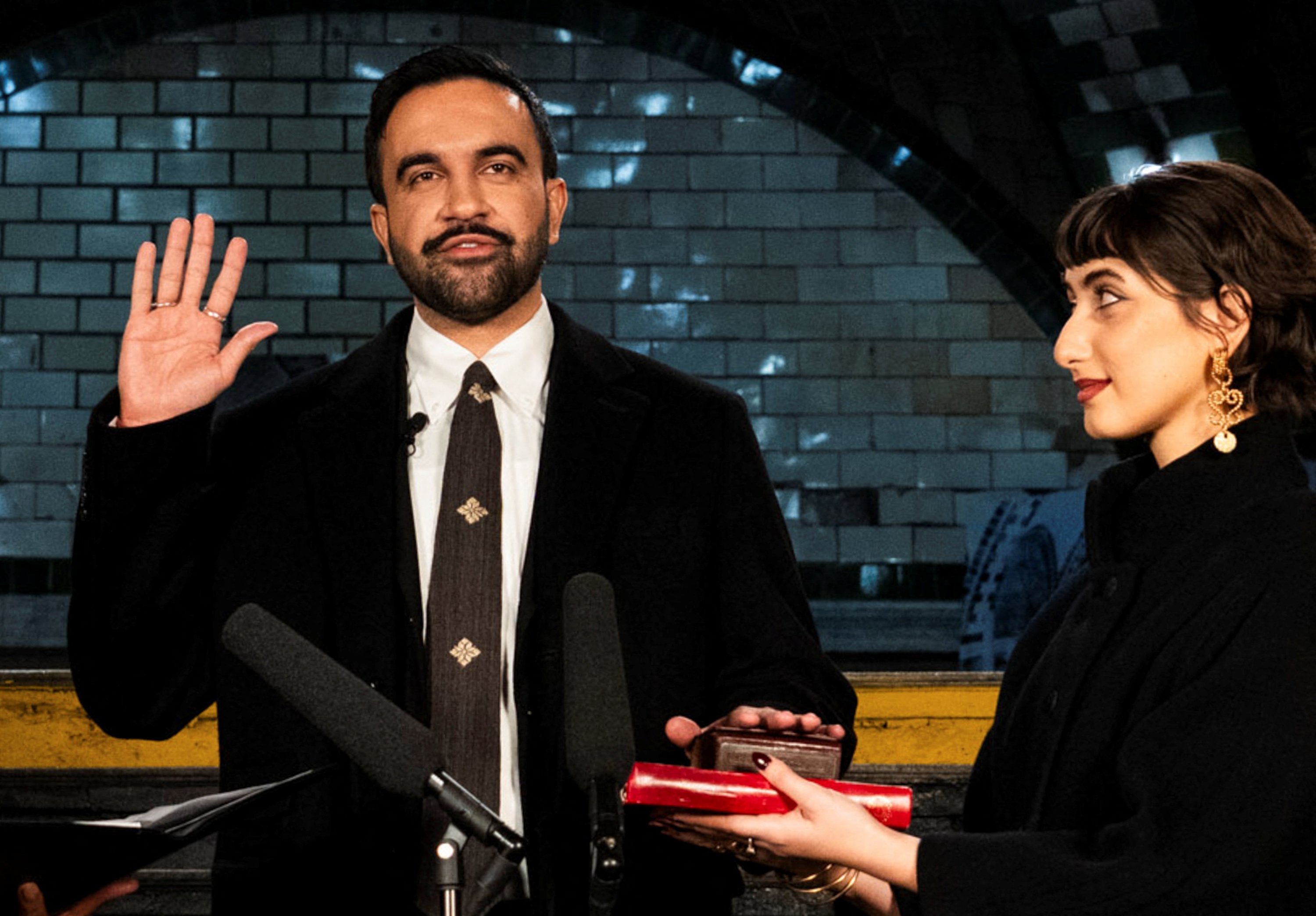
Zohran Mamdani was sworn in as New York City’s mayor just after midnight Thursday during a ceremony held at a historic, decommissioned subway station in Manhattan.
Mamdani, a Democrat, was sworn in as the first Muslim leader of America's biggest city, placing his hand on a centuries-old Quran as he took his oath.
"This is truly the honor and the privilege of a lifetime," Mamdani said in a brief speech.
The private ceremony, administered by New York Attorney General Letitia James, a political ally, took place at the old City Hall station, one of the city's original subway stops that is known for its stunning arched ceilings.
In Mamdani's first remarks as mayor, he said the old subway station was a "testament to the importance of public transit to the vitality, the health and the legacy of our city" as he announced the appointment of his new Department of Transportation commissioner, Mike Flynn.
The new mayor then closed: "Thank you all so much, now I will see you later," he said with a smile before heading up a flight of stairs.
Mamdani will be sworn in again, in grander style, in a public ceremony at City Hall at 1 p.m. by U.S. Sen. Bernie Sanders, one of the mayor's political heroes. That will be followed by what his office is billing as a public block party on a stretch of Broadway known as the "Canyon of Heroes," famous for its ticker-tape parades.
Mamdani now begins one of the most unrelenting jobs in American politics as one of the country's most-watched politicians.
In addition to being the city's first Muslim mayor, Mamdani is also its first of South Asian descent and the first to be born in Africa. At 34, Mamdani is also the city's youngest mayor in generations.
These milestones - as well as the historical Quran he used for the ceremony - reflect the longstanding and vibrant Muslim residents of the nation's most populous city, according to a scholar who helped Mamdani's wife, Rama Duwaji, select one of the books.
Most of Mamdani's predecessors were sworn in on a Bible, although the oath to uphold the federal, state and city constitutions does not require the use of any religious text.
And while he has focused heavily on the issue of affordability during his campaign, Mamdani was outspoken about his Muslim faith. He frequently appeared at mosques across the five boroughs as he built a base of support that included many first-time South Asian and Muslim voters.
Mamdani placed his hand on two Qurans during the subway ceremony: his grandfather's Quran and a pocket-sized version that dates back to the late 18th or early 19th century. It is part of the collection at the New York Public Library's Schomburg Center for Research in Black Culture.
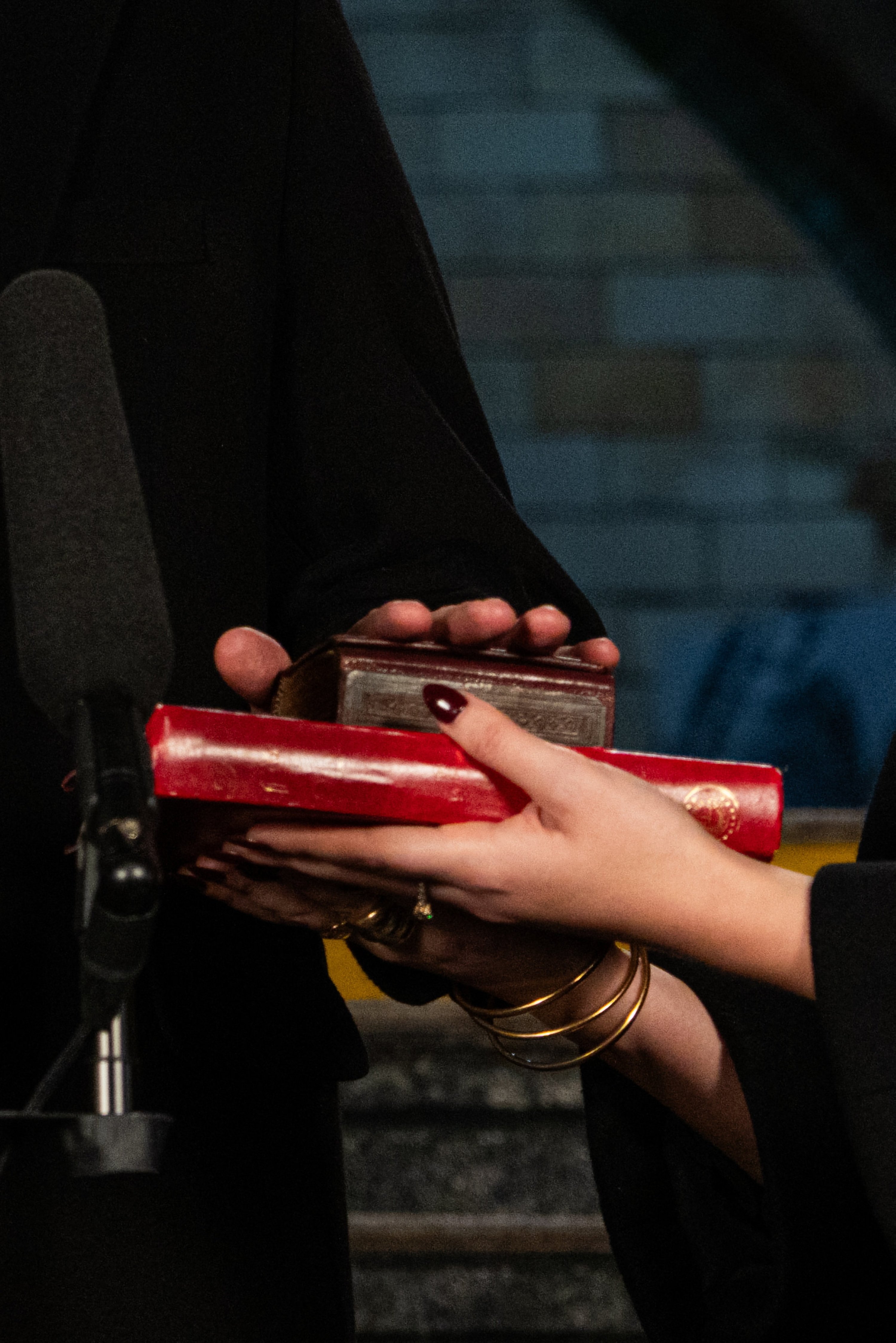
That copy of the Quran symbolizes the diversity and reach of the city's Muslims, said Hiba Abid, the library's curator for Middle Eastern and Islamic Studies.
"It's a small Quran, but it brings together elements of faith and identity in New York City history," Abid said.
In a campaign that helped make "affordability" a buzzword across the political spectrum, the democratic socialist promised to bring transformative change with policies intended to lower the cost of living in one of the world's most expensive cities. His platform included free child care, free buses, a rent freeze for about 1 million households, and a pilot of city-run grocery stores.
But he will also have to face other responsibilities: handling trash and snow and rats, while getting blamed for subway delays and potholes.
Mamdani was born in Kampala, Uganda, the son of filmmaker Mira Nair and Mahmood Mamdani, an academic and author. His family moved to New York City when he was 7, with Mamdani growing up in a post-9/11 city where Muslims didn't always feel welcome. He became an American citizen in 2018.
He worked on political campaigns for Democratic candidates in the city before he sought public office himself, winning a state Assembly seat in 2020 to represent a section of Queens.
Mamdani and his wife, Rama Duwaji, will depart their one-bedroom, rent stabilized apartment in the outer-borough to take up residence in the stately mayoral residence in Manhattan.
Mamdani inherits a city on the upswing, after years of slow recovery from the COVID-19 pandemic. Violent crime has dropped to pre-pandemic lows. Tourists are back. Unemployment, which soared during the pandemic years, is also back to pre-COVID levels.
Yet deep concerns remain about high prices and rising rents in the city.
He'll also have to deal with Republican President Donald Trump.
During the mayoral race, Trump threatened to withhold federal funding from the city if Mamdani won and mused about sending National Guard troops to the city.
But Trump surprised supporters and foes alike by inviting the Democrat to the White House for what ended up being a cordial meeting in November.
"I want him to do a great job and will help him do a great job," Trump said.
Still, tensions between the two leaders are almost certain to resurface, given their deep policy disagreements, particularly over immigration.
Mamdani also faces skepticism and opposition from some members of the city's Jewish community over his criticisms of Israel's government.
The new mayor and his team have spent the weeks since his election victory preparing for the transition, surrounding Mamdani with seasoned hands who have worked inside or alongside city government.
That included persuading the city's police commissioner, Jessica Tisch, to remain in her position - a move that helped calm fears in the business community that the administration might be planning radical changes in policing strategy.