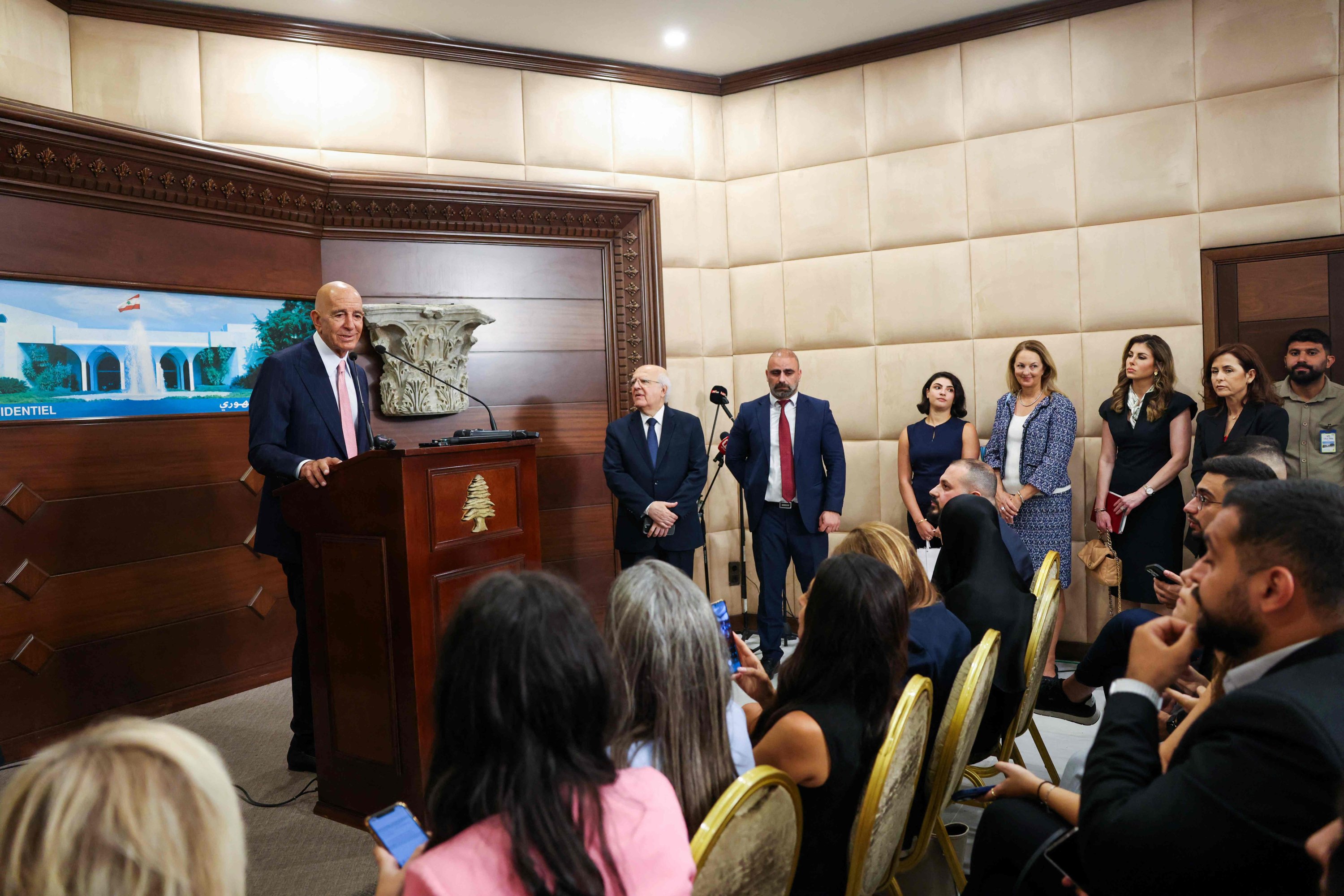
U.S. envoy to Syria Tom Barrack on Tuesday triggered a storm of criticism in Lebanon after referring to journalists’ behavior as “animalistic” during a press conference at the Presidential Palace in Beirut.
As reporters shouted questions following Barrack’s meeting with Lebanese President Joseph Aoun, the envoy, who also serves as U.S. ambassador to Türkiye, stepped to the podium and demanded silence. “We’re going to have a different set of rules... please be quiet for a moment,” he said. “The moment this starts becoming chaotic, like animalistic, we’re gone. So, you want to know what’s happening? Act civilized, act kind, act tolerant, because this is the problem with what’s happening in the region.”
The comments provoked swift backlash from Lebanese officials, media unions and press organizations. The Lebanese presidency issued a statement expressing “regret” at the remarks made “from its platform by one of its guests,” stressing “absolute respect for human dignity” and reaffirming its appreciation for accredited journalists. Information Minister Paul Morcos also voiced regret over the remarks, calling them inappropriate.
Press groups were far more forceful. The Syndicate of Lebanese Press Editors denounced Barrack’s conduct as “absolutely unacceptable and highly reprehensible,” declaring: “The dignity of journalists is not cheap, and no envoy, no matter how high his rank, can exceed the limits.” It warned that failure to issue a public apology could lead to a boycott of Barrack’s visits and meetings. The Photojournalists’ Syndicate called the comments a “direct insult” that set “a serious and totally unacceptable precedent,” while the Union of Journalists said the envoy’s words reflected “unacceptable arrogance in dealing with the media.”
Ibrahim Musawi, a lawmaker from Hezbollah and head of parliament’s media committee, described Barrack’s statement as “a blatant insult” and urged the government to summon and reprimand him.
Barrack arrived in Beirut earlier Tuesday for meetings with senior officials, with discussions focused on Lebanon’s plan to consolidate all weapons under state control, a move that primarily targets Hezbollah. On Aug. 5, the Lebanese government instructed the army to draft a disarmament strategy by the end of the month and begin implementation before the end of 2025 — a decision Hezbollah has rejected as a “grave sin.”