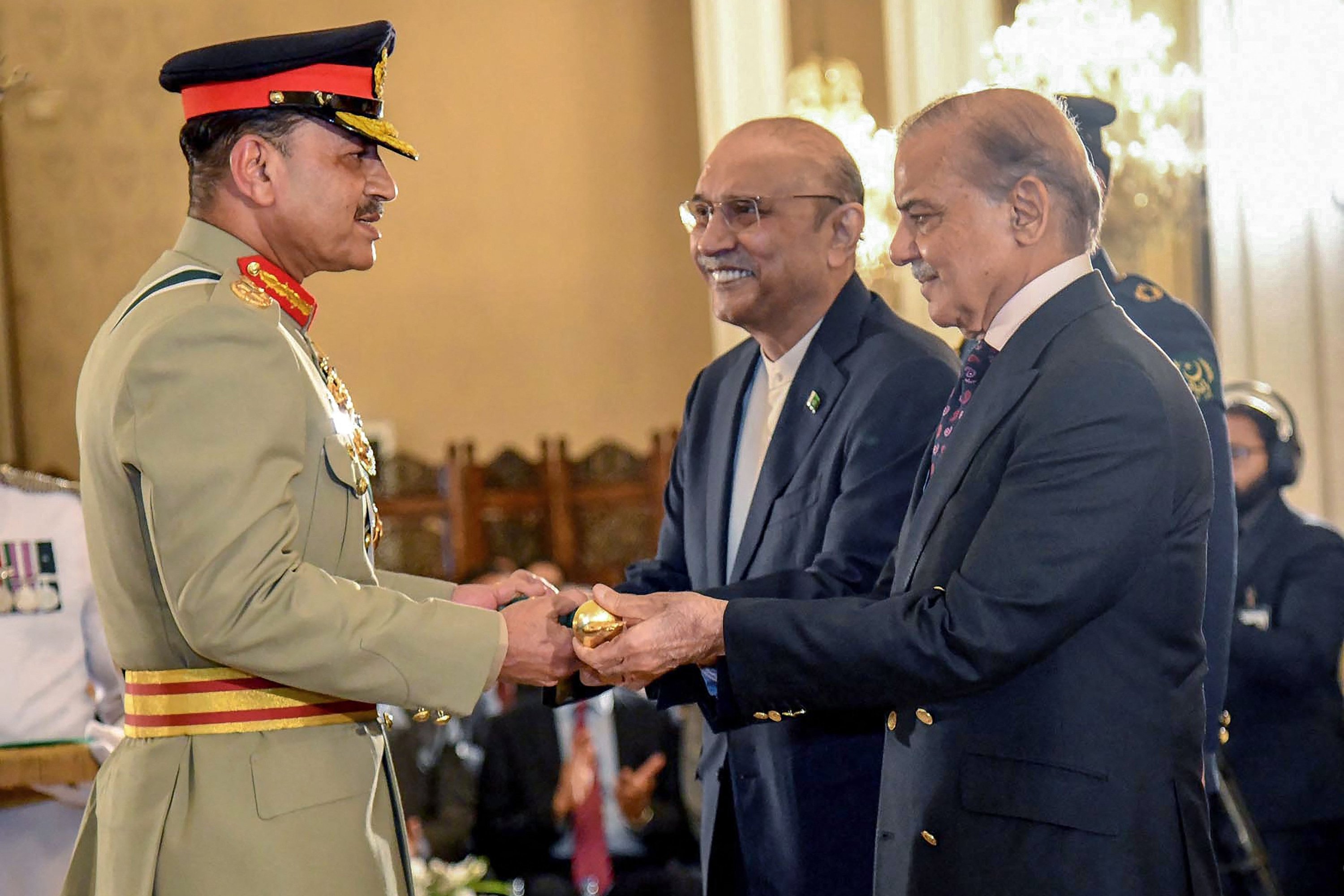
Field Marshal Asim Munir, Pakistan's widely popular army chief, has been confirmed to the newly created post of chief of defense forces, a position that was established last month to improve coordination among the army, navy and air force.
Prime Minister Shehbaz Sharif's office said in a statement that a summary for the appointment of Munir as both chief of army staff and chief of defense forces had been sent to President Asif Ali Zardari for approval. The president then approved the appointment, confirming Munir's expanded role.
"The appointment is for a period of five years," the statement said.
Sharif also approved a two-year extension for Air Chief Marshal Zaheer Ahmed Babar, the statement said.
Munir has risen to prominence since earlier this year, when Pakistan said it defeated India in a four-day war. Pakistan and India targeted each other's military positions in tit-for-tat strikes in May. The attacks came after India struck targets inside Pakistan that it alleged were affiliated with militants responsible for the massacre of 26 tourists in Kashmir. Pakistan repeateadly rejected the claims.
But the two sides stepped back from the brink of war after U.S. President Donald Trump said India and Pakistan had agreed to a full and immediate cease-fire. Since then, the truce between the two nuclear rivals is holding.
The elevation of Munir comes months after Pakistan promoted him to field marshal, making him only the second military officer in the country's history to hold the title. The first was Gen. Ayub Khan, who led Pakistan during the 1965 war with India.
The law passed by parliament last month stipulates that Munir will remain in uniform for life and will enjoy immunity from arrest, a move which has drawn criticism from the party of imprisoned former premier Imran Khan, which says the grant of sweeping powers to Munir undermines democracy.
The army has historically wielded huge influence in Pakistan, ruling it for half of the country's history. But it has also been fighting local and foreign militants since 2001, when Pakistan became an ally of the United States in the war on terror, and thousands of people, including sliders and police officers, have died since then in militant attacks.