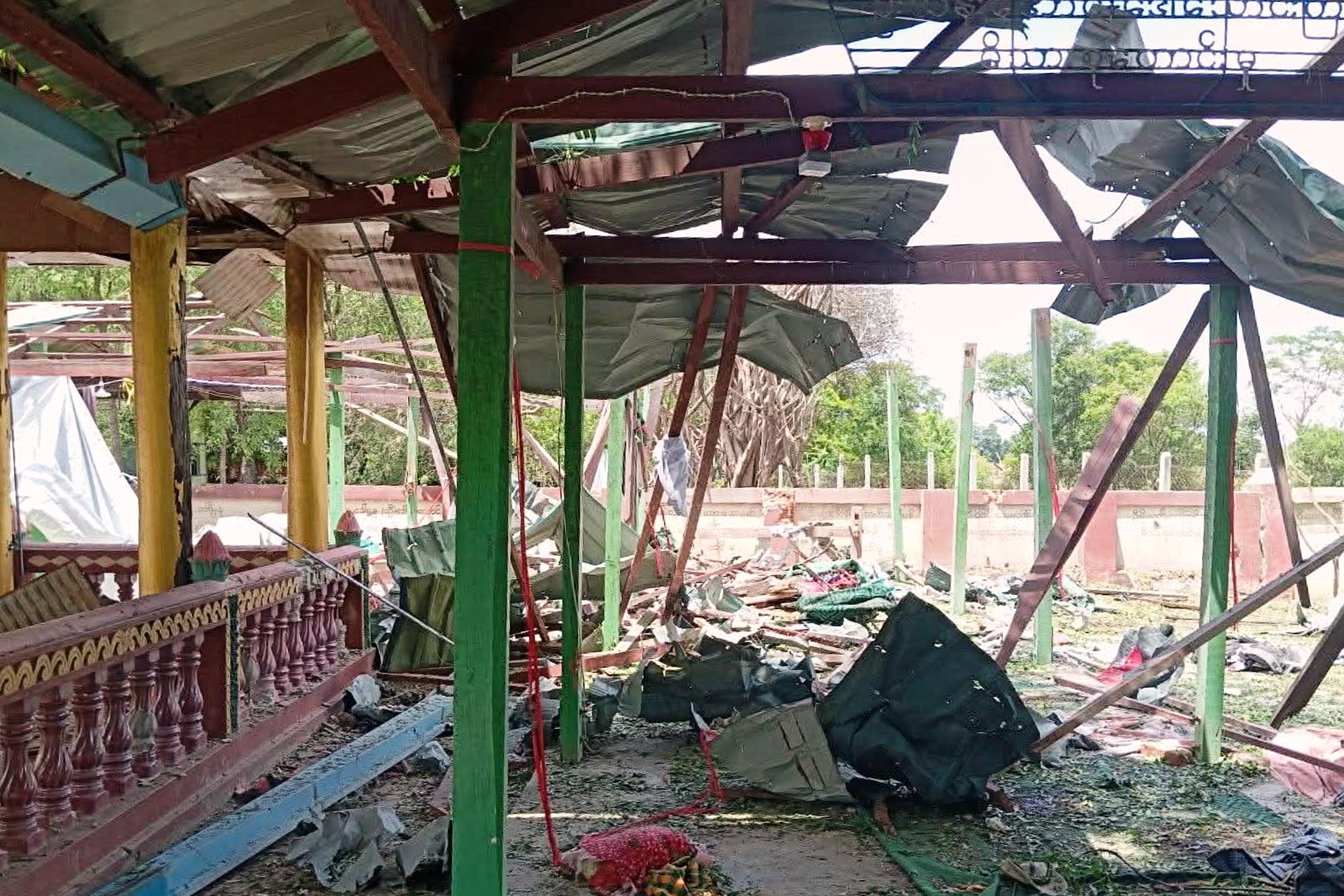
A Myanmar military airstrike on a monastery where civilians had gathered for a Buddhist Lent meditation retreat killed 14 people, including 11 men and three women, according to two local opposition fighters who witnessed the aftermath.
The strike hit a monastery hall at about 9:00 a.m. Friday in Myaung township in the central Sagaing region, one of the main areas of resistance to Myanmar’s military government.
Nway Oo Myaung, a pro-democracy rebel who helped recover the bodies, said the victims were between 50 and 70 years old and had been staying at the monastery for a three-month meditation retreat during Buddhist Lent, a period that largely coincides with Myanmar’s rainy season.
“It wasn’t a mistaken target, they intentionally attacked a monastery,” he said.
A second local opposition fighter, who spoke Saturday on condition of anonymity, said five of the dead were from his village and the other nine came from neighboring villages.
He also said the military aircraft returned to the area while rescuers were trying to recover the victims.
“While we were trying to rescue people, the aircraft came to bomb a second time,” he said.
The Myanmar military could not immediately be reached for comment.
Myanmar has been engulfed in civil war since the military seized power in a February 2021 coup, ousting the elected government of Aung San Suu Kyi and detaining the Nobel Peace Prize laureate.
The coup triggered widespread armed resistance, with the military fighting a patchwork of pro-democracy groups and powerful ethnic minority armed organizations across the country. More than 100,000 people are estimated to have been killed in the conflict.
The military has increasingly relied on airstrikes to attack areas held or contested by its opponents. Analysts say its forces use Chinese- and Russian-supplied aircraft to maintain pressure on rebel groups and compensate for difficulties on the ground.
The latest attack came shortly after United Nations investigators accused Myanmar’s military of carrying out “indiscriminate and intentional aerial attacks against civilians.”
The Independent Investigative Mechanism for Myanmar, which investigates serious international crimes committed in the country, said in a report published last week that airstrikes had repeatedly hit civilian areas.
Monasteries and schools are among the public buildings frequently reported to have been targeted in air attacks.
Myanmar’s government rejected the findings, describing them as “one-sided allegations” based on what it called unverifiable and inaccurate information about the country’s security forces.
Conflict monitoring group ACLED said in a report last month that the military’s campaign had increasingly focused on civilian infrastructure and public gatherings, including weddings and religious festivals, in an apparent effort to amplify fear and psychological pressure.
The military has continued its campaign even as it sought to portray the country as returning to political normality through elections held around the beginning of 2026.
The vote was widely dismissed by democracy advocates as a sham designed to legitimize military rule. Aung San Suu Kyi remained excluded, her political party was sidelined and opponents of military rule faced imprisonment.
The UN investigative mechanism said it had observed a notable increase in aerial attacks in the months leading up to the elections.
The elections ultimately paved the way for coup leader Min Aung Hlaing to become civilian president in April. He handed over his position as commander in chief of the armed forces to a close ally.
Since then, Min Aung Hlaing has pursued an international diplomatic campaign aimed at ending Myanmar’s isolation and securing greater recognition for his government.
India, China, Laos and Thailand have hosted him, drawing criticism from campaigners who say such engagements provide legitimacy to Myanmar’s military leadership.

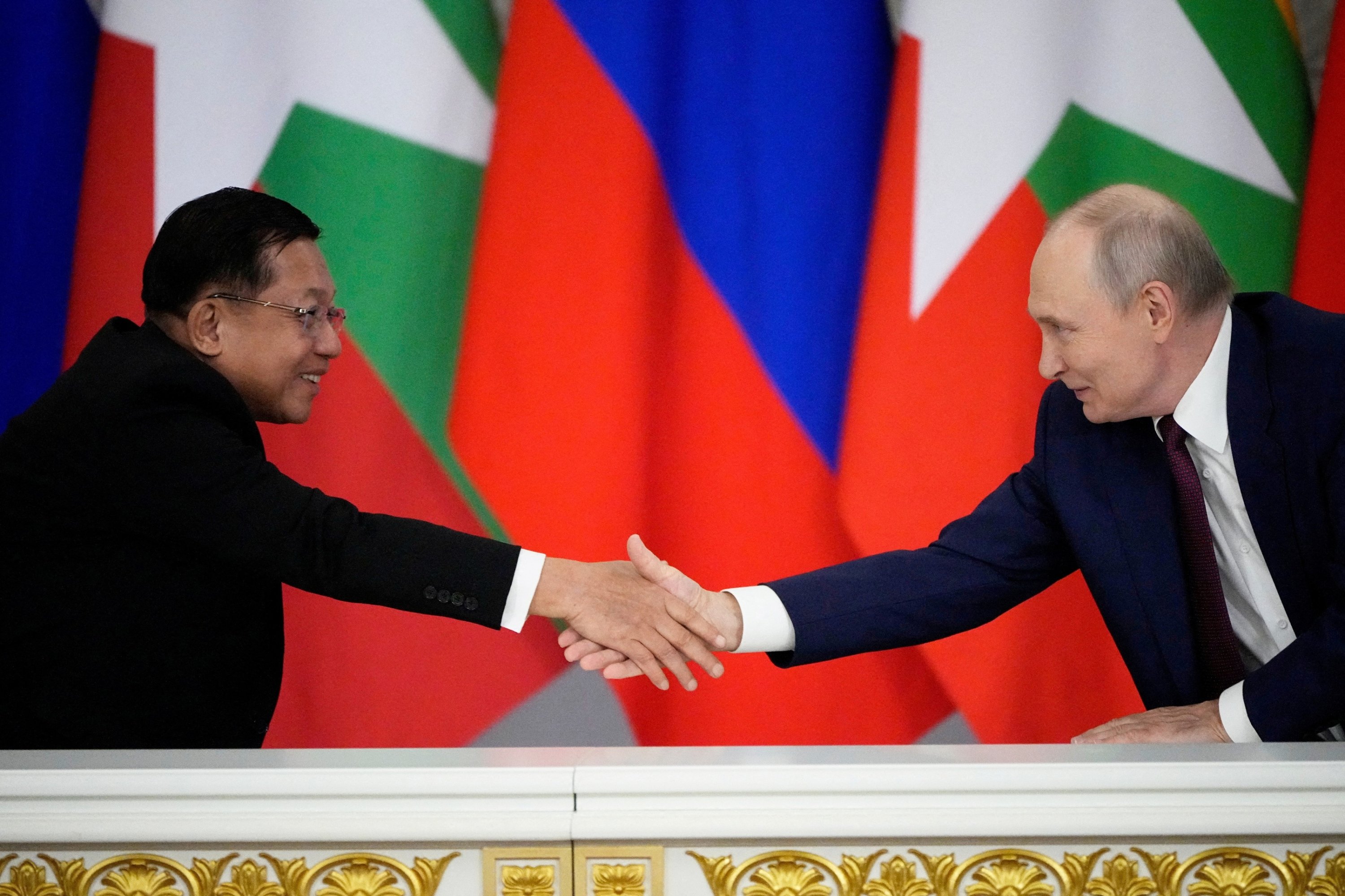
This week, Min Aung Hlaing traveled to Russia and Belarus, two of the military government’s most steadfast international allies since the coup.