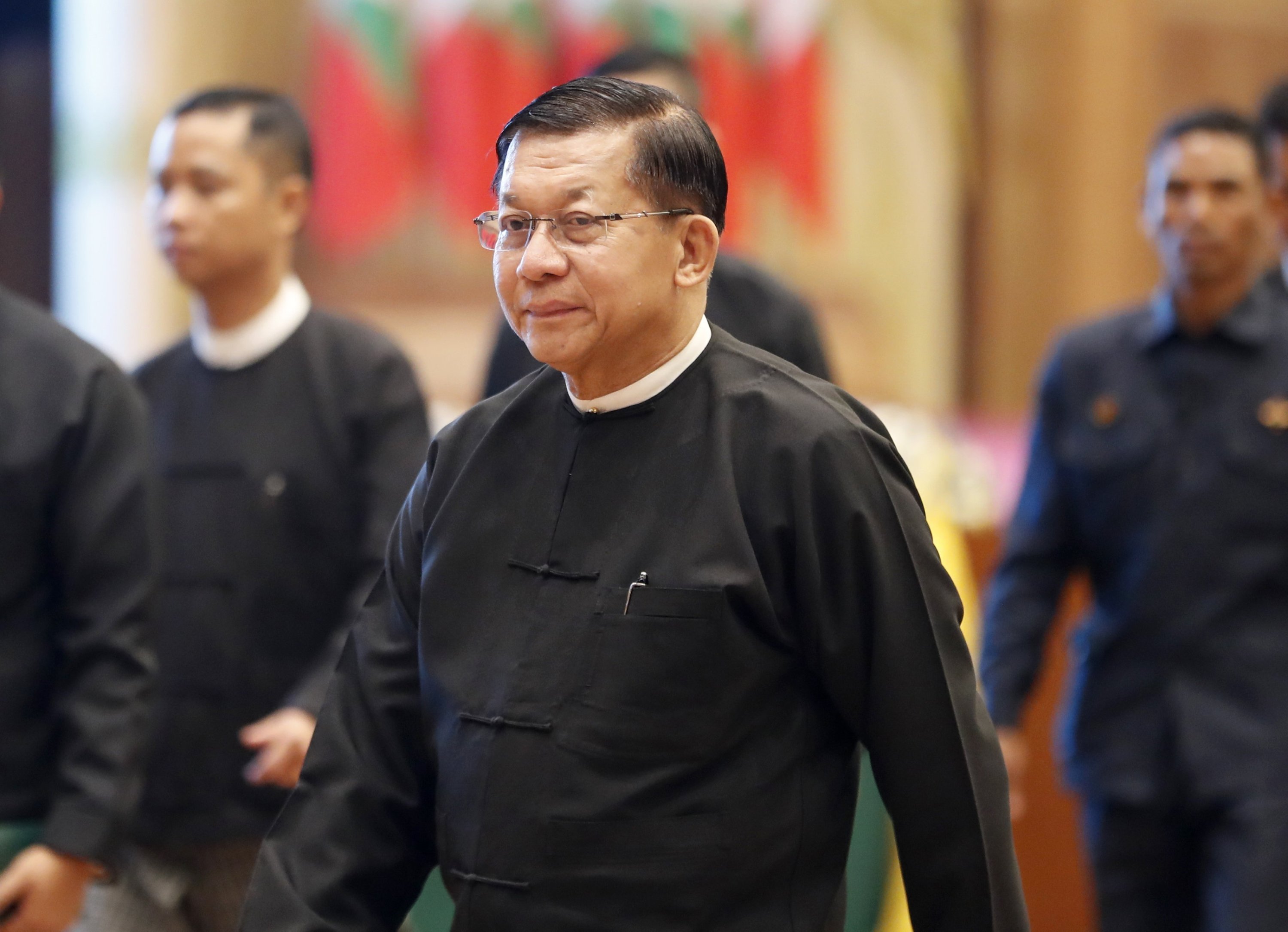
Myanmar’s ruling general Min Aung Hlaing has completed a long-anticipated transformation from military chief to civilian president, tightening his hold on a country still fractured by war and political upheaval.
Elected Friday by a parliament dominated by military allies, Min Aung Hlaing secured 429 of 584 votes, comfortably defeating fellow general Nyo Saw.
The outcome was never in doubt.
Lawmakers from the army-aligned Union Solidarity and Development Party, along with constitutionally mandated military appointees, ensured a decisive majority.
The vote formalizes what critics describe as a carefully engineered consolidation of power, five years after Min Aung Hlaing ousted the elected government of Aung San Suu Kyi in a 2021 coup that ended the country’s fragile experiment with democracy.
Suu Kyi remains imprisoned, while her party, the National League for Democracy, was effectively removed from the political arena ahead of elections widely condemned as neither free nor fair.
Min Aung Hlaing’s ascent follows a tightly choreographed sequence.
After decades in uniform and 15 years as commander-in-chief, he stepped down from the military’s top post to comply with constitutional requirements, handing control to trusted ally Ye Win Oo.
The move ensures that while he now leads a nominally civilian administration, the military remains firmly under loyal command.
The transition also dissolves the junta’s formal governing body, replacing direct military rule with a civilian facade.
Analysts say the shift is aimed at easing international pressure, reopening diplomatic channels, and reframing his leadership without relinquishing real authority.
“He has long sought the presidency as a way to legitimize his rule,” said independent analysts, noting that the title change does little to alter the underlying power structure.
Min Aung Hlaing’s presidency begins in the shadow of a brutal and unresolved conflict.
His 2021 coup triggered mass protests that were met with lethal force, pushing many civilians to take up arms.
What followed was a nationwide insurgency involving pro-democracy groups and long-standing ethnic militias.
The conflict has devastated Myanmar’s economy and displaced millions. Independent monitors estimate tens of thousands have been killed since the coup, though the true toll remains unclear.
Large parts of the country are now beyond full military control, with resistance forces mounting coordinated offensives.
International scrutiny continues to intensify.
In 2024, prosecutors at the International Criminal Court sought an arrest warrant for Min Aung Hlaing over alleged crimes against humanity tied to the 2017 military campaign against the Rohingya minority, which forced more than a million people to flee to Bangladesh.
Human rights organizations argue that his elevation to president underscores a failure of accountability. Amnesty International said the shift “changes nothing” about his alleged responsibility for serious violations of international law.
Min Aung Hlaing has consistently denied all allegations, maintaining that military operations were legitimate responses to security threats.
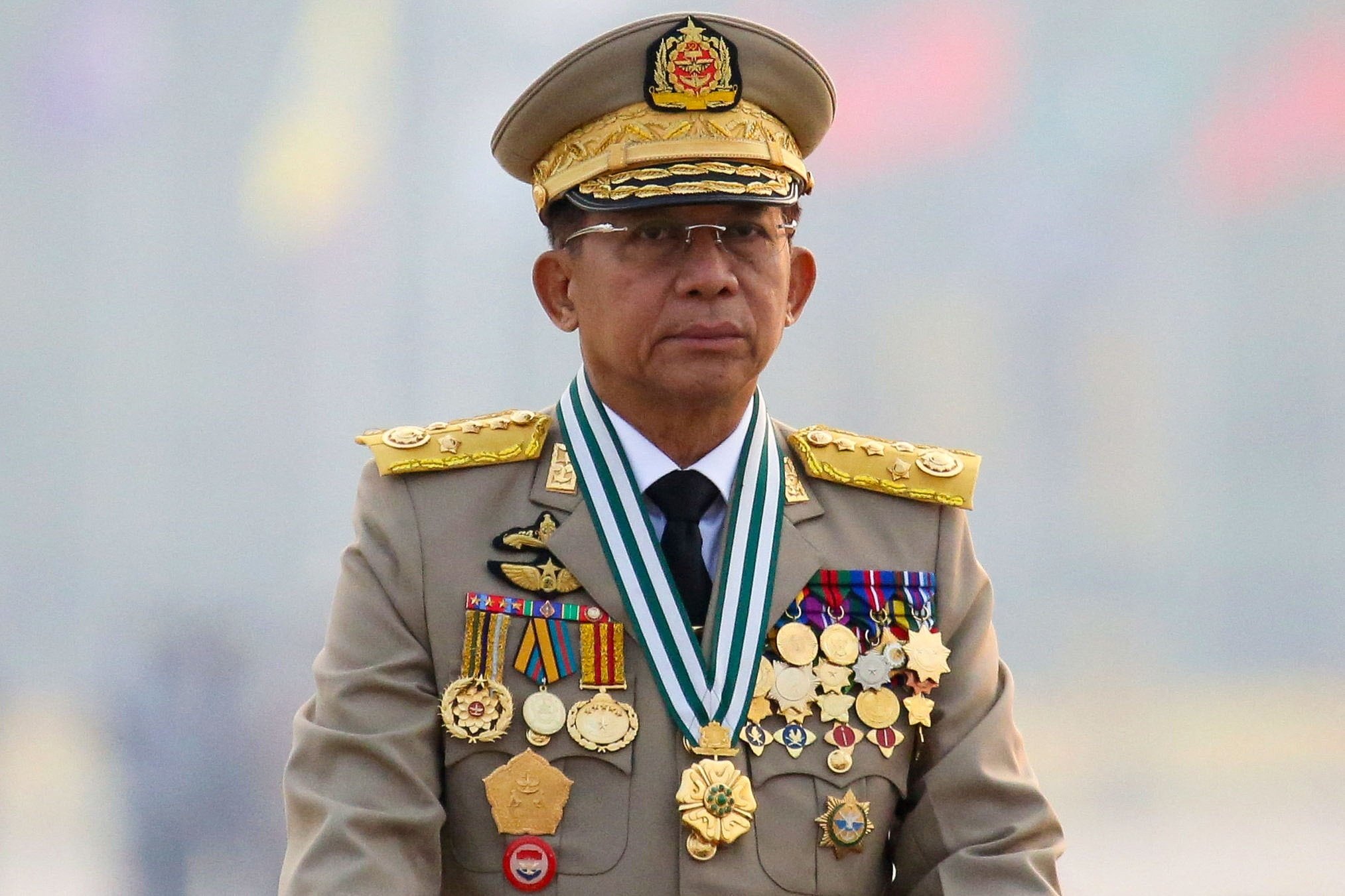
Despite widespread Western criticism, Myanmar’s leadership continues to receive support from key regional players. China quickly congratulated the new president, signaling continued backing and prioritizing stability along its border and strategic interests in the country.
This divide highlights a broader geopolitical reality. While Western governments push for sanctions and accountability, neighboring countries remain more inclined to engage with the junta-led administration.
As Min Aung Hlaing consolidates power, opposition groups are attempting to regroup. A newly formed alliance of pro-democracy factions and ethnic armed organizations has pledged to dismantle military rule and build a federal democratic system.
Yet unity remains fragile. Analysts warn that deeper coordination challenges, combined with military pressure and limited resources, could hinder their effectiveness at a critical moment.