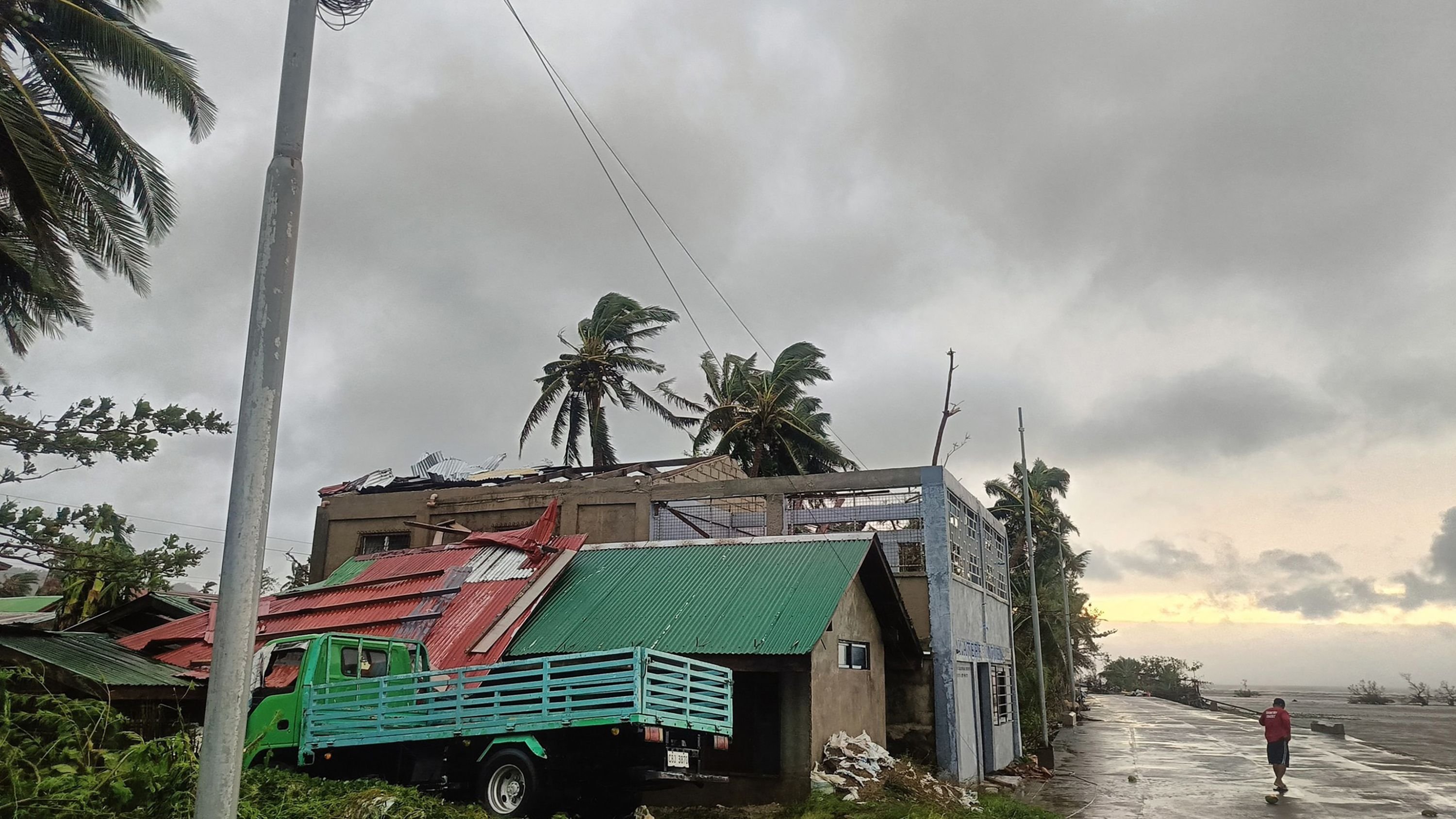
Another tropical storm swept across the Philippines on Friday, leaving at least four dead and forcing more than 433,000 residents to evacuate flood- and landslide-prone villages already battered by successive typhoons.
Bualoi, which weakened after making landfall late Thursday in the town of San Policarpo in Eastern Samar province, brought sustained winds of 110 kph (68 mph), widespread flooding, two minor landslides, and power outages across east-central provinces, the country’s disaster mitigation agency reported.
Evacuations included Albay province, where villagers living near the slopes of Mayon, one of the nation’s most active volcanoes, were moved to safety due to potential volcanic mudflows.
The four fatalities occurred in Masbate province: three were struck separately by a falling tree, a collapsed wall, and flying debris, while a fourth died after being hit by lightning. Masbate Governor Ricardo Kho said roads and ports remained blocked, hampering relief efforts.
“We need clearing operations because most of our road networks are not really passable for food and health assistance,” he said.
Bualoi, locally named Opong, is the Philippines’ 15th tropical cyclone this year.
The fast-moving storm has a rain and wind band stretching roughly 450 kilometers (280 miles) and is moving northwest.
Forecasters warned that it could hit densely populated coastal provinces south of Manila before entering the South China Sea, where it may regain typhoon strength en route to Vietnam.
The storm comes amid heightened public outrage over a flood-control corruption scandal implicating lawmakers, including allies of President Ferdinand Marcos Jr.
Investigations suggest that substandard and overpriced infrastructure projects were used to funnel kickbacks, leaving communities more vulnerable to extreme weather.
Marcos described the corruption’s impact on ordinary Filipinos as “horrible.”
Meanwhile, Taiwan continued recovery efforts after Typhoon Ragasa triggered a barrier lake overflow in Hualien County earlier this week.
Heavy rains unleashed 15.4 million tons of water – roughly 6,000 Olympic-sized swimming pools – into surrounding areas, carrying massive amounts of mud and sand.
By Friday, only 7.7% of the lake’s water remained.
Authorities reported 15 deaths, 69 injuries, and seven missing people.
Search and cleanup efforts continued in heavily affected Guangfu Township, where volunteers from across Taiwan brought shovels and supplies to assist residents, many of whom are elderly or children.
President Lai Ching-te pledged full government support for short-term housing and announced that the reconstruction of a key bridge destroyed by the floods would be fully financed. Agricultural losses are estimated at 257.3 million Taiwan dollars ($8.44 million).