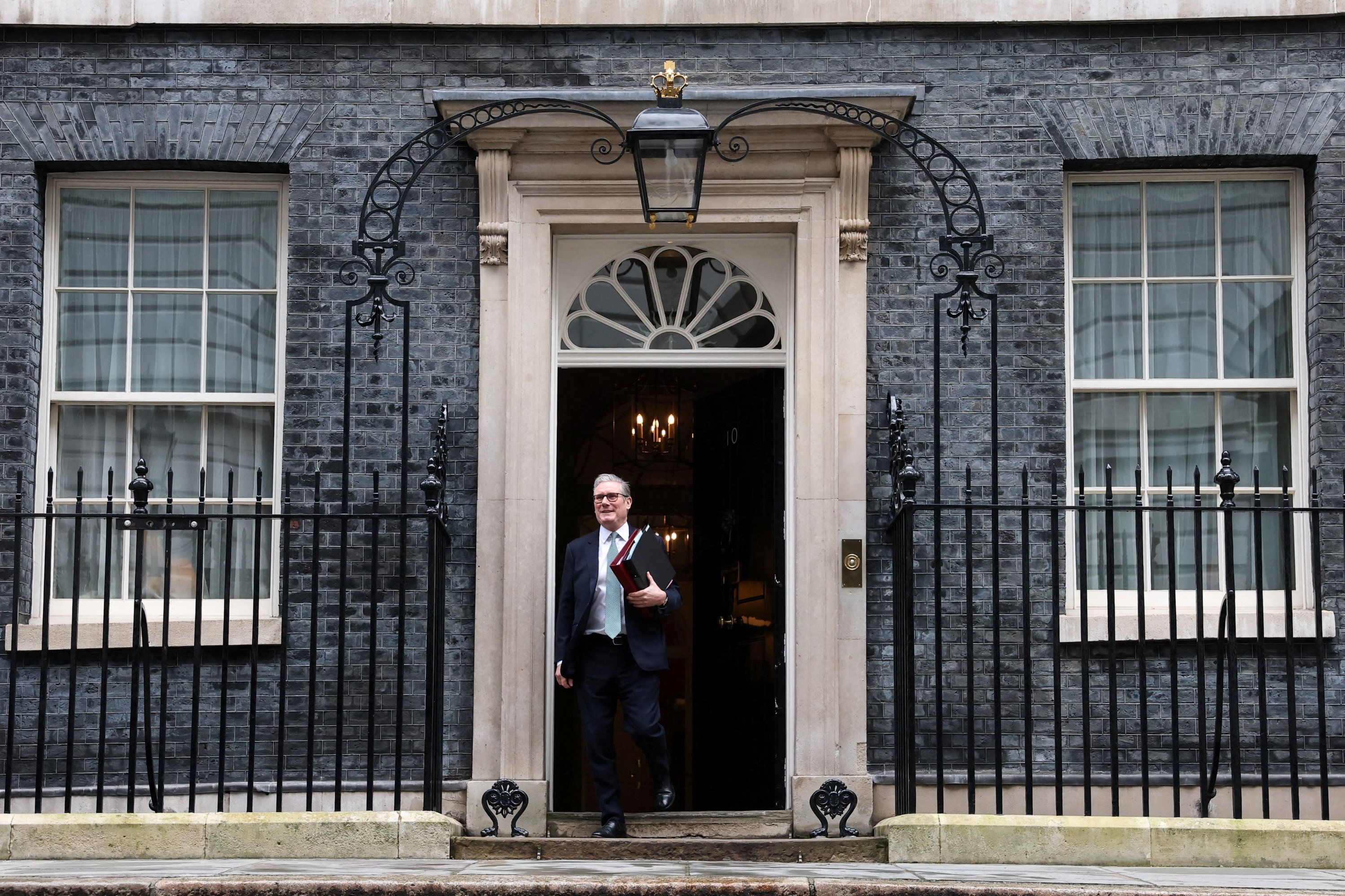
Prime Minister Keir Starmer has lost a third top aide within days as Britain's highest-ranking civil servant, Chris Wormald, resigned on Thursday, deepening the turmoil sparked by the Jeffrey Epstein scandal that has plunged the government into crisis.
Starmer has vowed to never walk away after facing the biggest challenge to his authority yet, including a call from Labour's leader in Scotland for him to stand down over the appointment of Peter Mandelson as ambassador to the U.S. despite his links to the late convicted sex offender Epstein.
"I am very grateful to Sir Chris for his long and distinguished career of public service, spanning more than 35 years, and for the support that he has given me over the past year," Starmer said in a statement on Thursday.
"I have agreed with him that he will step down as Cabinet Secretary today," he added.
Wormald was appointed to the post in December 2024, the most senior role in the civil service – the permanent non-political government workforce.
He said it had been "an honor and a privilege to serve as a civil servant for the past 35 years."
Starmer's chief of staff Morgan McSweeney, a Labour party stalwart, left on Sunday for advising the prime minister to make the contentious Mandelson appointment.
Deprived of his closest adviser, Starmer was then left scrambling to shore up his premiership as another top aide, communications chief Tim Allan, quit on Monday just months into the role.
The fallout was sparked by emails showing that Mandelson had remained friends with Epstein long after the latter's conviction in 2008. It is the most serious crisis of Starmer's 19-month tenure.
Mandelson has said he does not recall receiving payments from Epstein and has not commented publicly on allegations that he leaked documents.
Wormald's departure had been widely anticipated, and he will be replaced in the interim period by three people, including two women.
"The prime minister will appoint a new cabinet secretary shortly," the government statement said.
It will also mark a broader reset in Starmer's government, which has long trailed the right-wing Reform UK in the polls as it struggles to deliver on its policy priorities and has made several U-turns on areas such as welfare reform.
Conservative leader Kemi Badenoch hit out at the "preposterous" handling of Wormald's exit, noting it was coming just 14 months after he took on the role.
She accused Starmer of forcing him out.
Documents released on Jan. 30 by the U.S. Justice Department appeared to suggest that Mandelson had leaked confidential U.K. government information when he was a British minister to financier Epstein, including during the 2008 financial crisis.
The revelation placed intense pressure on Starmer and triggered a police investigation into Mandelson, 72, for alleged misconduct in a public office.
Starmer's premiership looked precarious on Monday after losing his closest aides over the Mandelson saga, and Labour's leader in Scotland Anas Sarwar called on him to quit.
But a coordinated show of support from senior ministers headed off any imminent rebellion.
The next general election in the U.K. is likely three years away. Starmer faces a difficult by-election later this month and key local polls in May.