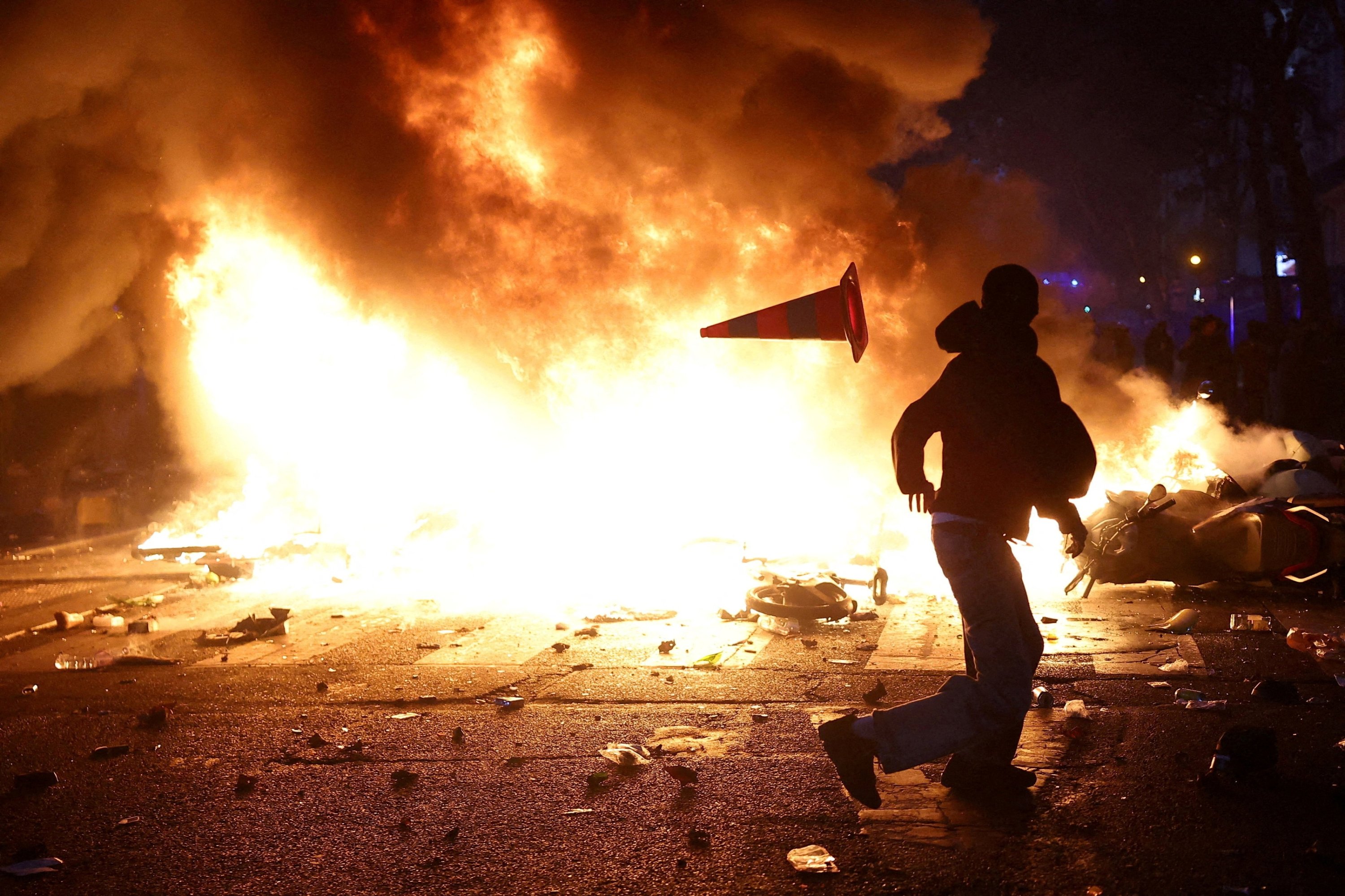
France is preparing for another weekend of nationwide demonstrations as anger over rising living costs, alleged police brutality and a controversial bill expanding legal protections for officers fuels unrest ahead of next year's presidential election.
The protests, entering their fifth consecutive Saturday, have evolved from school blockades and cost-of-living demonstrations into a broader movement challenging the government's handling of public grievances.
A main rally is scheduled in Paris at 1:00 p.m. (12:00 p.m. GMT), with dozens of other gatherings planned nationwide. The capital's demonstration is expected to bring together the Yellow Vest movement, high school students, trade unions and activists campaigning for children's rights and against the proposed police legislation.
"Society's in bad shape," said Claire Bourdille, a member of a collective campaigning against violence toward children and teenagers. "We can't focus on one cause more than another."
The proposed legislation would establish a presumption of legitimate self-defense for police officers who use their weapons. Supporters, including Marine Le Pen's far-right National Rally party, argue that officers should not automatically face accusations of excessive force when defending themselves.
Opponents say the measure would make it harder to hold security forces accountable, effectively giving officers a "license to kill" in a country where relatively few allegations of police brutality reach criminal courts.
The bill has passed the lower house of parliament and is awaiting consideration by the Senate.
Lawyers last week condemned alleged police violence during recent demonstrations, citing serious injuries involving protesters' hands, feet and eyes.
Karl Ghazi, a representative of the CGT trade union, said turnout could be affected by exhaustion after weeks of demonstrations.
Authorities estimated that 146,000 people participated in nationwide protests last Saturday, significantly fewer than during earlier rallies. More than 500,000 demonstrated during a nationwide strike the previous Thursday, according to official figures.
Trade unions have called another strike for Tuesday after rejecting the government's proposed 0.6% minimum-wage increase as "crumbs."
The demonstrations follow weeks of disturbances that have seen businesses looted, public buildings attacked and protesters seriously injured.
A Reuters investigation found that the government's response, including mass arrests, police violence and restrictions on demonstrations, has added to the grievances driving the movement.
Reuters reviewed dozens of videos, attended court hearings involving 26 people accused of participating in the unrest and interviewed more than 50 officials, police officers, lawyers, protesters and witnesses.
The investigation traced how protests that began in September over conditions in state schools escalated into some of France's worst civil disturbances in years.
Police tactics have faced particular scrutiny following reports of young demonstrators losing hands and eyesight. The United Nations and other human rights experts have also questioned the arrest of nearly 7,000 minors during school blockades, describing the detentions as disproportionate.
Images of riot police charging teenagers with batons helped attract parents, teachers, left-wing politicians and trade unionists to the demonstrations.
The unrest intensified on Oct. 17, when the Yellow Vest movement, which previously challenged President Emmanuel Macron's government over fuel prices and living costs in 2018 and 2019, returned to the streets.
Violence overwhelmed police in parts of Paris, Marseille and Lyon, with rioters and looters taking control of entire neighborhoods.
Although subsequent demonstrations were generally calmer, clashes continued as police attempted to disperse crowds, repeatedly using tear gas against protesters throwing bottles, stones and homemade fireworks.
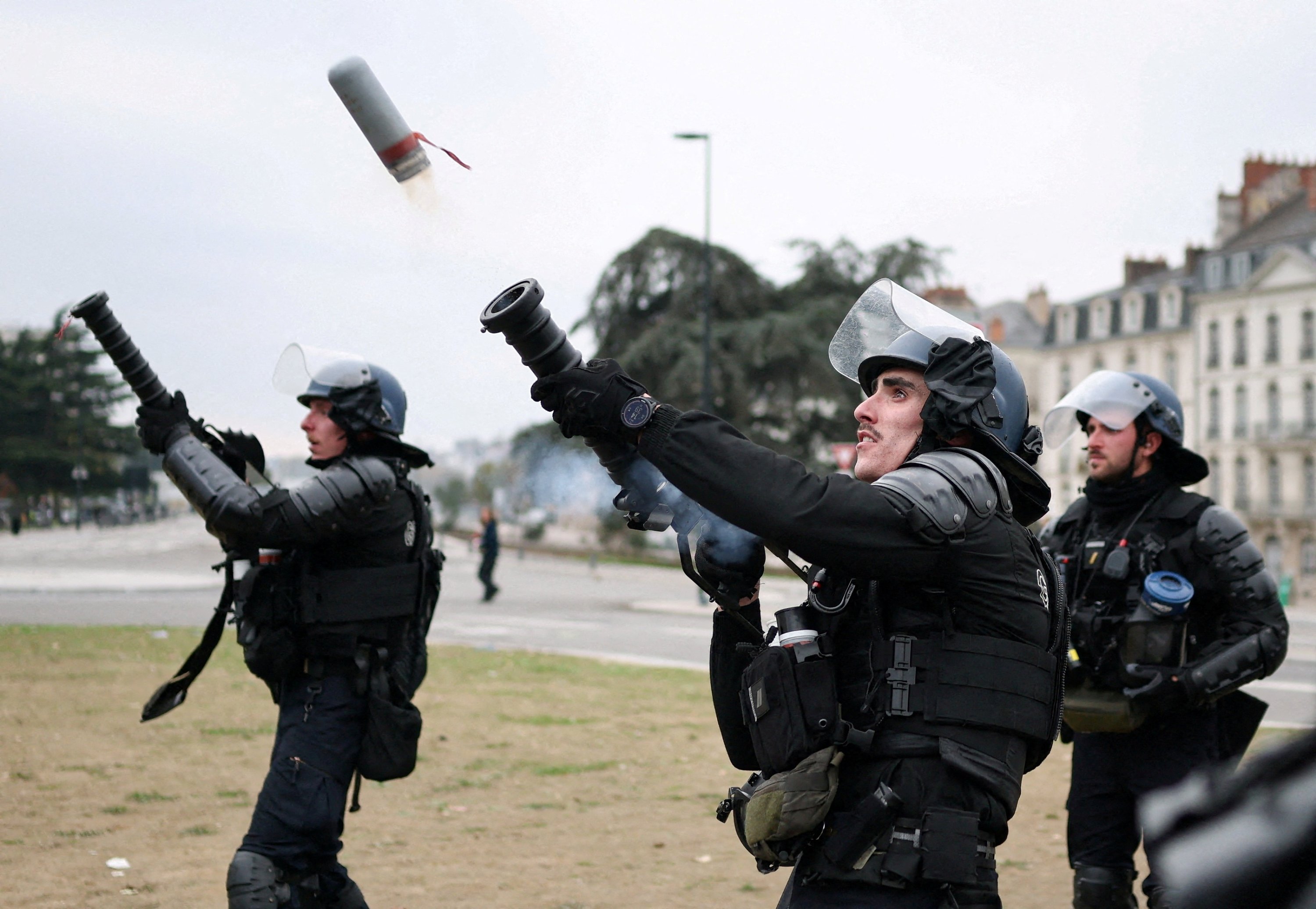
The Interior Ministry said its internal watchdog had opened 161 investigations into allegations of police violence since September.
Interior Minister Laurent Nunez acknowledged injuries caused by explosive crowd-control weapons, including stun grenades, but rejected calls to ban them, arguing that officers needed the equipment to protect themselves.
He also admitted authorities underestimated the scale of the Oct. 17 violence. Nunez credited the subsequent deployment of 70,000 police officers and paramilitary gendarmes with maintaining order, although security forces continued to face attacks.
The government has blamed far-left groups and opportunistic looters for exploiting largely peaceful demonstrations to attack businesses and public buildings.
Nunez said more than 500,000 people demonstrated nationwide on Oct. 17, including 110,000 in Paris. He accused thousands of so-called ultra-left activists of confronting police and attempting unauthorized marches toward government institutions.
However, three police officers and an intelligence official familiar with investigations told Reuters they could not confirm the central role attributed to far-left groups and said further investigations were necessary.
"There is a body of circumstantial evidence but no certainty," said Eric Moulin, a regional representative of the UNSA Police union in Marseille.
The violence also devastated public buildings. In Marseille, black-clad protesters broke into city hall and toppled a bust of Marianne, a symbol of the French republic. In Limoges, rioters set fire to the city hall, while Lyon's tourism office was also torched.
Thousands arrested as political pressure mounts
Justice Minister Gerald Darmanin said more than 4,900 suspects had been taken into custody since Oct. 17. Around 2,290 were referred for prosecution and 404 had received prison sentences by Nov. 3.
Most suspects were young men between 18 and 25, he said.
The government has reinforced security operations, deployed troops, imposed curfews and banned numerous demonstrations to prevent further violence.
However, Amnesty International and other rights groups have warned that the measures risk pushing France toward authoritarianism.
Some researchers argue that aggressive policing is perpetuating the unrest by encouraging further confrontations.
"Escalation happens when black blocs provoke with violence, and law enforcement are ordered to respond with violence," said Fabien Jobard, a sociologist at the French National Centre for Scientific Research.
The demonstrations pose a growing challenge for Macron, whose government faces strained public finances and no longer commands a parliamentary majority.
His administration has proposed improvements to education and brought forward a planned minimum-wage increase, but student representatives and trade unions say the concessions are insufficient.