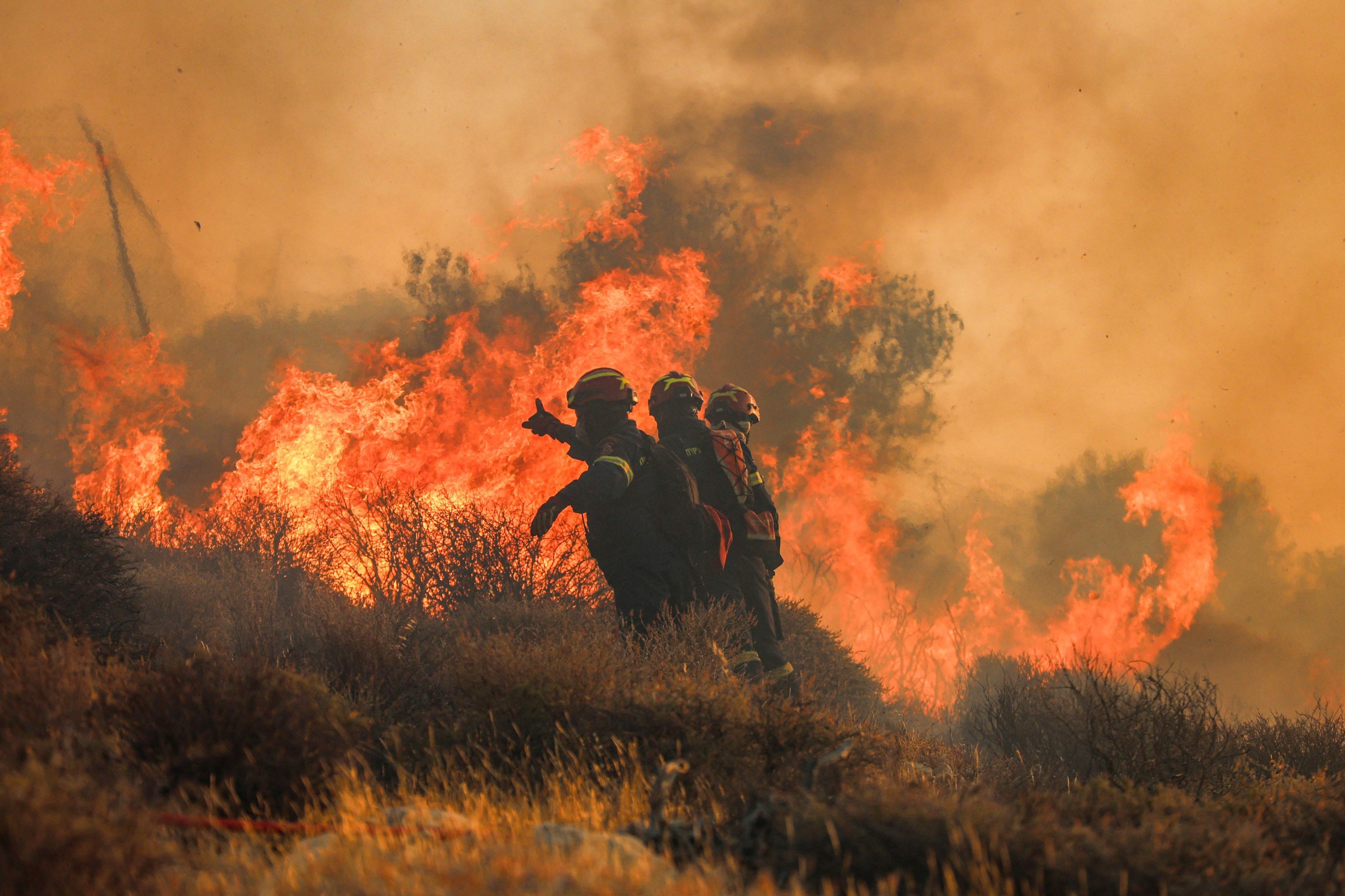
A wildfire on the Greek island of Crete forced the evacuation of more than 1,000 people and scorched forests and olive groves Thursday, as hundreds of firefighters battled the blaze in a region increasingly prone to destructive fires, officials said.
Gale-force winds and dry weather made for tinderbox conditions in Greece, hampering authorities' efforts to tame the fires, as much of Europe baked in an early summer heat wave linked to the death of at least eight people across the region.
Around 230 firefighters, along with 46 engines and helicopters, were deployed to contain the conflagration on Crete, which broke out a day earlier near Ierapetra town on the southeastern coast of Greece's largest island.
Stoked by intense winds, the blaze widened to encroach upon houses and hotels that were earlier evacuated, officials said.
"There are wind gusts in the area, some measuring 9 on the Beaufort scale, triggering rekindling and hindering firefighting efforts," fire brigade spokesman Vassilis Vathrakogiannis said, as his troops fought alongside reinforcements from Athens to tame several resurgent blazes.
More than 1,000 residents and tourists were evacuated from at least four settlements and moved to a temporary shelter at an indoor stadium in Ierapetra. Some left Crete by boats, authorities said.
Local media reported damage to some homes but no severe injuries, though some people were hospitalised with respiratory issues, an official said.

Southeastern Crete saw the large exodus of about 5,000 holidaymakers, George Tzarakis, head of hoteliers in the area, told Reuters, expressing concern over the impact on future bookings. Tourism is a key income earner for the popular tourist island.
July is usually the most difficult month of the fire season due to high temperatures and strong winds, the fire brigade's Vathrakogiannis said.
Greece and other countries in the Mediterranean are in an area scientists have called "a wildfire hotspot" – with blazes common during hot and dry summers. These have become more destructive in recent years, authorities say, due to a fast-changing climate.
Italy's Health Ministry issued red alerts for 18 cities as temperatures poised to soar as high as 38 degrees Celsius (100.4 degrees Fahrenheit) in major cities.

Temporary blackouts were possible with power consumption surging from the use of air conditioners, Italian Energy Minister Gilberto Pichetto Fratin warned.
Swiss utility Axpo has shut its two reactor units at the Beznau nuclear power plant due to high river water temperatures.
Scientists say heat waves have arrived earlier this year, spiking temperatures by up to 10 degrees Celsius in some regions as warming seas encouraged the formation of a heat dome over much of Europe, trapping hot air masses.