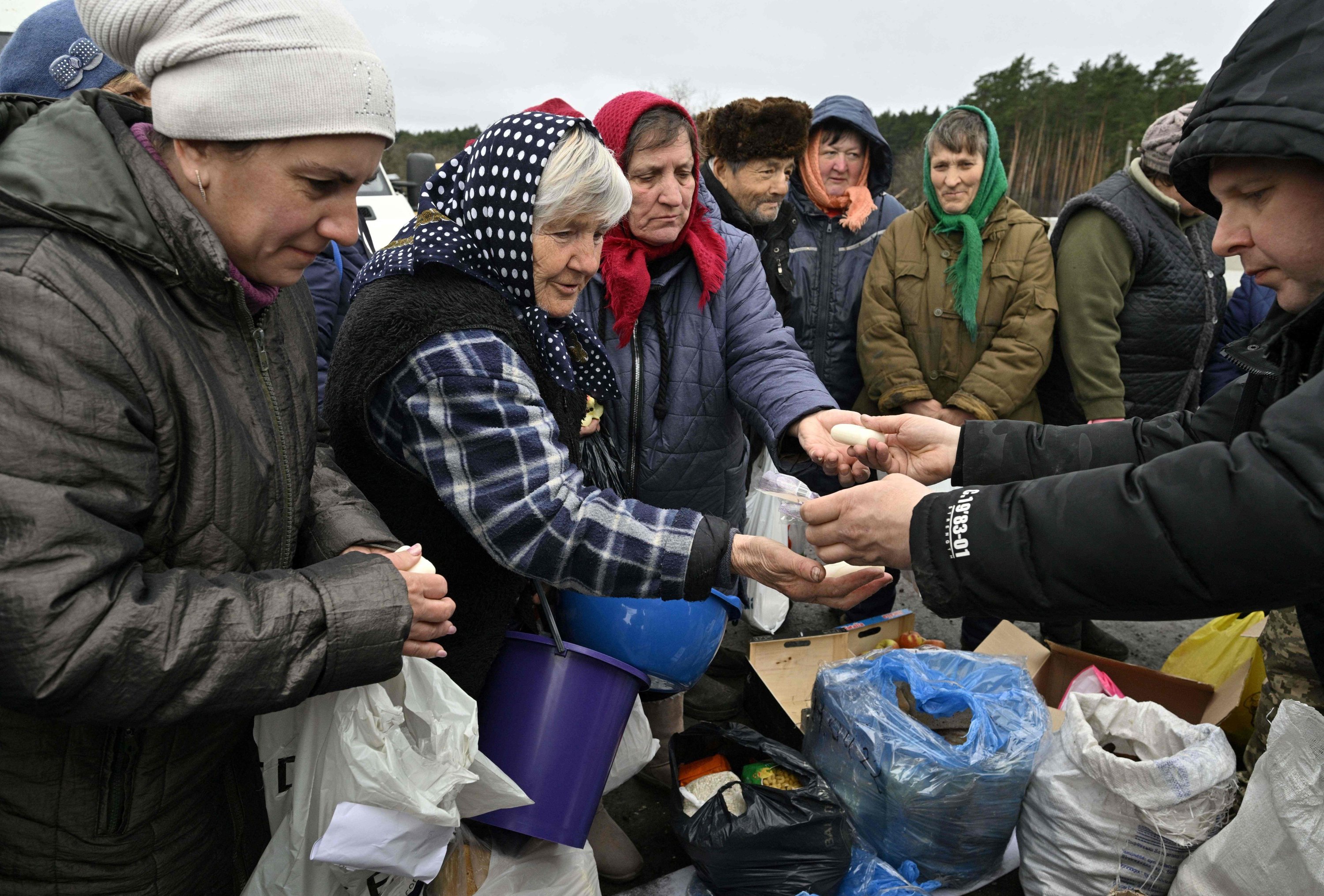
The world is facing a "human catastrophe" from a food crisis in the wake of the Ukraine war, the World Bank's chief said Wednesday, warning that a record rise in food prices would push hundreds of millions of people into poverty and lack of nutrition if the war continues.
Speaking to the BBC, Malpass said: "It's a human catastrophe, meaning nutrition goes down. But then it also becomes a political challenge for governments who can't do anything about it, they didn't cause it and they see the prices going up."
Malpass had also warned that rising interest rates are squeezing the world's poorest countries as they struggle with the coronavirus and soaring food prices. There is "a huge buildup of debt, especially in the poorest countries,'' Malpass said in a press conference. "As interest rates rise, the debt pressures are mounting on developing countries, and we need to move urgently towards solutions.‘’
Malpass said the "debt crisis'' has been a topic of extensive discussion at this week's spring meetings of the World Bank and International Monetary Fund (IMF), already dominated by other daunting issues including the war in Ukraine, the coronavirus pandemic and a slowing global economy.
Meanwhile, IMF Managing Director Kristalina Georgieva told reporters Wednesday that 60% of low-income countries were in or near "debt distress'' – an alarming threshold reached when their debt payments equal half the size of their national economies. Countries that strain to pay their creditors will also struggle to help their poorest citizens at a time when the Ukraine war is disrupting food shipments and pushing food prices higher.
Countries around the world piled on debt to shield their economies from the ravages of the coronavirus pandemic and the lockdowns meant to contain it. The IMF forecasts that government debts in low-income countries will surpass 50% of gross domestic product – the broadest measure of economic output – this year, up from less than 44% in the pre-pandemic year 2019.
Globally, the massive economic assistance has worked, fueling an unexpectedly quick recovery from 2020's pandemic recession.
But the rebound caught businesses by surprise. They scrambled to meet surging customer demand, which overwhelmed factories, ports and freight yards. Deliveries slowed and prices rose. The IMF now forecasts that consumer prices will jump 8.7% this year in emerging-market and developing countries and 5.7% in advanced economies, the most since 1984.
In response, the world's central banks – led by America's Federal Reserve (Fed) – are raising interest rates to combat rising prices. Higher rates will increase the debt burden – most painfully in the world's poorest countries.
As they climb, U.S. rates are also likely to lure investment out of poor countries and to the United States, pushing down the currencies of developing countries and forcing them to pay more for food and other imported goods.
Georgieva counseled central banks to move carefully, explain what they're doing to avoid overreactions in financial markets and stay "mindful of the spillover risks to vulnerable emerging and developing economies.''
She and Malpass also urged a coordinated global effort to help countries struggling with their debts. Similar efforts, which were started when COVID-19 hit two years ago, have since sputtered "and must be improved in time to provide meaningful relief to countries that need it,'' Marcello Estevao, the World Bank's global director of macroeconomics, trade and investment, wrote last month in a blog post.
The trouble has already started. Sri Lanka last week said it was suspending its repayment of foreign debt, pending the completion of a loan restructuring program with the IMF to deal with the island nation's worst economic crisis in decades.
Estevao said that up to a dozen developing countries may be unable to meet debt payments over the next year. That's nothing like the emerging market debt crises of the 1980s and 1990s, he wrote, but "would still be significant – the largest spate of debt crises in developing economies in a generation.''