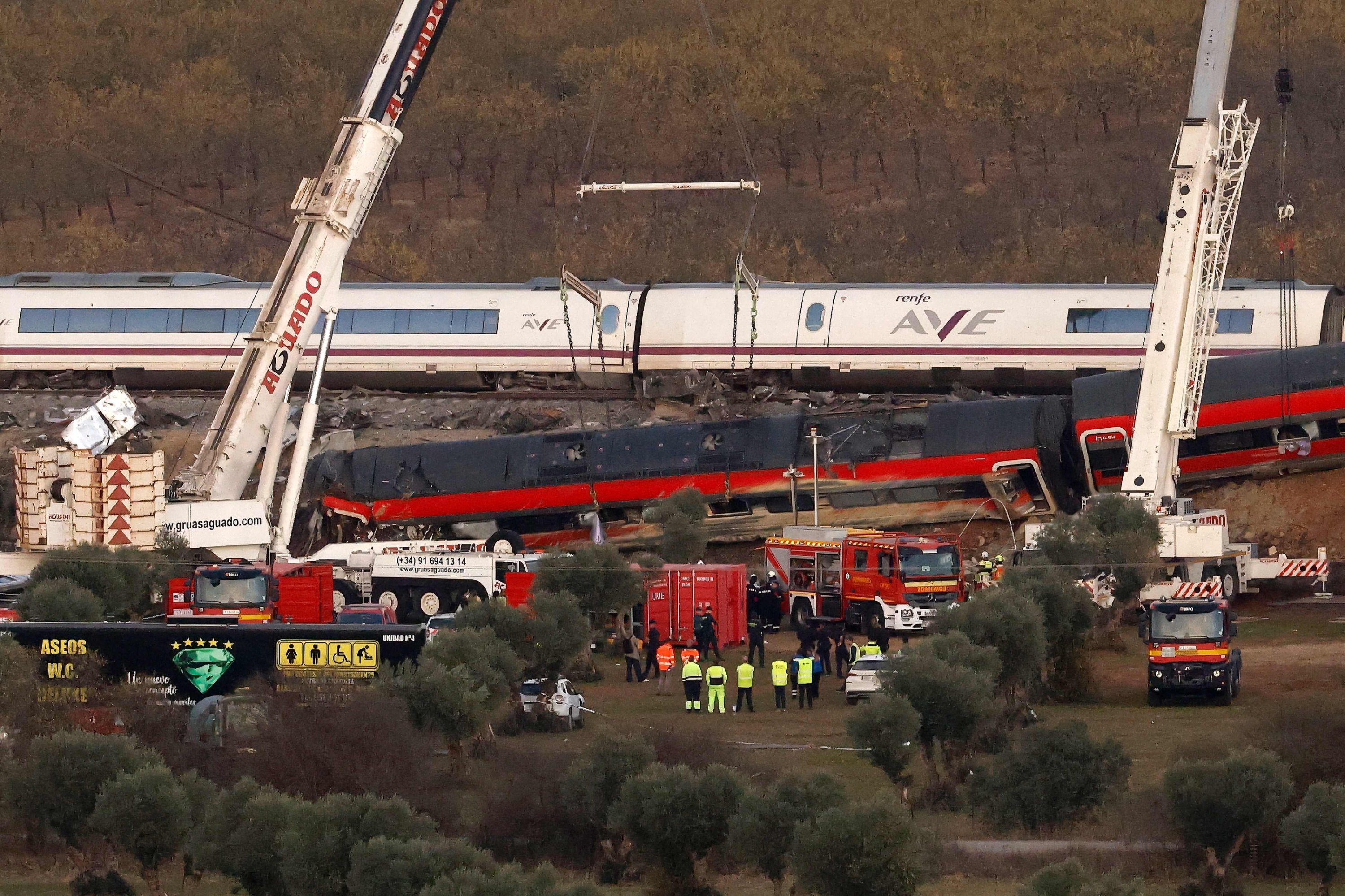
Spain’s second major train collision this year has reignited questions over whether human error or systemic failures in its once-praised high-speed rail network are to blame.
The causes remain disputed.
Spain’s transport minister has pointed to a traffic controller’s alleged poor judgment as a key factor in Wednesday’s crash in Toledo province, which claimed 69 lives.
Railway unions, however, reject the focus on individual responsibility, arguing that worsening working conditions have left the network increasingly vulnerable. They cite a shortage of traffic controllers, heavier workloads and mounting pressure on staff responsible for the safety of some 45 million passengers each year.
A judge and a special government commission are conducting separate investigations into the deadly collision, while Prime Minister Pedro Sanchez has pledged a thorough inquiry to establish what caused the disaster.
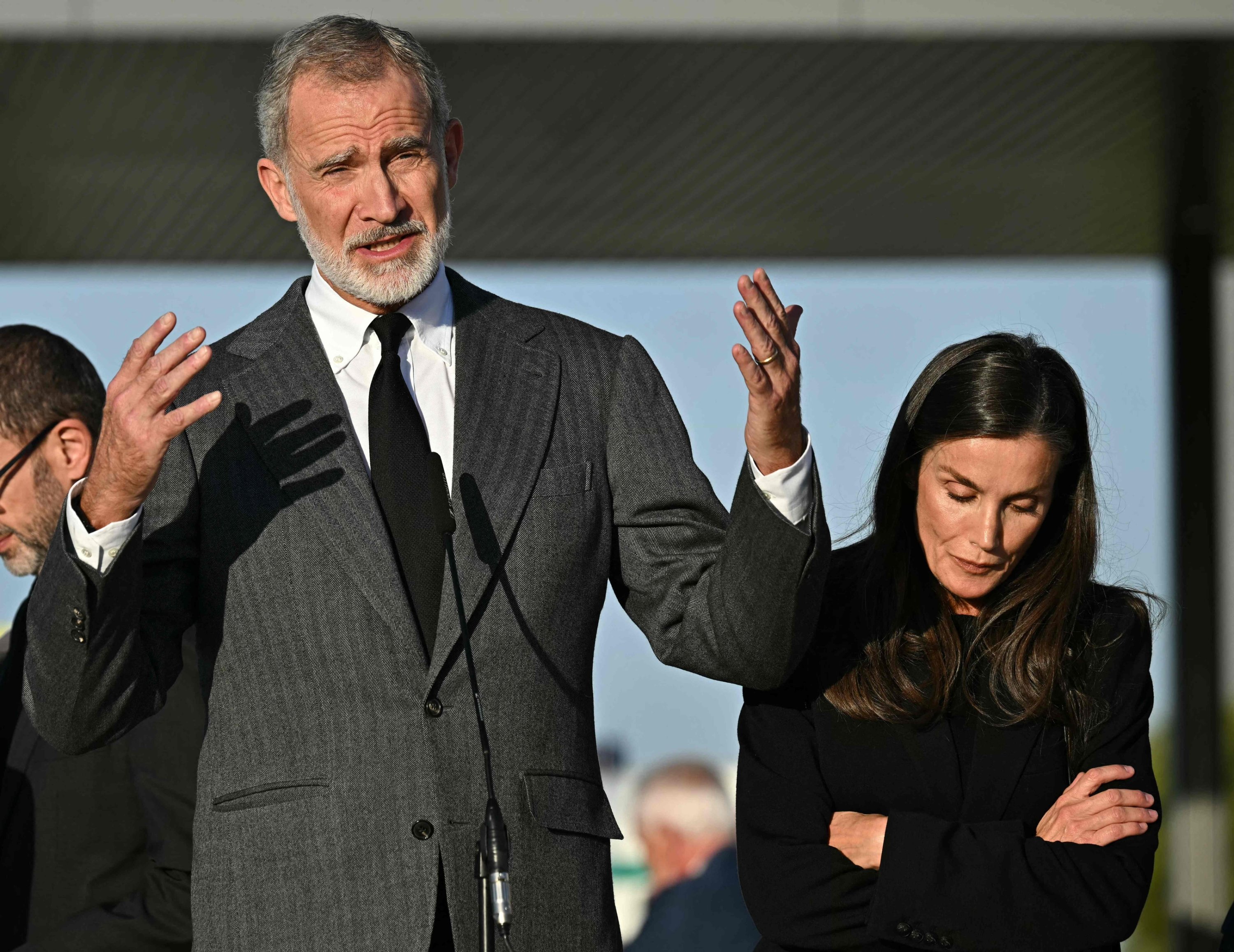
"This investigation must determine how and why this catastrophe happened," Spain’s King Felipe VI said Thursday after visiting injured passengers at a hospital in Toledo. "We will have to take measures so this never happens again."
The chain of events that led to the disaster began at 8:30 a.m. Wednesday, when the communication system essential to the line’s safety operations went down. Known as LZB, the system monitors train positions and can automatically activate a train’s brakes to prevent collisions.
The malfunction forced human controllers at a control center in Madrid to assume full responsibility for monitoring train movements and safety along a 63-kilometer (39-mile) stretch between Madrid and Seville. Authorities believe six trains were on the affected section at the time.
At 8:36 a.m., a controller told a train operated by state-owned RENFE that it could resume normal-speed operations. Another train, operated by privately owned IRYO and located 15.5 miles (25 kilometers) farther down the line, also attempted to restart, but its engineer was unable to override the automatic stop and notified the controller.
At 8:53 a.m., the trains collided, derailing carriages and leaving parts of the wreckage torn apart.
It was the second major crash on the Madrid-Seville line this year. In January, farther south along the route, a train derailed and struck another traveling in the opposite direction, killing 46 people.
Transport Minister Oscar Puente, who is facing calls to resign, described the controller’s decision to allow one train to resume at full speed while the other remained stopped as "inexplicable" and "erroneous."
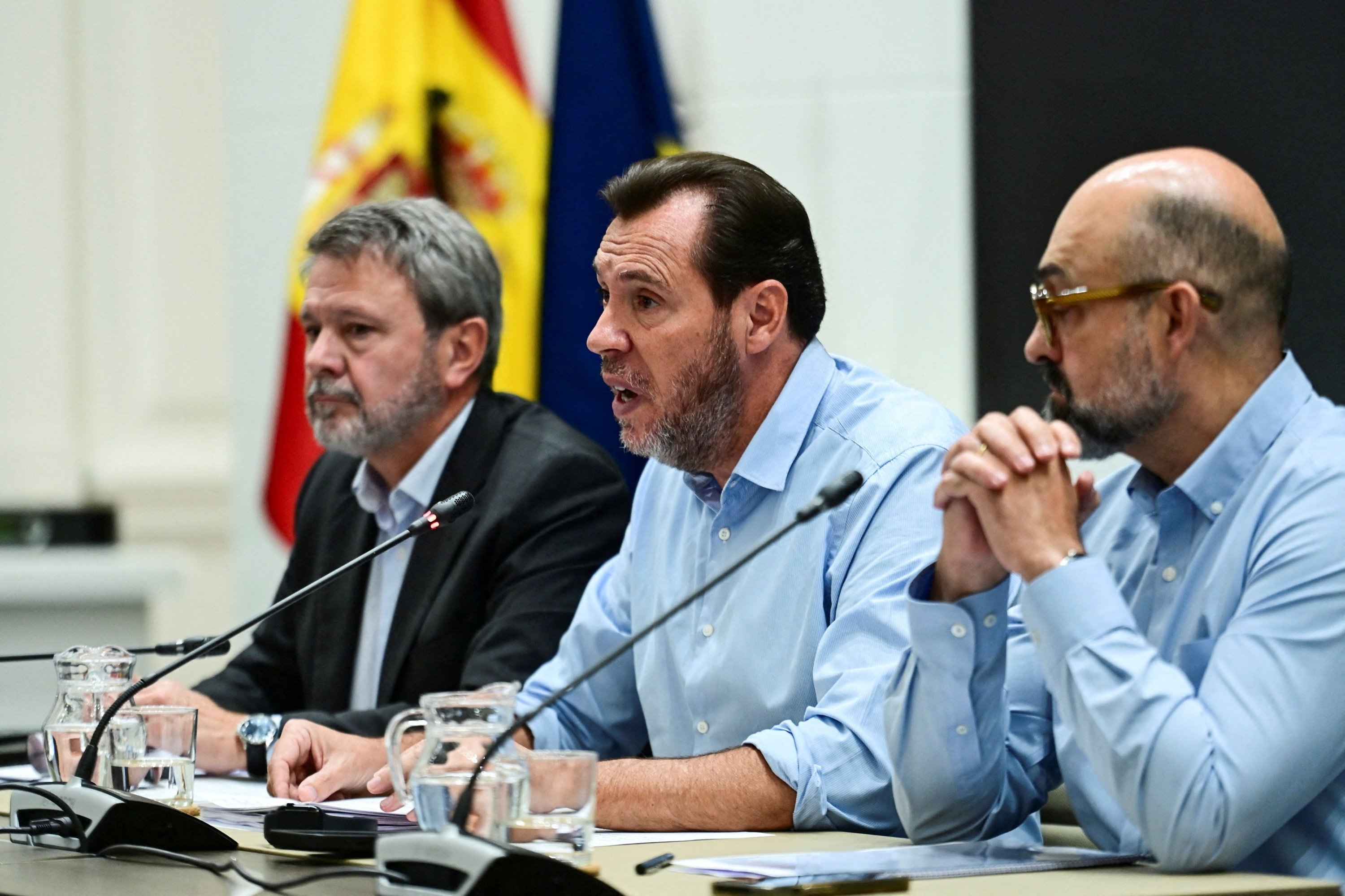
Puente said the RENFE train should never have been authorized to move because a stop signal was still active on the line.
"An order is given for the train to restart, an erroneous decision," Puente told reporters. The decision "was taken in inexplicable circumstances given that a train was stopped and with a red light," he said.
Railway unions, however, argue that the circumstances surrounding the decision cannot be ignored.
Raquel Ayllon, a spokesperson for SCF, Spain’s railway traffic controllers union, told The Associated Press that workloads regularly exceed what existing staff can safely manage. She said controllers have been calling for additional personnel for years while safety systems continue to fail.
"We believe (the minister) is blaming a mere worker who was working under increasingly poor conditions," she said. "Human error isn't incomprehensible. What is incomprehensible is that the safety system is regularly failing."
SEMAF, Spain’s train engineers union, said the three-decade-old LZB safety system, which remains in use on the Madrid-Seville line as it is gradually phased out, has failed before, leaving human operators to manage train movements without its protection.
"The LZB system should have been replaced some time ago," said Diego Martin, a SEMAF spokesperson. "It failed us yesterday (Wednesday) and it has gone offline on repeated occasions in the past."
Railway workers went on strike Thursday in a previously planned action to demand that the government honor its commitments to improve safety conditions following the January crash.
Representatives of several unions also condemned what they described as the "irresponsible" leak of audio recordings of conversations between the control center and train engineers to Spanish media outlets.
Spain’s railways were exclusively operated by state-owned companies until the country opened its high-speed passenger network to private operators in 2021.
Both major crashes this year involved trains operated by RENFE and IRYO.
Rail traffic has increased since the market was opened to competition. Between Madrid and Barcelona, for example, the average number of daily services rose from 56 in 2019 to 89 in 2024, according to the SCF union.
Joan Rodriguez, a spokesperson for a Spanish railway workers union, said the increase in traffic following privatization had placed additional pressure on the network.
"We are not convinced that the liberalization of the high-speed passenger rail service was matched by the necessary upkeep of the lines," Rodriguez told Spanish public broadcaster TVE on Wednesday. "I am not saying it was a determining factor (in the crashes), but yes, the increase in use of the network is a factor to keep in mind."