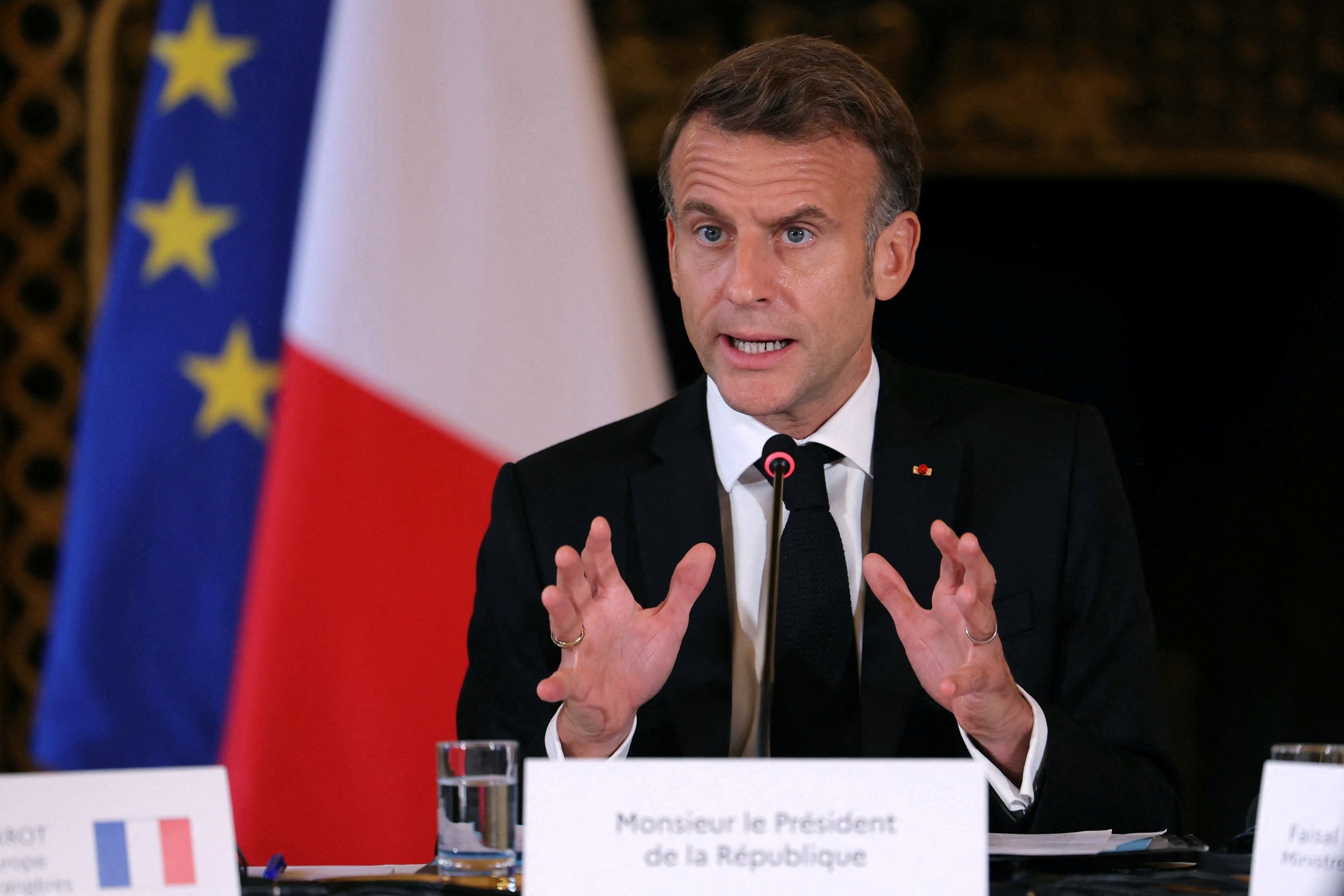
French President Emmanuel Macron was set Friday to choose a new head of government to pull the country out of political deadlock, sparking irritation among allies over the possibility that he could reappoint the same prime minister who resigned earlier this week.
The crisis stems from last year’s snap elections, a gamble by Macron intended to consolidate his power but which instead resulted in a hung parliament and gains for the far right.
Macron was scheduled to meet leaders of all political parties, except the far-right National Rally and the radical left France Unbowed, at 12:30 p.m. GMT at the presidential palace, sources told Agence France-Presse (AFP).
Shortly before the meeting, the presidency urged all parties in a statement to recognize a “moment of collective responsibility,” signaling that Macron could dissolve parliament if they failed to back his preferred candidate.
Macron’s office said he would pick a name by Friday evening after his seventh prime minister, Sebastien Lecornu, 39, resigned Monday following months of stalemate over an austerity budget.
The centrist president, facing the worst domestic crisis of his presidency since 2017, has yet to address the public.
Lecornu, a Macron loyalist, agreed to stay on for two extra days to talk to all political parties and told French television late Wednesday that he was optimistic a new cabinet could get a spending bill through parliament. Parliament had toppled Lecornu’s two predecessors in a standoff over cost-cutting measures.
Lecornu, who served three years as defense minister, offered no clue about who the next premier would be. He said his mission was finished, but several politicians believe the president would likely reappoint him, at the risk of further exasperating the opposition and even members of his own camp.
Fellow centrist Gabriel Attal, who was France’s youngest prime minister until last year, urged Macron Friday to “share power” and not name someone close to him.
Others have suggested Jean-Louis Borloo, a former minister under right-wing presidents Jacques Chirac and Nicolas Sarkozy, as a potential candidate, though he said he knew nothing of the plan.
It seemed unlikely a left-wing premier would be named, despite calls from the main left-wing parties Thursday evening to include them in government. Two Socialist names had been floated: former Prime Minister Bernard Cazeneuve and Pierre Moscovici, head of the country’s supreme audit institution.
Lecornu said a revised draft budget for 2026 could be put forward Monday, meeting the deadline for approval by the end of the year. But it was not immediately clear whether this would require a fresh cabinet lineup to be announced by the weekend.
Lecornu’s suggested list of ministers Sunday sparked criticism that it contained too many of the same faces and did not break enough with the past. On Wednesday, Lecornu suggested a more technocratic government could be named, with members having no “ambitions” to stand in the 2027 presidential elections.
The escalating crisis has drawn criticism from former allies. In an unprecedented move, former Premier Edouard Philippe, a contender in the next presidential elections, said earlier this week that Macron himself should step down after a budget was passed. Macron, however, has insisted he will stay until the end of his term.
Marine Le Pen, whose far-right party declined to take part in talks with Lecornu this week, said she would thwart all action by any new government and would “vote against everything.”
Le Pen’s anti-immigration National Rally sees its best-ever chance of winning power in the 2027 presidential elections, with Macron having served the maximum two terms. Le Pen has been barred from running after being convicted in a corruption case, but her 30-year-old lieutenant, Jordan Bardella, could be a candidate instead.