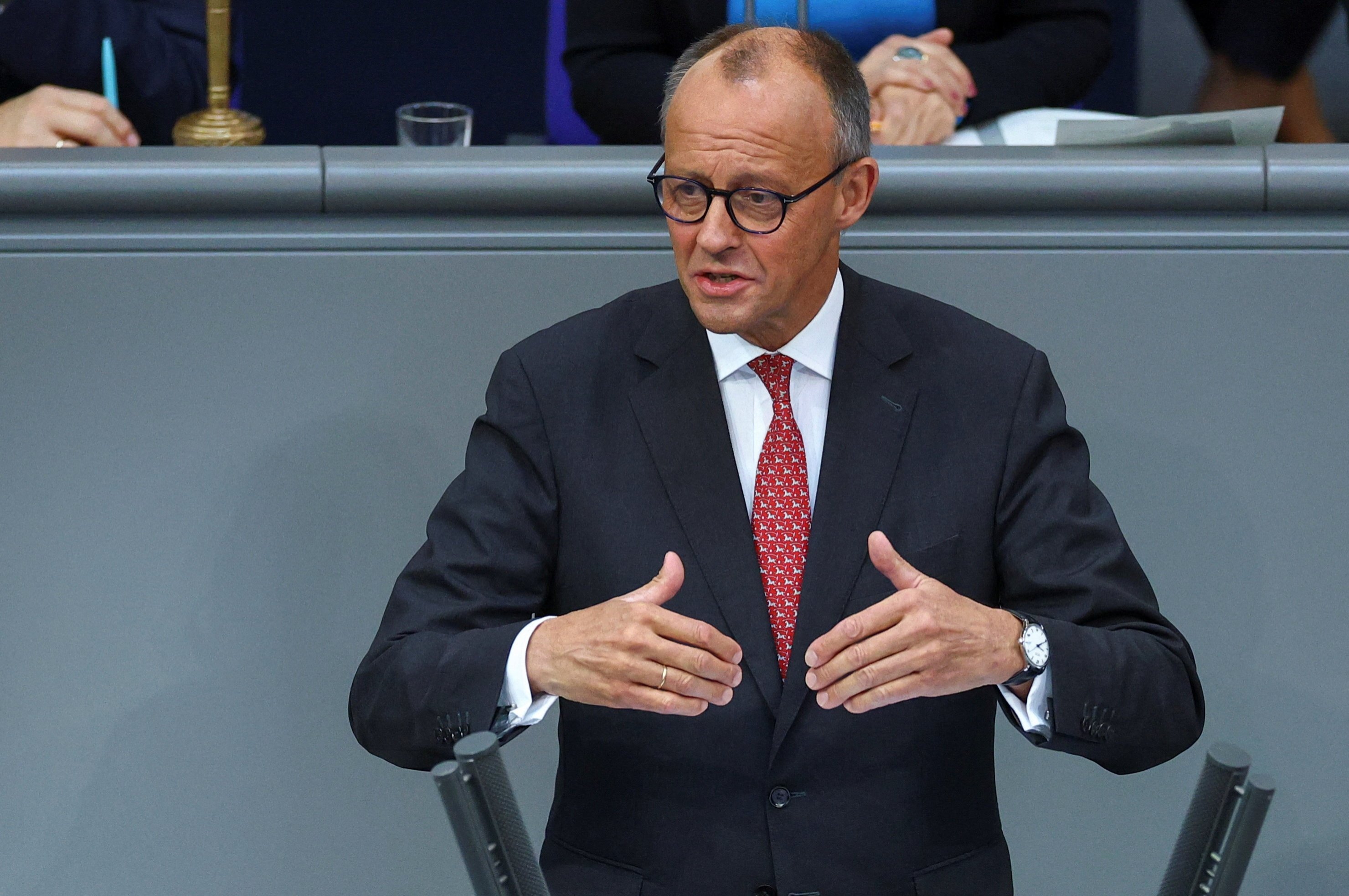
German Chancellor Friedrich Merz on Wednesday urged citizens to prepare for sweeping reforms in the coming months as his government moves to address the mounting challenges facing Europe's largest economy.
One of the toughest tasks for Merz and his ministers will be to find ways to return to economic growth after two consecutive years of recession.
Businesses continue to struggle with high energy prices, diminished demand and new U.S. tariffs, with many continuing to slash their forecasts and jobs in response.
Merz, who was addressing parliament during budget week, acknowledged the gravity of the situation.
"The decisions that lie ahead of us are not about details, but about very fundamental issues," he said.
"It is about nothing less than the future of our country – how we live, how we live together, how we work, how we do business, and whether our values will continue to endure."
Merz's conservatives are also under pressure from a rise in support for the anti-immigrant Alternative for Germany (AfD), as far-right parties in Europe continue to gain traction.
A trend that is being watched with particular concern in Germany for historical reasons, the AfD came in second in February's snap election, making it the biggest opposition force in parliament. On Wednesday, the party came first in a national YouGov poll for the first time.
This meant AfD co-leader Alice Weidel, an ardent supporter of U.S. President Donald Trump, was eligible to open Wednesday's debate, an opportunity she used to sharply attack Merz.
Weidel accused the chancellor of breaking campaign promises and "warmongering" in Ukraine, where Germany has become the biggest supplier of military aid.
She also criticized the measures taken by the new government to curb migration, another issue that dominated February's vote, saying they were not going far enough.
Right after taking office in May, the Merz administration ordered police officers to reject asylum seekers at the border, a move that has been criticized as violating EU law.