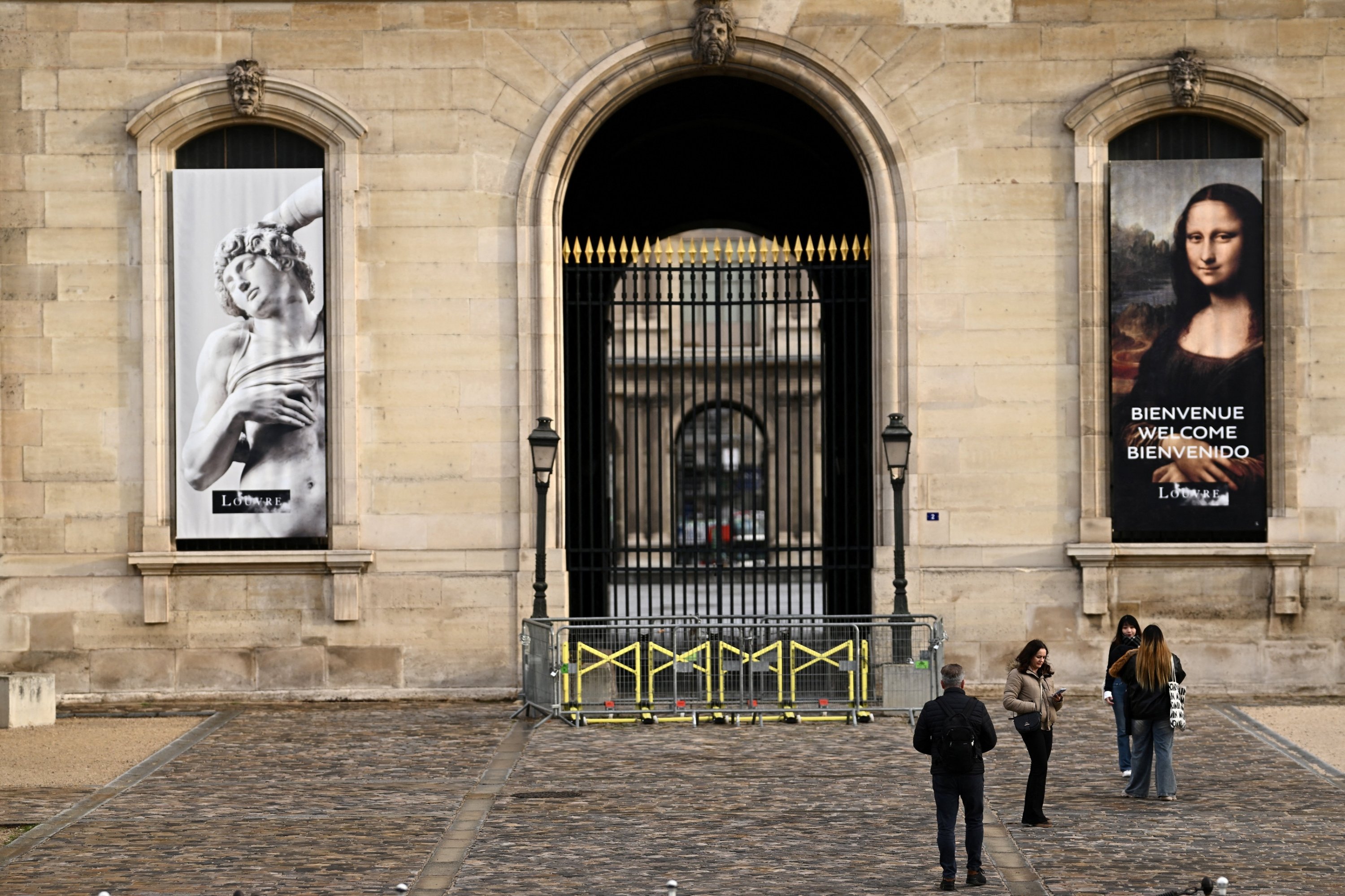
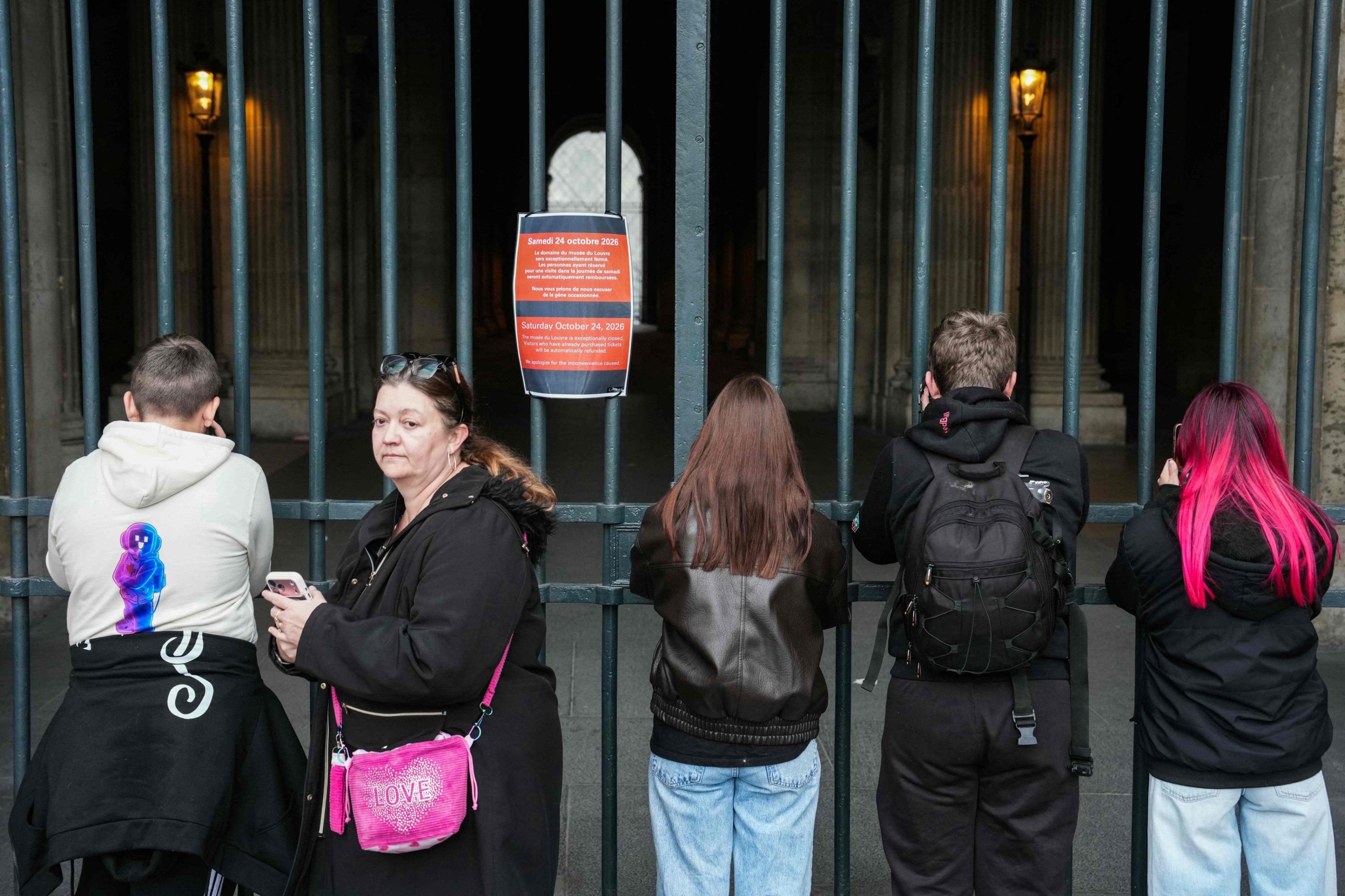
Major museums in Paris closed Saturday as authorities deployed tens of thousands of police officers across France ahead of a new round of protests, seeking to prevent a repeat of last week’s violent unrest that shocked the country.
Last week’s demonstrations were marked by looting, torched cars and attacks on public buildings, with masked groups targeting businesses in Paris and other major cities, raising questions about the government’s ability to maintain order.
Interior Minister Laurent Nunez said up to 70,000 officers would be deployed nationwide, backed by helicopters, armored vehicles and water cannons.
Authorities braced for another large turnout after more than 500,000 people took to the streets across France last week.
Major museums, including the Louvre, the Orsay Museum, the Picasso Museum and the Grand Palais, where a major Cezanne exhibition is on display, were closed Saturday. Art Basel, one of the world’s leading contemporary art fairs, opened to the public Friday but canceled its weekend program amid concerns about unrest.
Parisian shopkeepers had been barricading their stores throughout the week. Near Place de la R
epublique, one of last weekend’s protest hot spots, a bank branch and other businesses were boarded up with wooden panels to deter potential looters.
Following the unrest, Paris police prefect Patrice Faure urged shopkeepers to hire security guards. He later clarified that protecting business owners and their establishments was the government’s responsibility.
About 3,000 shops across France were damaged or looted last weekend.
Protest marches were scheduled in Paris and Marseille, while local authorities banned some other rallies, including those planned in Lyon, Nice and Montpellier. Cities outside Paris were also hit hard by the unrest. In Limoges, a suspected arson attack nearly destroyed the 19th-century city hall.
Trade unions criticized the bans, calling them violations of freedom of expression, which is protected by the French Constitution.
President Emmanuel Macron, a centrist, entered the crisis in the final stretch of his term, with his popularity at its lowest level since he took office in 2017. He has said the measures are necessary to protect city centers, businesses and public buildings.
Saturday’s demonstration in Orleans, about 110 kilometers (70 miles) south of Paris, was also expected to draw close attention.
About 50 organizations called for a protest against the far right on the sidelines of a two-day congress of Marine Le Pen’s nationalist, anti-immigration party, ahead of next spring’s presidential election. The organizers included labor unions, left-wing parties, student groups and anti-racism organizations.
The demonstrations began last month at a high school southeast of Paris over staff shortages.
Class boycotts and demonstrations subsequently spread to other Paris suburbs and across the country, including smaller towns. High school students raised concerns about underfunded schools and staff shortages, particularly in lower-income neighborhoods. Some also called for reforms to the university admissions system, which many consider unfair.
As the government struggled to respond to students’ demands, the movement expanded into broader protests over the rising cost of living, just months before voters are due to choose Macron’s successor.
“The money is now concentrated in the hands of very few people,” said Victoria Ambrosini, an art critic and art teacher at Saint-Denis University. “And it’s not possible anymore.”