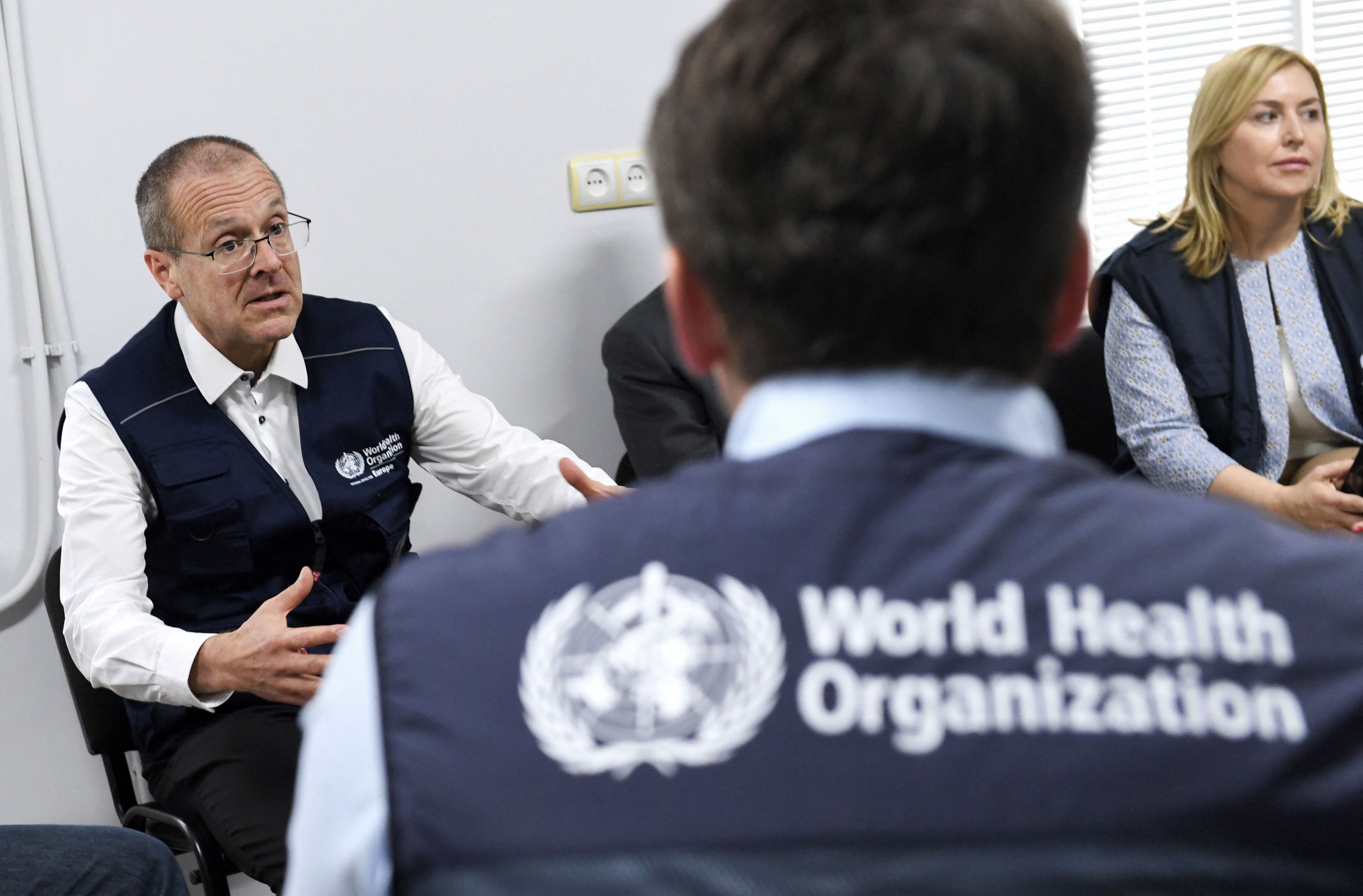
The World Health Organization warned Wednesday that it is facing severe funding shortages for global humanitarian emergencies, calling the outlook for 2026 “really dire.”
WHO’s humanitarian and disaster action chief, Teresa Zakaria, said the U.N. health agency has received 40% less funding for emergency aid this year compared with 2024 – a shortfall she described as “huge.”
The cuts come as the United States, long the world’s leading donor, continues to scale back foreign aid under President Donald Trump, forcing other major contributors to tighten their budgets and leaving millions vulnerable.
Zakaria said WHO had identified more than 300 million people in urgent need of humanitarian assistance but was now forced to make “very hard choices” about which communities to prioritize.
“We’re literally having to decide who gets help and who doesn’t,” she said, underscoring the scale of the crisis.
The organization is now targeting those most in need, in the toughest places, “with the worst living conditions.”
As of September, more than 5,600 health facilities in humanitarian settings had reduced services, while more than 2,000 have suspended operations.
“This has directly reduced access to health services for 53 million people across multiple countries,” Zakaria said.
“The outlook for 2026 is really dire,” Zakaria said.
Some scientific publications predict the cuts will result in millions of otherwise avoidable deaths.
Zakaria said that in countries such as the Democratic Republic of the Congo, Sudan, and Haiti, “we’re seeing this already – a rise in maternal mortality, in malnutrition rates – and the situation is only getting worse.”
WHO Director-General Tedros Adhanom Ghebreyesus said that even more concerning than the cuts suffered by his agency was the dramatic rollback in support to dozens of low-income nations.
“There is a decline in the donations that go to countries, and that’s what’s worrying us, especially in countries where there is no capacity,” Tedros told Thursday’s press conference.
Tedros noted some positives in the way countries are adapting to the situation.
“One good piece of news is that many countries are waking up now and saying we need a mindset shift – mobilizing domestic resources to finance their health systems, including health emergencies,” he said.
Donor support from other nations could then be used “to build capacity,” he added.