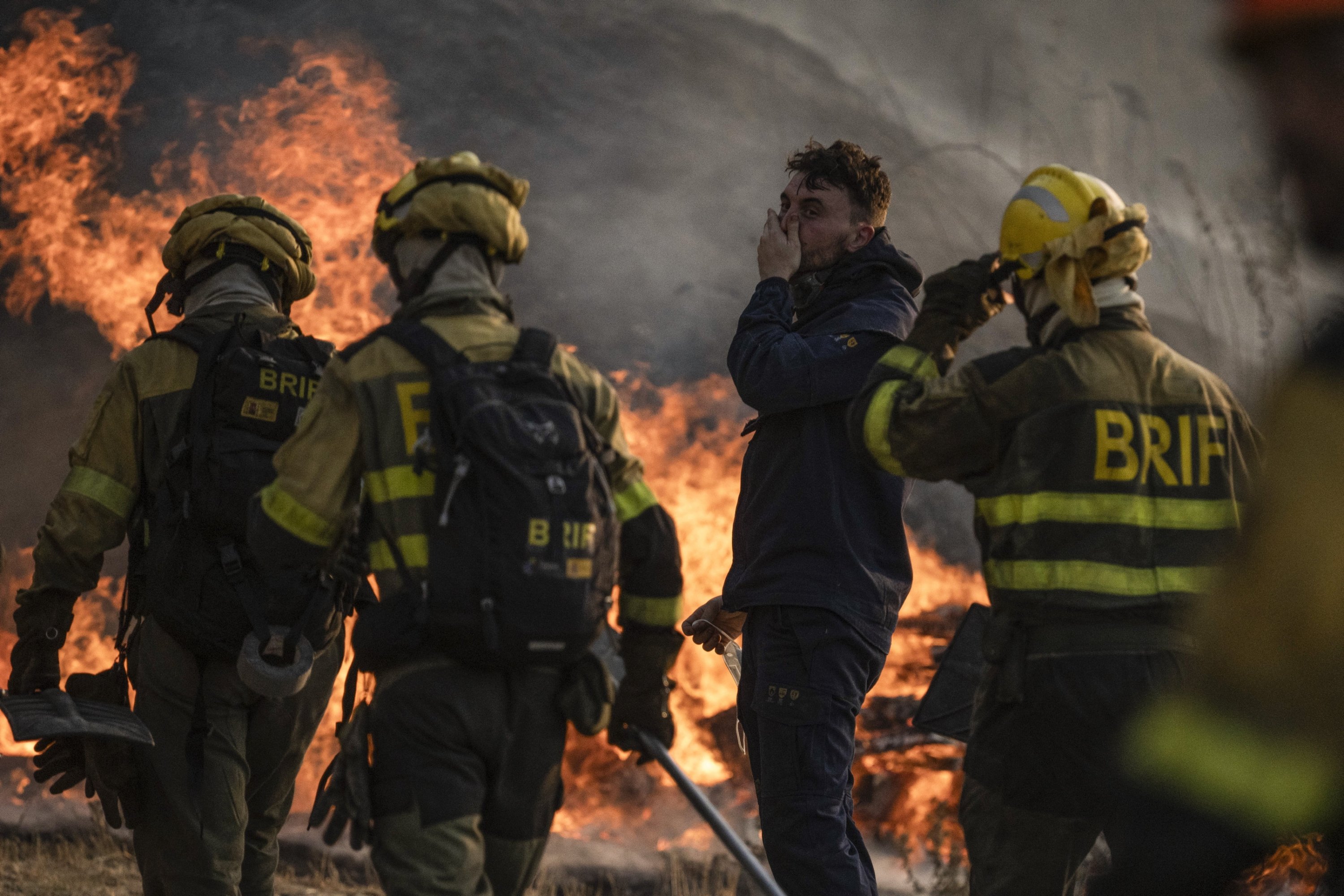
Southern Europe reeled Thursday under an unrelenting heatwave that has stoked deadly wildfires from Spain to Greece, torching vast swaths of land, forcing thousands to flee, and prompting urgent calls for international assistance.
Spain, gripped by its 10th straight day of blistering heat that has pushed temperatures to 45 degrees Celsius (113 degrees Fahrenheit), mourned its third wildfire death this week.
Interior Minister Fernando Grande-Marlaska confirmed that a firefighter died battling flames in the northwestern province of Leon, days after two others – one near Madrid, another in Leon – succumbed to their injuries.
Nearly 6,000 residents in 26 communities have been evacuated from the Castile and Leon region, where flames have devoured large tracts of countryside.
Spain has already lost nearly 99,000 hectares (244,000 acres) to fire this year – more than double the destruction recorded by this time in 2024.
In a bid to bolster exhausted crews, Madrid has appealed to the European Union for two Canadair water bombers, with France agreeing to send aircraft.
While the planes are not yet needed urgently, officials said they want them on standby given the grim weather forecast. Grande-Marlaska also signaled Spain could seek more firefighters from European partners if conditions worsen.
In Greece, firefighters gained ground against a massive blaze that had threatened Patras, the country’s third-largest city and a major port to Italy.
After days of intense firefighting – including the evacuation of a children’s hospital and a retirement home – crews were left battling scattered hotspots on the city’s eastern edge. Gentler winds and the deployment of 600 ground crews with nearly 30 water-bombing aircraft have aided efforts.
Still, fires remain active on the Ionian island of Zakynthos, the Aegean island of Chios and near the western city of Preveza. According to the EU’s Copernicus satellite program, those blazes and the Patras fire have consumed more than 10,000 hectares. Police have arrested multiple suspects accused of deliberately starting fires near Patras.
Elsewhere, Portugal mobilized nearly 2,000 firefighters against four major infernos, including one that has razed an estimated 14,000 hectares in the central Trancoso area. In Albania, crews continue battling blazes that have destroyed homes, while Montenegro reported progress thanks to easing conditions and water-bombing aircraft.
Across the region, the fires are unfolding amid extreme summer heat that scientists say is being intensified and lengthened by human-induced climate change. From Rome and Venice to Florence, much of Italy remains on red alert, with the tourist-heavy weekend expected to bring searing highs near 39 degrees Celsius (102 degrees Fahrenheit).
For residents like Antonio Silva in Portugal’s village of Mourisia, the decision to stay and defend his home was personal. “I wanted to be here to help,” the 70-year-old said, his face hidden behind a mask as flames climbed the nearby hillsides.