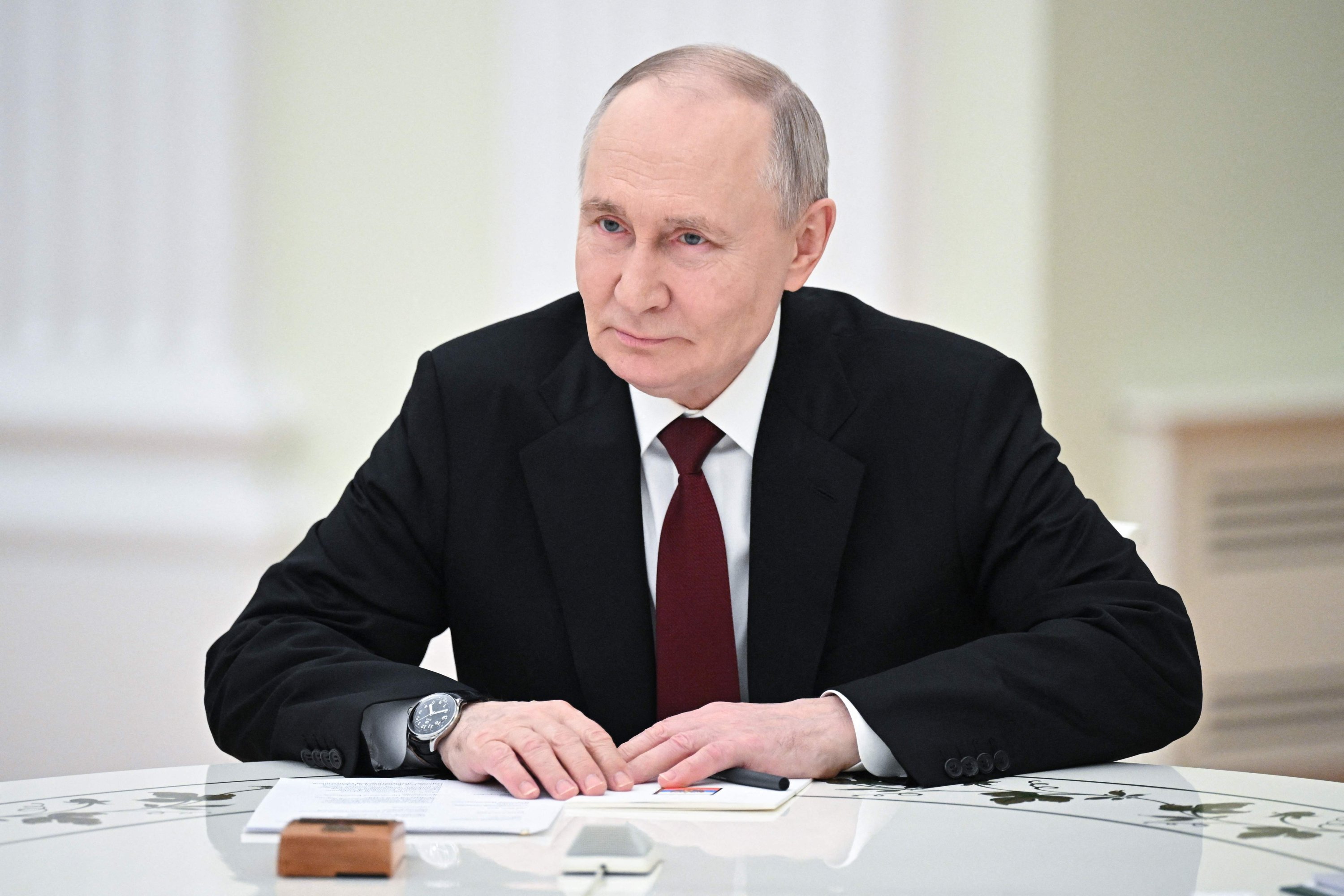
The Kremlin on Monday called for pressure on Ukrainian President Volodymyr Zelenskyy to agree to peace, citing his public rift with U.S. President Donald Trump as evidence of the challenges in ending the war.
Zelenskyy clashed with Trump and Vice President JD Vance in the Oval Office on Friday, where Trump accused him of disrespecting the United States, losing the war and risking a global conflict.
"What happened at the White House on Friday clearly showed how difficult it will be to establish a peace trajectory in Ukraine," Kremlin spokesperson Dmitry Peskov said.
"The Kyiv regime and Zelenskyy do not want peace; they want the war to continue." He added, "Someone must force Zelenskyy to change his position. If the Europeans can do it, they deserve praise."
Russian President Vladimir Putin launched a full-scale invasion of Ukraine in 2022, escalating a long-brewing conflict. Russia annexed Crimea in 2014 after Ukraine's pro-Moscow leader was ousted, and Russian-backed separatists have fought Ukrainian forces in the eastern Donbas region since then.
Currently, Russia controls nearly a fifth of Ukraine – about 113,000 square kilometers – while Ukraine has captured approximately 450 square kilometers (173.7 square miles) of Russian territory in the Kursk region, according to open-source maps and Russian estimates.
Following the Oval Office meeting, European leaders rallied behind Zelenskyy. At a London summit Sunday, British Prime Minister Keir Starmer announced a new 1.6 billion pounds ($2 billion) defense deal, allowing Ukraine to acquire 5,000 air-defense missiles.
Peskov dismissed the summit as an attempt to prolong the war rather than seek peace but also noted apparent fractures between Europe and the U.S.
"We see the beginning of fragmentation within the collective West," Peskov said. "Some countries still form a 'war party' openly supporting Ukraine’s military efforts."
The West and Ukraine view Russia's 2022 invasion as an attempt at imperial land expansion. Meanwhile, Putin portrays the war as part of a broader struggle against a declining West, accusing NATO of encroaching on Russia’s sphere of influence.
Peskov also addressed Trump’s claim that he had spoken to Putin "numerous times," saying, "There have been no undisclosed contacts beyond a Feb. 12 phone call."
Despite tensions, Peskov said Moscow would maintain dialogue with Washington and continue what Russia calls its "special military operation" in Ukraine.