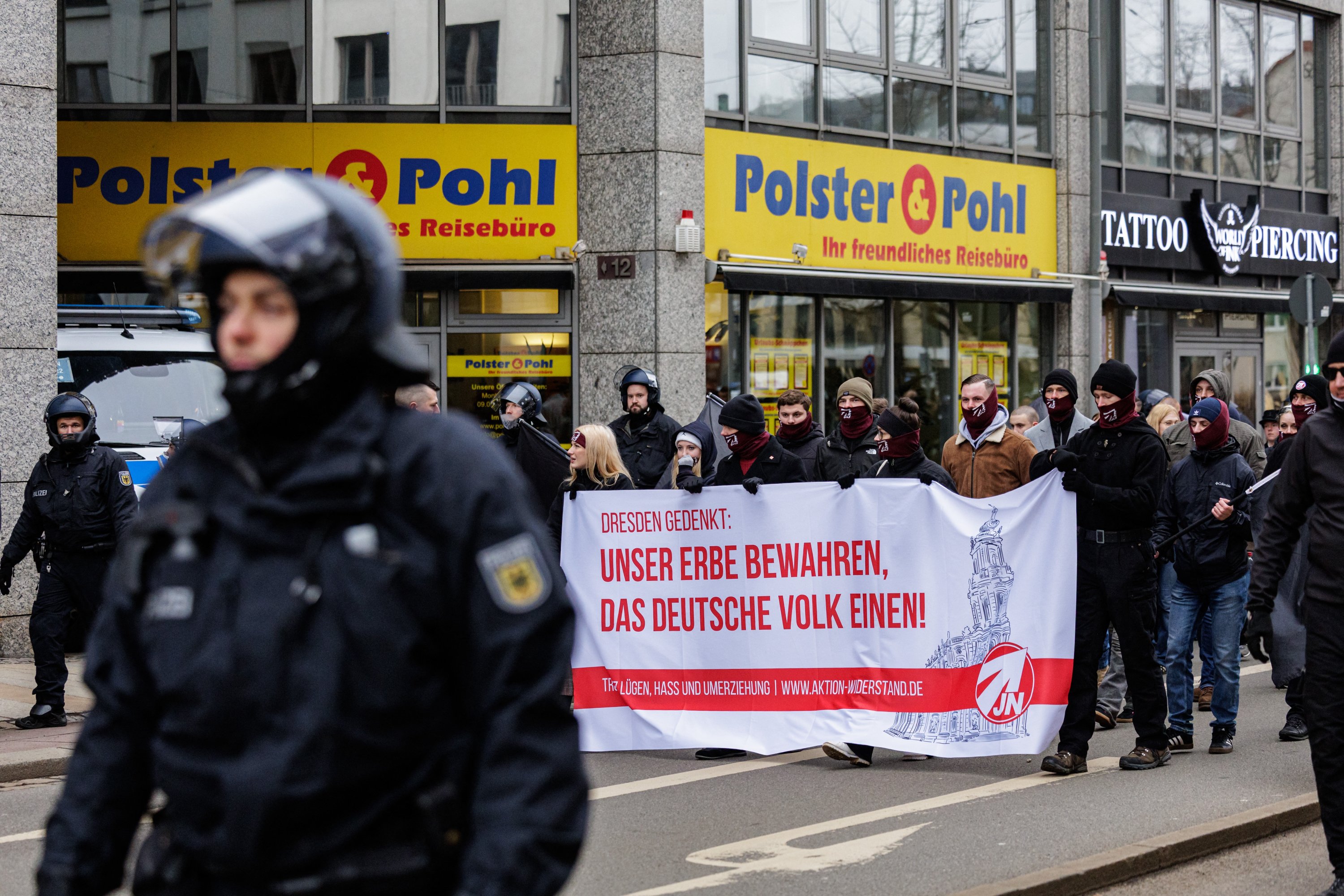
Far-right extremism has increasingly shifted from traditional groups with identifiable leaders to decentralized online networks, creating a more fragmented environment that makes radicalization and potential threats harder to track, according to an assessment provided by sources covering the first half of 2026.
The assessment said the transformation has accelerated over the past decade as extremist activity moved further into digital spaces, where narratives previously associated with fringe neo-Nazi and white supremacist circles can reach broader audiences.
It recorded 255 far-right incidents across 30 countries in the first six months of 2026, ranging from propaganda and demonstrations to threats, assaults and serious violence.
The U.S. accounted for 82 cases, followed by the U.K. with 33, Italy with 20 and Spain with 16.
Serious violence or attempted violence, including shootings, bombings, arson and killings, accounted for 37 cases, or 14.5% of the total.
Most of the recorded activity instead involved propaganda, public mobilization or intimidation. Rallies, demonstrations, concerts and public statements accounted for 81 cases, while 77 involved graffiti, leaflets or other written material. Another 60 cases involved assaults, insults or threats.
Racial or ethnic hostility was the most frequently identified motive, accounting for 76 cases. Anti-immigrant and anti-foreigner sentiment followed with 62 cases.
The assessment recorded 41 anti-Muslim incidents and 28 antisemitic cases, while 31 involved anti-government or anti-system ideologies, including accelerationism.
Accelerationism advocates intensifying political violence and social instability to hasten the collapse of the existing political order, with some far-right adherents seeking to replace it with a white ethno-nationalist system.
The assessment said ideological motives often overlap, with white supremacism, anti-immigrant rhetoric, Islamophobia, antisemitism, conspiracy theories and hostility toward state institutions appearing within the same extremist environments.
Security agencies have also focused increasingly on the role of digital platforms in spreading extremist material and connecting individuals across national borders.
Europol has warned that online platforms remain central to extremist propaganda and radicalization, while lone actors and small networks pose particular challenges because they may operate with few direct links to established organizations.
The Terrorgram Collective has emerged as one example of the changing structure of far-right extremism. Individuals influenced by Terrorgram material have been linked by authorities to attacks and plots in several countries, highlighting the ability of extremist propaganda to cross borders without the infrastructure of a conventional organization.
The U.S. designated the transnational white supremacist network and three of its leaders as Specially Designated Global Terrorists in January 2025. U.S. authorities said the predominantly online network promoted violence, circulated material offering guidance for attacks and encouraged supporters to target government officials and minority communities.
The growing role of online communities has also complicated efforts to distinguish between extremist rhetoric and individuals moving toward violence. Much of the material may not cross the threshold for criminal prosecution, leaving authorities to identify the smaller number of users progressing toward threats, attack planning or violent acts.
The figures in the assessment do not represent a comprehensive global count of far-right activity. Its definition covers a wide range of incidents, from propaganda and demonstrations to killings, and no publicly accessible incident-by-incident database was provided to independently verify all 255 cases.
The findings, however, come amid similar warnings from European and U.S. security researchers about the increasingly decentralized nature of far-right extremism and the role of digital communities in radicalization.
Security agencies are increasingly dealing with individuals who may consume extremist propaganda, interact with like-minded users and radicalize online without ever becoming members of a formal extremist organization.