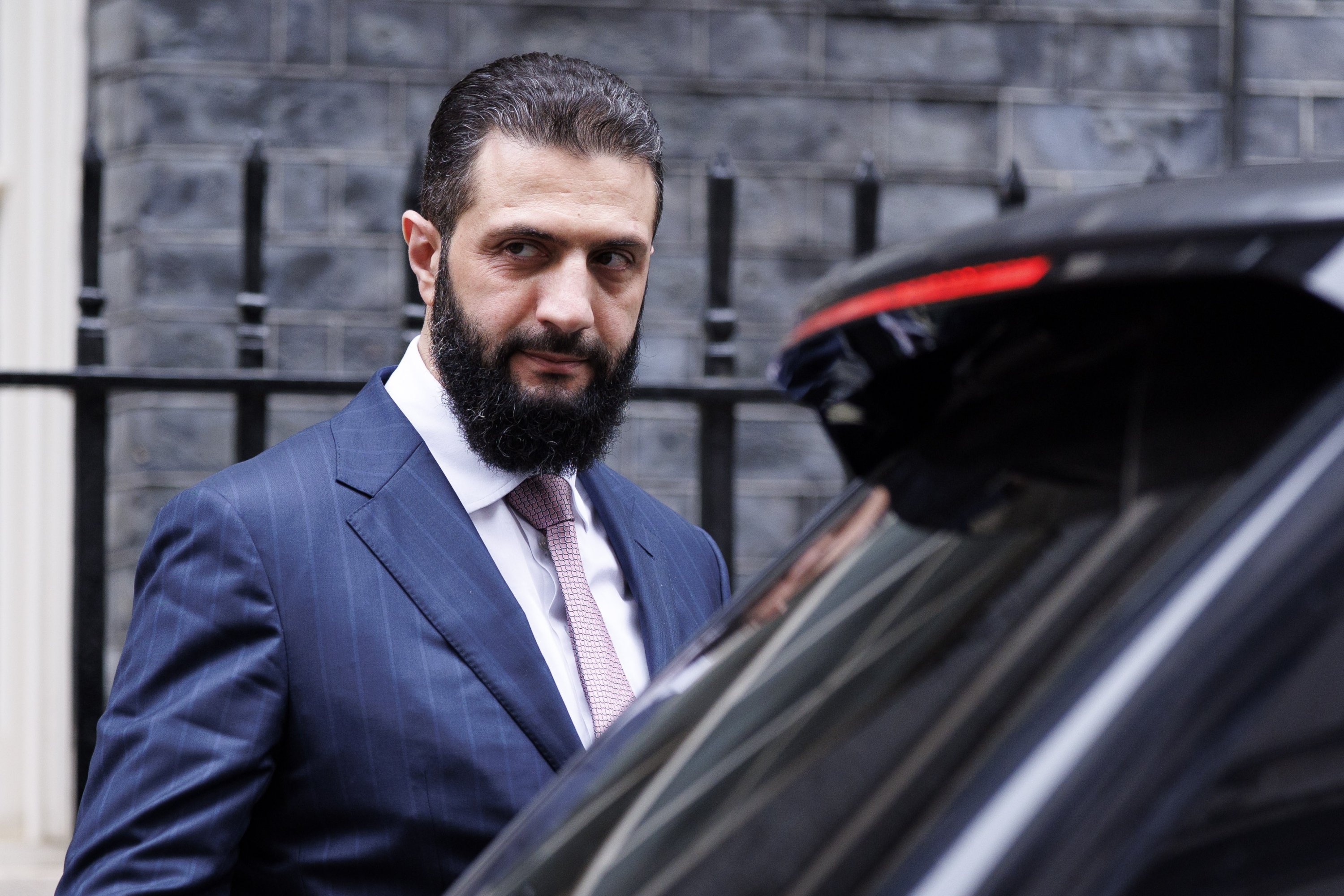
Syrian President Ahmed al-Sharaa has ruled out any Syrian military intervention in Lebanon, stressing that Damascus seeks to contribute to stability through political, diplomatic and economic channels rather than armed involvement.
Speaking in an interview with al-Mashhad TV, al-Sharaa addressed recent remarks by U.S. President Donald Trump, saying that some media outlets had misinterpreted the comments as a call for Syrian intervention in Lebanon.
He stressed that neither Trump nor the U.S. administration had requested a Syrian military role and reaffirmed that Damascus is pursuing political and diplomatic efforts aimed at helping resolve the crisis.
According to al-Sharaa, Syria has presented a proposal to the United States and other international actors calling for an immediate halt to hostilities in Lebanon, followed by a broader political, economic and social process to address the roots of the conflict.
He emphasized that restoring economic ties between Syria and Lebanon would help mitigate the impact of the crisis on both countries.
The Syrian president described Lebanon’s situation as highly critical, citing political paralysis, displacement and growing security challenges. He noted that instability in Lebanon directly affects Syria, particularly along the shared border and in areas where Hezbollah maintains a presence.
Al-Sharaa's remarks come against the backdrop of Syria’s past controversial involvement in Lebanese affairs. Under former ruler Hafez Assad, Syrian troops entered Lebanon in 1976 during the Lebanese Civil War under the umbrella of the Arab Deterrent Force. Damascus gradually established extensive political and military influence in the country, maintaining a military presence for nearly three decades. Syrian forces ultimately withdrew in 2005 following intense domestic and international pressure after the assassination of former Lebanese Prime Minister Rafik Hariri.
While acknowledging the deep disagreements between Syria’s current leadership and Hezbollah, al-Sharaa said Damascus remains open to dialogue if it serves the interests of both countries and contributes to regional stability. He argued that engagement and negotiation remain the best means of preventing further escalation.
The Syrian president also highlighted the importance of strengthening economic cooperation between Damascus and Beirut, pointing to opportunities in trade, transportation, energy and services. He said the two countries' geographic and economic complementarity could play a key role in future reconstruction and development efforts.
Reaffirming that Syria harbors no hostile intentions toward Lebanon, al-Sharaa called for a shift away from military solutions and toward reconstruction, development and long-term stability.
Lasting peace in the region, he argued, can only be achieved through dialogue, cooperation and mutually beneficial economic partnerships.