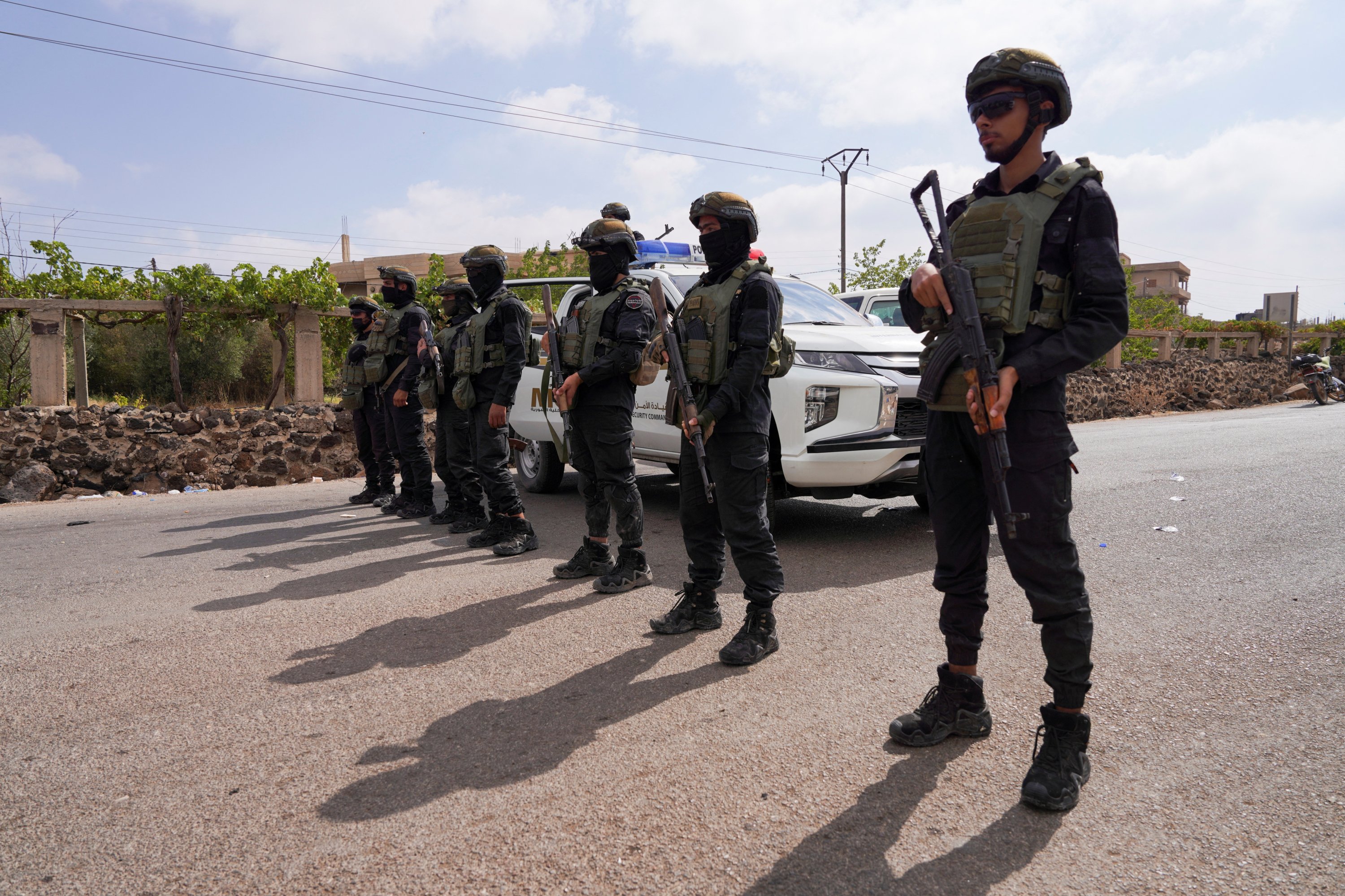
Calm returned to Syria’s Suwayda province Sunday after a week of sectarian fighting between Druze and rival armed groups left more than 1,000 people dead, according to a war monitor and media.
A cease-fire announced Saturday appeared to be holding after earlier agreements failed to end fighting between longtime rivals the Druze and the Bedouin that spiralled to draw in the interim government, the Israeli military and armed tribes from other parts of Syria.
Agence France-Press (AFP) correspondents on the outskirts of Suwayda city reported hearing no clashes Sunday morning, with government forces deployed in some locations in the province to enforce the truce and at least one humanitarian convoy headed for the Druze-majority city.
The Syrian Observatory for Human Rights said that since around midnight, "Suwayda has been experiencing a cautious calm," adding government security forces had blocked roads leading to the province in order to prevent tribal fighters from going there.
The Britain-based Observatory gave an updated toll Sunday of more than 1,000 killed since the violence erupted a week ago, including 336 Druze fighters and 298 civilians from the minority group, as well as 342 government security personnel and 21 Sunni Bedouin.
Witnesses, Druze factions and the Observatory have accused government forces of siding with the Bedouin and committing abuses, including summary executions, when they entered Suwayda days ago.
Hanadi Obeid, a 39-year-old doctor, told AFP that "the city hasn't seen calm like this in a week."
The Interior Ministry said overnight that Suwayda city was "evacuated of all tribal fighters, and clashes within the city's neighbourhoods were halted."
The Observatory had said Druze fighters reassumed control of the city Saturday evening.
Interim President Ahmed al-Sharaa had Saturday announced a fresh cease-fire in Suwayda and renewed a pledge to protect Syria's ethnic and religious minorities since overthrow of longtime ruler Bashar Assad in December.
A spokesman for Syria's tribal and clan council told Al-Jazeera late Saturday that fighters had left the city "in response to the call of the presidency and the terms of the agreement."
Another medic inside Suwayda told AFP by telephone on Sunday that "the situation is totally calm ... We aren't hearing clashes."
"No medical or relief assistance has entered until now," the medic added, requesting anonymity due to the security situation.
Inside the city, where around 150,000 people live, residents have been holed up in their homes without electricity and water, and food supplies have also been scarce.
State news agency SANA published images showing medical aid being prepared near the Health Ministry in Damascus and quoted Health Minister Musab al-Ali as saying assistance would be delivered to Suwayda's main hospital, where bodies have piled up.
U.S. special envoy to Syria Tom Barrack said Sunday that the country stood at a "critical juncture," adding that "peace and dialogue must prevail – and prevail now."
"All factions must immediately lay down their arms, cease hostilities, and abandon cycles of tribal vengeance," he wrote on X, saying "brutal acts by warring factions on the ground undermine the government's authority and disrupt any semblance of order."
Sharaa's announcement Saturday came hours after the United States said it had negotiated a cease-fire between Syria's government and Israel, which had bombed government forces in both Suwayda and Damascus earlier in the week.
Israel, which has its own Druze community, has said it was acting in defense of the group, as well as to enforce its demands for the total demilitarization of Syria's south.
U.S. Secretary of State Marco Rubio on Saturday urged the Syrian government's security forces to prevent "massacres" in the south and called.