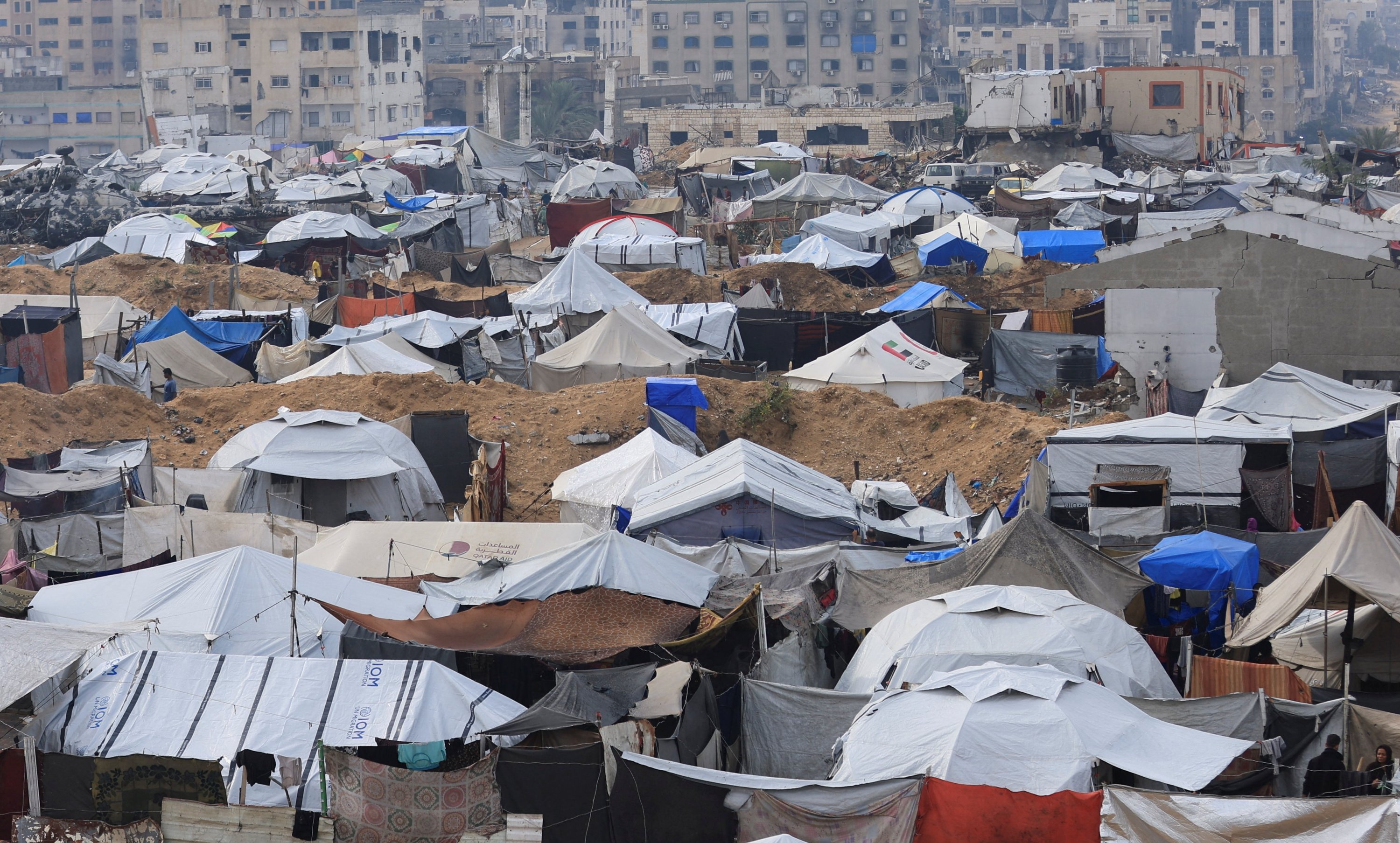
Southern Gaza is bracing for another blow to its already battered population, as a powerful storm system edges toward the coastline and threatens to swamp makeshift camps sheltering more than 900,000 displaced Palestinians.
Local officials warned Thursday that the approaching weather could trigger catastrophic flooding in a region where two years of war have shredded infrastructure, overwhelmed relief efforts and left entire communities exposed to the elements.
Saeb Lakkan, spokesman for the Khan Younis Municipality, said the storm poses an immediate danger to thousands of families living in tents stretched along the coast and packed inside the city.
Collapsed sewage networks, crippled drainage systems and rainwater ponds filled to their limits have created a landscape incapable of absorbing even moderate rainfall, he said, let alone the deluge forecast in the coming days.
The Palestinian Meteorological Department has warned of flash floods Friday and Saturday, particularly in Gaza’s valleys and low-lying neighborhoods where water will funnel quickly and with little escape.
For municipal crews, Lakkan said, the emergency is compounding what he described as an “unprecedented and catastrophic” situation: more than 85% of Khan Younis’ road, water and sewage networks have been destroyed, nearly 15 million tons of rubble still sit where Israeli airstrikes left them, and basic emergency equipment is almost nonexistent.
According to Lakkan, Israeli attacks have torn up roughly 210,000 meters of roads, 300,000 meters of water pipelines and 120,000 meters of sewage lines, leaving the city “practically paralyzed” ahead of the storm.
Fuel shortages threaten to shut down the remaining sewage stations entirely, he added, warning that a complete stoppage could unleash dangerous overflow that would inundate entire blocks.
Since the Oct. 10 cease-fire, Khan Younis has received just 16,000 liters of diesel – enough for only three days of municipal operations.
Workers are relying on rudimentary tools to build earthen barriers and divert valley flow away from crowded camps. But Lakkan said such efforts “barely scratch the surface” of what is needed.
Gaza officials say Israel has violated the cease-fire daily, killing hundreds and restricting the entry of food and medical supplies.
With 1,900 of the city’s 2,200 rainwater drains destroyed, only an emergency U.N.-supported project is keeping the remaining channels open.
Lakkan said the municipality urgently needs mobile pumps and other emergency machinery to avert a disaster when the storm arrives.
Conditions in Khan Younis, he said, have reached a level of “extreme bleakness,” with immediate international intervention needed to clear rubble, restore essential services and protect nearly two million displaced civilians clinging to Gaza’s coastline. “If nothing is done,” he warned, “flooding and death will follow.”
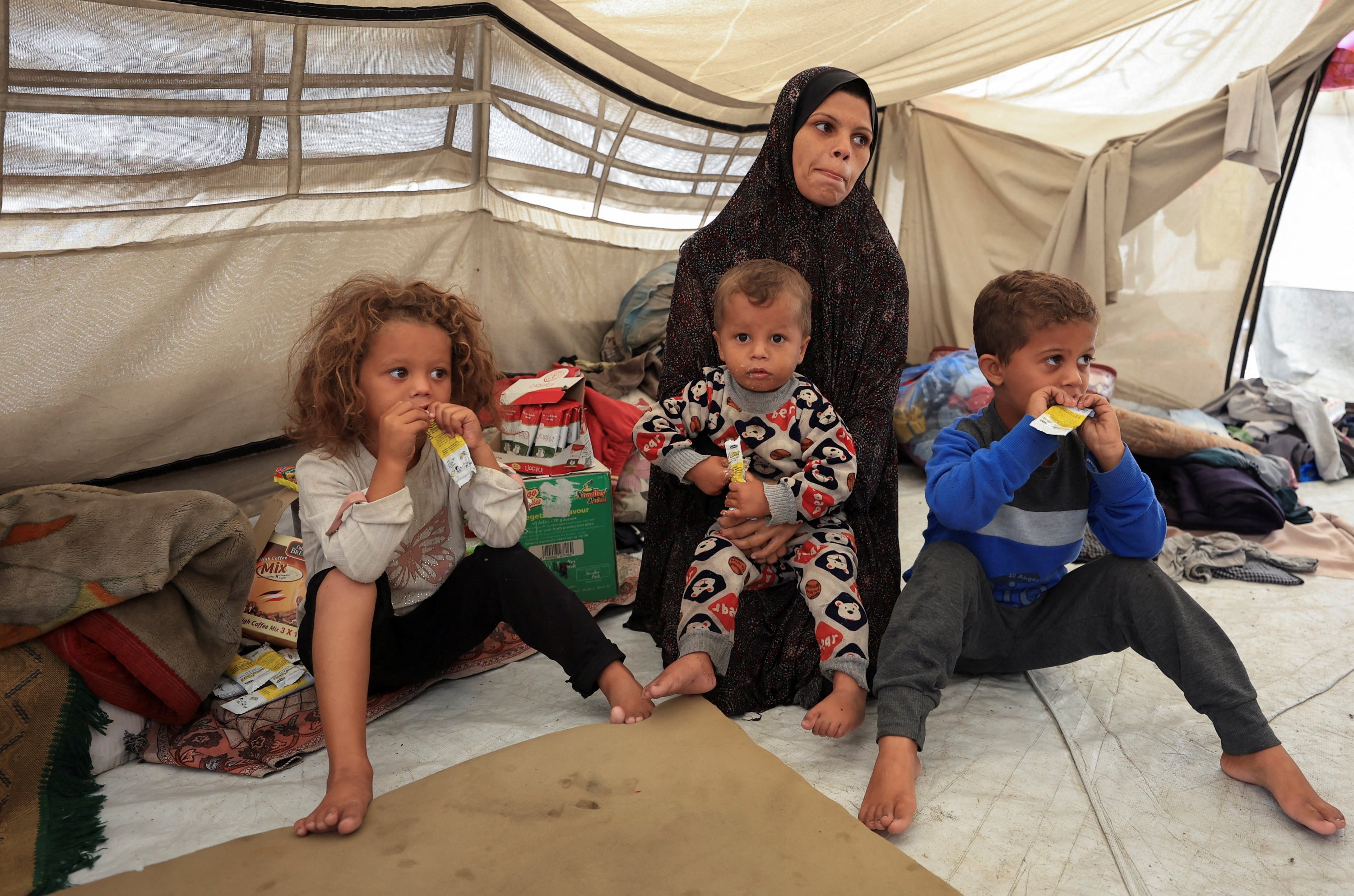
Earlier Thursday, the United Nations Relief and Works Agency for Palestine Refugees in the Near East (UNRWA) reported that more than 282,000 homes have been destroyed or damaged during the war, forcing tens of thousands of families to face winter in tents that collapse at the first sign of rain.
Over the past two cold seasons, high winds and heavy downpours have ripped open shelters and drowned personal belongings in mud.
UNRWA Commissioner-General Philippe Lazzarini told the U.N. General Assembly’s Fourth Committee in New York that the agency now faces a severe funding crisis that threatens its ability to keep millions of refugees alive.
With donor freezes following Israeli accusations that UNRWA staff participated in the Oct. 7 incursion – claims the agency says Israel has never substantiated despite repeated requests – a $200 million shortfall looms between late 2025 and early 2026.
Lazzarini warned that without an urgent flow of new funding, UNRWA may not be able to maintain essential services, including the health care system that provides 40% of primary medical support in Gaza and the schools educating hundreds of thousands of children.
He said any reduction in operations would carry “grave consequences” across Gaza, the West Bank, Lebanon, Syria and Jordan.
Speaking to reporters afterward, Lazzarini said the agency may eventually be forced to return to the General Assembly to ask which services should be prioritized if money runs out entirely.
He acknowledged that the International Court of Justice’s (ICJ) advisory opinion urging Israel to lift restrictions on UNRWA is nonbinding, but noted that its legal weight will shape how many states approach their obligations – even if Israel itself chooses to ignore the ruling.
Gaza’s displacement crisis is growing more severe by the month. By the end of September, the enclave’s media office said 93% of tents had collapsed and were no longer safe for living.