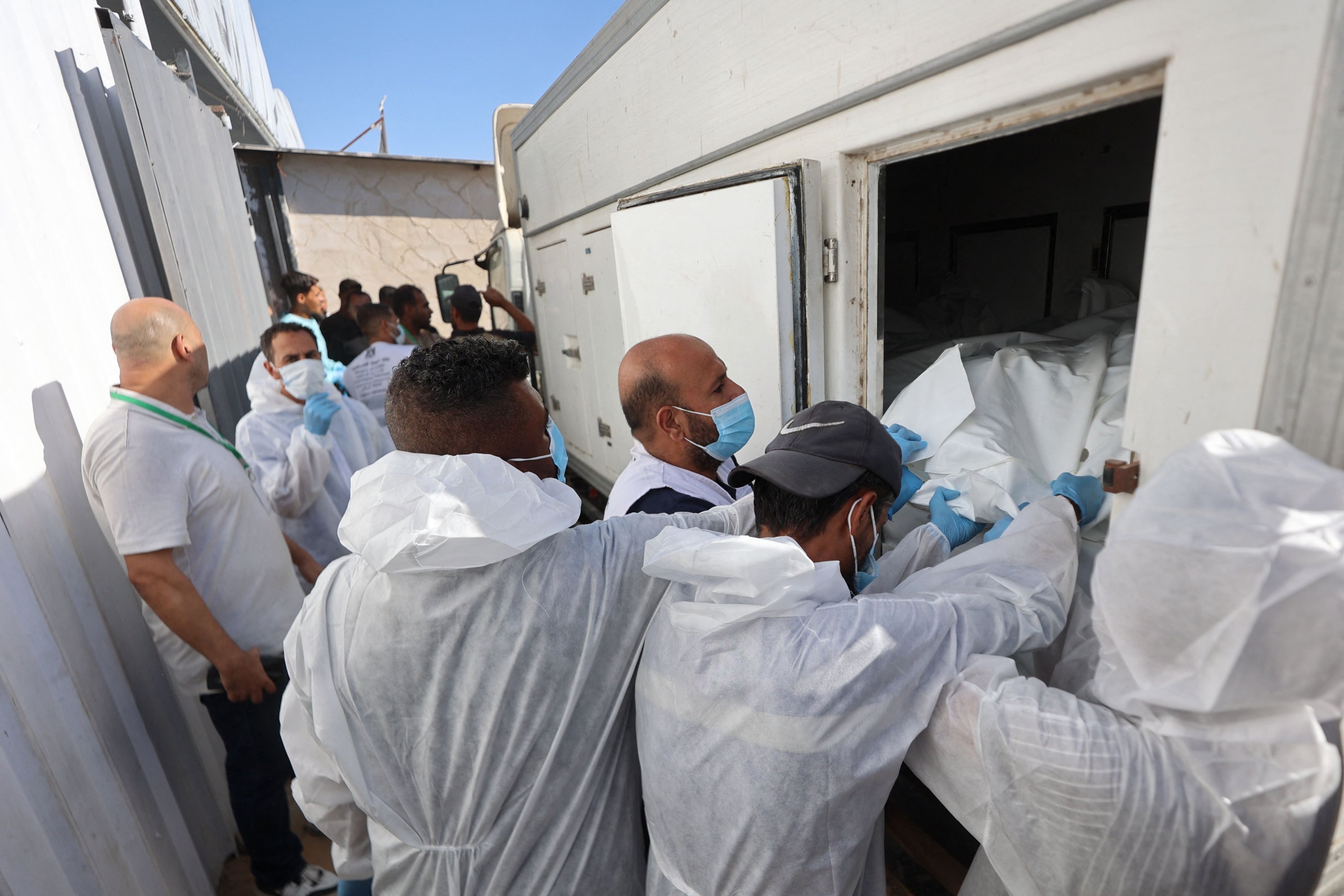
The fluorescent lights flicker over rows of weary faces inside a small hall at Nasser Hospital.
A large screen dominates the room, its shifting images revealing bodies returned from Israel – charred, decomposed and stripped of identity.
Mothers clasp their hands to their mouths. Fathers lean forward, frozen in anguish, as they stare at the numbered faces of the dead.
Each image carries a number, not a name. Each number represents a Palestinian returned home without dignity, explanation, or record.
This is how Gaza’s Health Ministry now identifies its martyrs – through digital screens, forensic guesswork and the faintest traces of memory.
“These are not just numbers,” said Ismail al-Thawabta, director of Gaza’s Government Media Office. “These are sons and daughters. Some show signs of torture, burns, even field executions. Yet Israel sends them back without names, without a word.”
Through the International Committee of the Red Cross (ICRC), Israel has returned the remains of 120 Palestinians in three separate batches. All arrived wrapped in body bags marked only by numeric codes. For families who have waited for months, sometimes a year, to know their loved ones’ fates, this process is both a miracle and a torment.
For Akram al-Manasrah, 51, the wait ended in heartbreak.
He had been searching for his sons, Abdullah and Khaled, since Oct. 7, 2023.
When he heard that bodies were being returned, he went to Nasser Hospital with a trembling mix of hope and dread.
“His face was mutilated beyond recognition,” Manasrah said, his voice breaking. “But I knew it was Abdullah – by a small mole near his nose and the shape of his teeth.”
He paused, swallowing grief like a stone. “The torture was clear. The enemy didn’t only kill him. They wanted to erase who he was.”
Manasrah’s second son, Khaled, is still missing. Like thousands of others, his fate lies somewhere between the rubble, the detention centers, or the cold anonymity of Israel’s “cemeteries of numbers.”
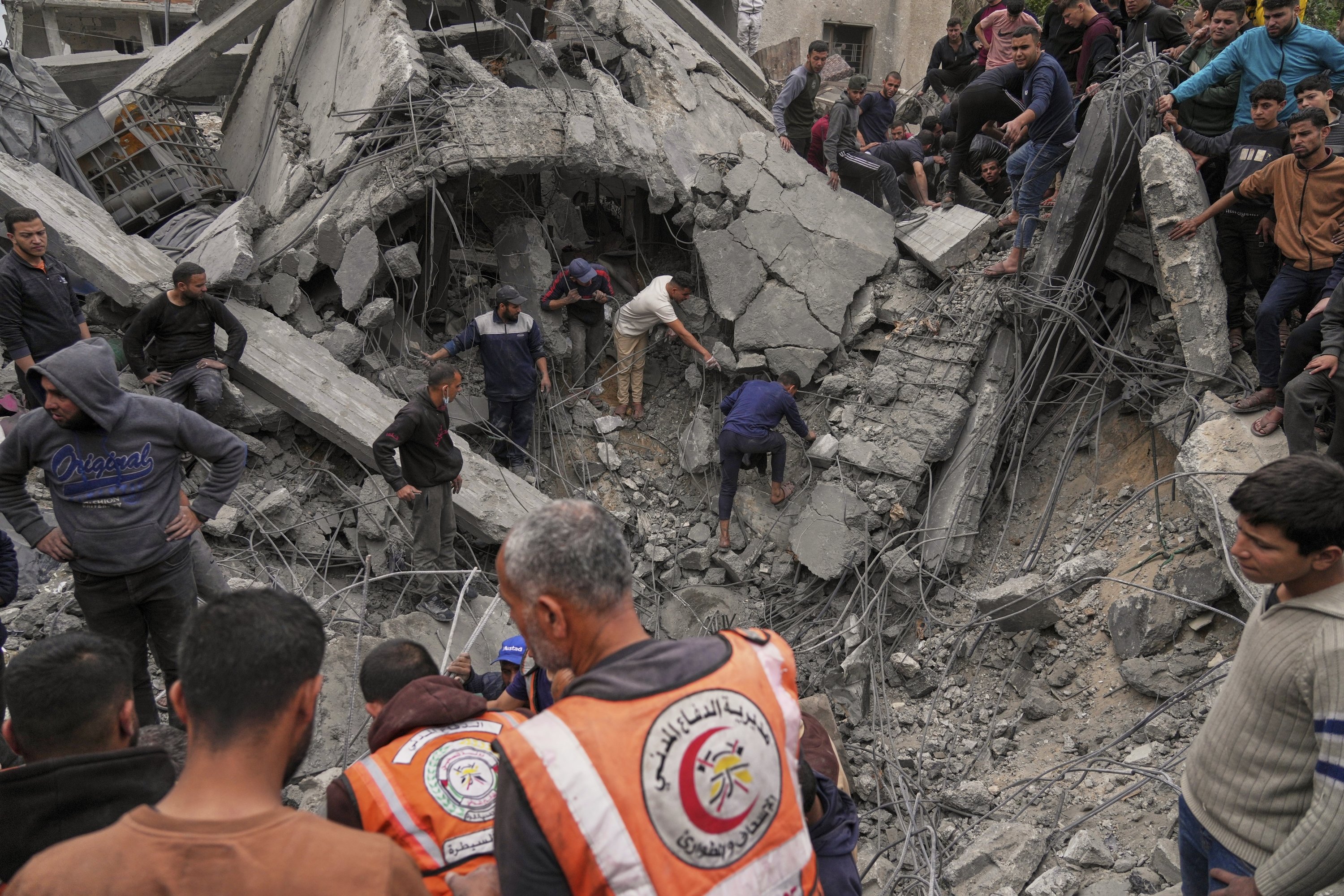
In a room next door, forensic teams led by Dr. Ahmad Dhahir labor over the remains with whatever resources they can find. Gaza’s health system, battered by two years of relentless bombardment, is running on the edge of collapse.
“The bodies come to us labeled only by number – one to ninety,” Dhahir said. “There are no dental records, no DNA samples, no data from Israel. We depend on visible clues: height, bone structure, wounds, sometimes a birthmark.”
Dhahir’s team has examined every body, recording details – burns, bullet holes, limb fractures – in an attempt to reconstruct stories from the ruins.
But he admits that the work often feels futile. “We have no laboratories, no testing equipment and no coordination. We’re left to guess what happened to these people.”
To help families, the Health Ministry created an online database displaying censored photos of the deceased.
Relatives can browse the images remotely in privacy. When a potential match is found, the family is invited to Nasser Hospital for in-person confirmation.
Once a body is positively identified, the process shifts to the prosecutor’s office for documentation before it is released for burial. But time is limited – unidentified bodies are buried within five days by the Awqaf Ministry, each site carefully logged with its corresponding number on a digital map.
“This way,” Dhahir said, “even if the family can’t find their loved one today, they might be able to one day.”
Palestinians have long accused Israel of systematically withholding bodies to use as bargaining chips. Before the cease-fire, rights groups reported that Israel held at least 735 Palestinian corpses in its “cemeteries of numbers” – barren plots of land enclosed by stone walls, each grave marked by a metal plate instead of a name.
According to the Palestinian National Campaign to Retrieve Martyrs’ Bodies, a Haaretz investigation in July 2024 revealed that around 1,500 additional bodies from Gaza were being stored at the Sde Teiman military base in southern Israel.
“These are mass graves disguised as order,” said al-Thawabta. “Families deserve to mourn properly. They deserve to bury their children with names.”
The return of the bodies coincides with a fragile cease-fire brokered under a U.S.-backed plan introduced by President Donald Trump.
The deal saw Hamas release 20 Israeli hostages and the remains of 10 others in exchange for nearly 2,000 Palestinian prisoners.
The plan’s first phase, now in effect, includes promises to rebuild Gaza and establish a new governing body that excludes Hamas – but few here believe those pledges will materialize anytime soon.
Since Oct. 7, 2023, Israeli airstrikes and ground operations have killed nearly 68,000 Palestinians, the majority women and children.
The war has gutted Gaza’s infrastructure, flattened neighborhoods and turned fertile farmland into barren soil.
“Almost all of Gaza’s farmland is destroyed or inaccessible,” the United Nations Relief and Works Agency for Palestine Refugees in the Near East (UNRWA) said Friday. “A kilo of tomatoes that once cost 60 cents now costs $15 – if found at all.”
Families who once relied on agriculture are now destitute.
While 653 aid trucks have entered Gaza since the cease-fire took effect on Oct. 10, that number is far below the 600 daily shipments promised in the agreement.
“People can see food in the market,” UNRWA added, “but they can’t afford to buy it.”
For many in Gaza, identifying the dead has become an act of defiance – a refusal to let loved ones vanish into statistics.
The Health Ministry says every confirmed identity restores a small piece of dignity stripped away by months of bombardment and dehumanization.
“Israel wants them forgotten,” said Dhahir. “But every time we match a face to a name, we bring them back – if not to life, then at least to memory.”