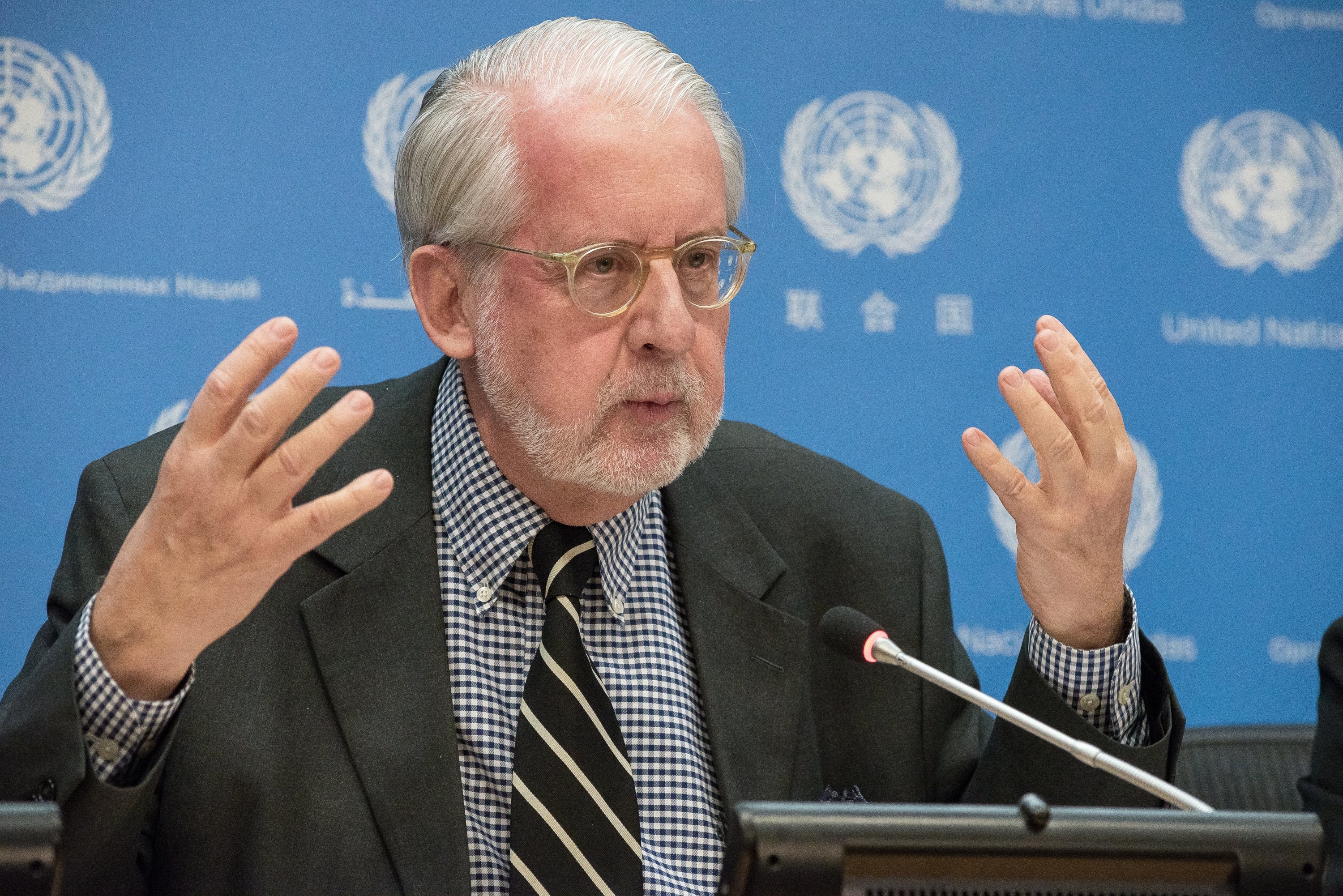
After nearly 15 years at the helm of one of the United Nations’ most prominent investigative bodies, Paulo Sergio Pinheiro has stepped down as chair of the U.N. Independent International Commission of Inquiry on Syria.
His departure marks the end of a chapter that began in the early months of the Syrian conflict and spanned some of the most turbulent years in the country’s modern history.
The Brazilian academic and veteran human rights expert had led the commission since its establishment by the U.N. Human Rights Council in August 2011.
During his tenure, the body produced dozens of reports documenting alleged violations of international humanitarian and human rights law committed by various actors throughout the Syrian conflict and especially by the Assad regime.
Pinheiro’s resignation comes at a moment of significant political and social transformation in Syria. Having overseen investigations from the earliest stages of the conflict through multiple phases of military escalation, foreign intervention, displacement crises, and political negotiations, he became one of the most recognizable international voices monitoring developments in the country.
Under his leadership, the commission gathered testimony from thousands of witnesses, survivors, former detainees, humanitarian workers, and officials. Its findings informed discussions within the United Nations system and contributed to broader international efforts to document abuses and preserve evidence for potential future accountability mechanisms.
Throughout the years, the commission examined a wide range of allegations, including unlawful killings, torture, arbitrary detention, enforced disappearances, attacks on civilians and violations committed by the regime.
In recent years, Pinheiro has increasingly emphasized the importance of transitional justice and national reconciliation. As Syria entered a new political phase, he repeatedly argued that addressing the legacy of past violations would be crucial to achieving long-term stability.
Particular attention was devoted to the issue of missing and disappeared persons, one of the conflict’s most painful and unresolved humanitarian consequences. International estimates suggest that tens of thousands of Syrians remain unaccounted for after years of war, detention, and displacement.
Another notable aspect of Pinheiro’s recent public interventions concerned Syria’s economic recovery. He argued that prolonged economic restrictions and sanctions were having serious consequences for ordinary Syrians, particularly amid widespread poverty and infrastructure damage.
While maintaining support for accountability and justice mechanisms, he urged the international community to consider measures that could facilitate reconstruction, economic stabilization, and improved living conditions for civilians.
Although Pinheiro’s departure closes an important chapter in the commission’s history, the body itself will continue its work. The U.N. Human Rights Council has renewed its mandate, and other commissioners remain in place to oversee ongoing investigations and reporting.
Recent commission reports have focused on developments in Syria’s evolving political landscape, including communal violence, detention practices, displacement, property rights, and efforts to address historical grievances.